Features

Boosting employee morale is one of the most crucial topics that every leader should consider when finding ways to steer their small businesses to grow exponentially. Low morale can result in poor cooperation, low productivity, and augmented turnover. Several studies have demonstrated that focusing on enhancing morale in the workplace can have a tremendous impact on a company’s growth.

Back in 2015, representatives from nations all around the world met to sign an initiative that would help combat the damaging effects of climate change. This very first globally collective effort in terms of reducing greenhouse emissions, to which 179 countries have formally agreed their commitment, focusses on limiting the rise in global temperature increases by two degrees above its preindustrial measurement.

Even the most optimistic founders and executives at high growth companies aren’t immune to the challenges of fundraising. According to PWC, European IPOs have been ‘heavily impacted’ in the first half of 2020, with just 28 deals compared to 53 at the same stage in 2019.

With lockdown forcing many people into furlough or redundancy, the thought of turning a personal passion into a startup has never been more tempting. But is this the right time or the right environment? And how do you turn a passion project into a viable business?

The return to the office has sparked some interesting debate. Our own research has found that individuals are more concerned about their work-life balance and having to commute than the impact of COVID-19 to their health. And similar themes have been explored around the attitudes of staff in different countries and why the UK is lagging with a proposed return compared to European counterparts.

Founders typically establish a business with one of two game plans in mind. They either want a lifestyle business and one that fits their work life balance, or they want to build a business and grow it with the ultimate goal of building something of value that they can exit when the time is right for them. For any founder seeking to raise finance for their company, or to sell it, whether a lifestyle one or one with more ambitious plans, there will always be the need for a valuation.
Cyprus’s tourist industry suffered a hammer blow this year thanks to the coronavirus pandemic, but the disaster has fuelled other ambitions on the island with many political leaders, financial experts and corporate players now seeing the country as an international hub for SMEs.

The East Anglian City of Ely has been labelled the worst connected city in the UK according to a study by Nomad Digital.
It’s troubling times for industries around the world who are attempting to negotiate the impact of a global pandemic and – for those in the UK and EU, the uncertainty around Brexit.

Now more than ever, the power of design thinking is being recognised. From Airbnb and Netflix to Tesla and Samsung, companies are looking to this ideology to change the way they view business problems, using it as a catalyst to introduce customer-focused design that works.

For freelancers and small business owners, mentors can help take your career to the next level. As such, Tide explores what to look for in an ideal mentor, and how to successfully find and approach one.

As we continue to work towards the government’s net zero emissions by 2050 commitment, businesses are naturally becoming increasingly aware of the need to be more eco-friendly. Other strategies, such as the Clean Growth Strategy, which aims to promote economic growth at the same time as decreasing emissions, mean that the focus on having a positive effect on the environment is now higher than ever.
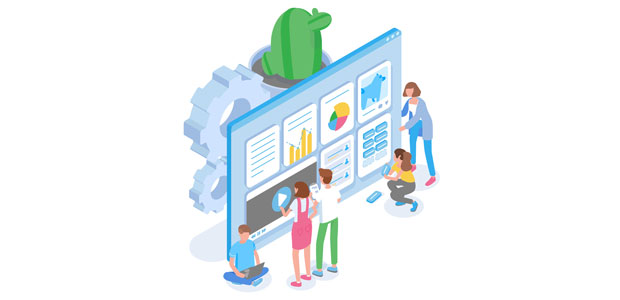
Online streaming giant Netflix, which has over 150 million paid subscribers in over 190 countries, collects data from its users. Using advanced analytics to understand customer behaviour and buying patterns, the company makes extremely relevant customer recommendations, helping it achieve an impressive 93% customer retention.

Remote working has been in the technology ecosystem for many years. I have personally been doing partial remote work for the last ten to twenty years and what I have found is surprising. Most individuals are not used to this style of work which is accelerating a nationwide transformation of company culture.

It’s received wisdom that successful startups solve real world problems. But there’s a commonly overlooked footnote to this mantra: you can’t try to solve a problem unless you’ve lived it first. Because without gaining the authentic understanding of lived experience, you’ll never find a solution that works in practice as well as in theory.

Many startups would have been forgiven for spending the last three months focusing purely on survival. Yet, as lockdown restrictions lift, an alternative story is beginning to emerge.

Launching a new business is not for the faint hearted even when market conditions are ‘perfect’. Doing that in the midst of the worst global pandemic in over a century is, by any standards, rather bold.

It has now been five months since the Government announced the development of a centralised NHSX contact tracing app that was set to monitor and contain the spread of COVID-19, safely releasing the UK from its strict national lockdown.

As much as we hate this phrase, Babble was born in the cloud. We don’t have any fixed technology so naturally, when Boris gave the order to stay at home our business found it easy to adapt. Our employees work, collaborate and communicate around one central platform, available on any device, anywhere. Our contact centre isn’t fixed to an office with phones and headsets, and our cyber security isn’t something we ever need to worry about.

A few years ago, journalists at The Daily Telegraph arrived at their London office on a Monday morning to discover that ‘Occupeye’ sensors had been installed over the weekend on the underside of each of their desks. The management team defended the installation ‘…as part of the Telegraph’s commitment to green energy measures,’ claiming they were simply conducting a four-week study aimed at optimising the building’s use of lighting, heating and air conditioning. The study’s subjects were not impressed.