Features

Applying for jobs, let alone during a pandemic, can be an extremely time-consuming and stressful job in itself. It’s crucial to ensure that amongst a sea of other applicants, you tailor your CV for success – especially now that employers will likely be hiring remotely.

At Relative Insight, we’ve always held the conviction that language provides a critical source of insight that’s often overlooked, and our mission is to help our customers drive value from all those language data sources that they’ve got floating around in their organisations, not doing much.

The startup world is no stranger to fleeting fads. We’ve seen an influx of monthly subscription boxes, e-commerce savings communities, and even a rise in nostalgic games like Pokemon Go. While those were all fun and games while they lasted, users eventually lost interest and moved onto the next shiny thing.
Online conferences and events aren’t new, but the coronavirus pandemic has brought them from a niche activity to a mainstream channel. In the absence of in-person events and conferences, online ones are providing one of the best ways for startup founders to meet one another, learn from each other, and gain inspiration for building their businesses in a safe, socially distanced manner.

For years now, there has been a huge demand for developers, all with different skillsets, from coding specialisations to full-stack backgrounds. And this is unsurprising, as until recently, many startup accelerators and incubators were hesitant to accept companies without technical co-founders or a built MVP.
This week saw the national final of Santander’s Emerging Entrepreneurs Entrepreneurship Awards 2020. Since May, 81 businesses from Santander’s network of 85 partner universities have been put through their paces during a series of expert-led online workshops and webinars, covering a range of topics under four key themes – money, management, marketing and motivation.

There has always been debate as to what the optimal number of co-founders is for a startup. Some people prefer to go solo, while others choose to work in teams of two or three. It’s certainly an interesting question – products can pivot and evolve, funding can often be found somewhere, competitors will come and go, and the market will always fluctuate, but through it all it is the team of founders that hold the company’s DNA.

We are facing multiple attacks on the working world as we used to know it. Technological disruption has forced change into almost all industries. COVID-19, the climate emergency and the need to take Diversity & Inclusion seriously is forcing fledgling companies to adapt at lightning speed if they are going to survive, let alone thrive.

Attending an online event feels novel for many but since the outbreak of COVID-19, it’s becoming mainstream. As an organiser of in-person, and now online conferences, I have found that there is an art to attending and maximising an online event, which is quite different to the in-person experience.

The world of online retail has progressed significantly since the launch of eBay and Amazon in 1995 and online channels are now a key source of revenue for retail businesses. As customers increasingly move to shopping online, rather than in physical stores, retail startups evermore question the need for a physical store to sell their products.
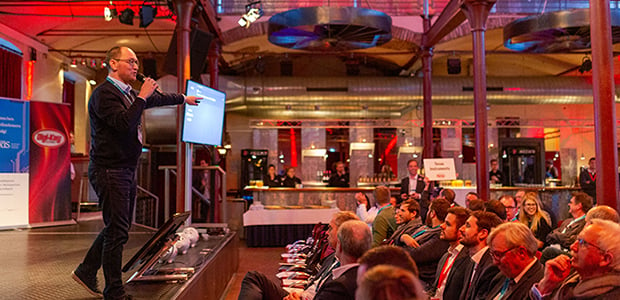
Jason Brand, Regional Sales Manager for Mass Market customers in North East Europe and South Africa, at Texas Instruments, discusses why startups are critical to future innovation, and what the semiconductor company is doing to maximise their potential.

How often do we consciously change our leadership styles at work? How would you describe your leadership style? Autocratic? Democratic? Collaborative?

People are now more eager to learn than ever. And what better place to find this knowledge than in the most convenient of places – the online platform. Businesses and individuals alike understand this demand and are coming out in great numbers in a bid to satisfy this growing need.

What qualities make an entrepreneur? What character traits are typically seen in entrepreneurs? Are these qualities and character traits something that they are born with or do they change over time? Can they be learned? Is it nature or nurture? Whatever the answers, it is certainly true that some people take to being an entrepreneur naturally whilst others would be so far out of their comfort zone that they would never even consider the idea.

The clock is ticking to Brexit and there are now less than 100 days until we exit the European Union. For startups the potential changes this could bring, coming so soon after the disruption caused by COVID-19, will present another huge challenge.

When it comes to reimagining what the events industry will look like in the near future, these are the four things we should be thinking about according to Wolves Summit’s Vice-President, Mike Chaffe. Mike grew Wolves Summit to become one of the largest tech conferences in CEE. In March this year, when most tech events were put on hold, he made the decision to organise Wolves Summit 11th as a fully virtual event. Over 1,500 participants, 600 startups, and 300 investors tuned in online to be part of the former edition. Since then the Wolves Summit team has also organised other events on behalf of some of the largest organisations in Poland and worldwide. Wolves Summit now offers technical support to CEE & CIS based Hopin clients. Hopin is an event software that has recently secured $40M in funding. We spoke to Mike to find out more about the future of events.

Employees joining during lockdown don’t have the same chance to meet other members of their team or get acquainted more casually with the company, and it can be tough on both morale and productivity as a result.

Whether it’s a natural disaster, global health pandemic or economic downturn, businesses are inevitably going to encounter some unexpected circumstances that are out of their control. It’s not always straightforward for companies to keep operations running smoothly during these unprecedented times, but the highest priority should be to nurture employees and support the company culture. But how do organisations invest in the business culture, while still taking care of the company’s changing needs?

Ethics and business aren’t always easy bedfellows in a crisis. Now, more than ever, in order to survive, most businesses need to be risk averse and fret primarily about the bottom line.

We’re living through a time of economic uncertainty, so it’s no surprise that money worries are responsible for a high level of stress and anxiety right now. Financial concerns can have a huge impact on an employee’s performance and productivity levels at work and employers therefore have a duty of care to their people when it comes to financial wellbeing.