Features

As a start up business owner there is no doubt that you may have overcome challenges to get to where you are today. But one area that many business owners may struggle with is the relentless heightened momentum that is needed to steer a business to success without hitting burnout. Keeping up momentum when you have limited staff and are trying to jump from department to department throughout the day can leave business leaders not knowing what to prioritise.

Whether it’s in a forest, field, garden, tree lined avenue, or plant-filled corner of your home, spending just two hours a week with nature is enough improve our mental and physical health.

Running a zero-waste business always starts with passion. Passion for the products, passion for ‘being better’ and passion for the planet. In order to ensure that you’re going to have the biggest impact, you need to consider all elements of your business from manufacturing and supply chain to the packaging that you use.

If there’s one thing startup founders can take from 2020, it’s that the future is unpredictable in many ways. With the reminder that unexpected factors can affect plans at any time, a key takeaway is to stay agile and build an organisation that can respond to almost any circumstances.

It goes without saying that in 2020 COVID-19 shook humanity to the very core. Millions lost their lives and even more lost their livelihoods. But even amid all this chaos and uncertainty, there’s one group of people who are somehow still finding possibilities in a pandemic.

One presumption about tech-for-good startups is that they generate less profit than traditional tech companies. This is a myth – they need to take care to prevent the nobility of the cause from getting in the way of their financial ambition, but there is no fundamental conflict between good business and business for good.

Innovation, by its very nature, involves change and disruption. This is undisputed, but many businesses can, naturally, have some reservations about disrupting themselves too much. After all, change can often seem like a scary thing. But businesses have now been forced to change by something well beyond their control. The aptitude to risk has changed and ‘pandemic’ will be referenced in the PESTLE analysis of every university student’s dissertation for years to come.

Sustainability, more than a word or an ambition, but a daily reality and practise. Since we opened Huckletree in 2014, we have worked hard to make sure that being environmentally conscious was in each and every strand of our DNA and who we were as founders.
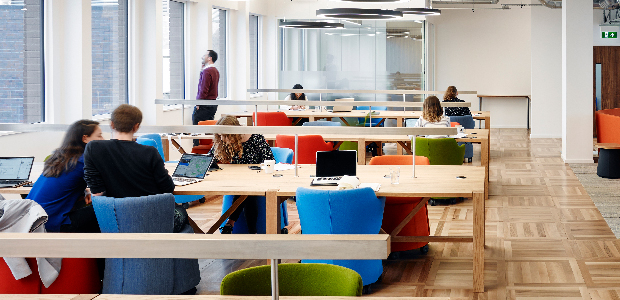
Over the last 30 years, there has been a steadfast campaign calling for remote working to be offered to employees. Calls for more flexible working options seemed to fall on deaf ears. Businesses were sceptical of change, unable to assess the differing productivity levels of those who worked remotely and those who worked in an office, so they consistently opted for the tried and tested. Us&Co – Professional Workspaces explores.

Cyber is becoming an increasingly important part of every business, from small to large enterprise. Regarding the added issue of security – how do you protect what you value most?

Today’s consumers are an evolved, diverse and versatile breed with ever-changing expectations. They make educated choices, are equipped with relevant information, and continuously challenge the enterprises they interact with. That said, enterprises that go the extra mile to understand their customers and their customers’ needs have an added advantage.

We’ve all dreamt about handing in our notice and leaving our full-time job to go it alone and start our own business. And, for many, this dream has become a reality, with the world going startup crazy in the last 12-months.

The majority of executives deem sustainability to be important, yet a mere 25% integrate sustainability into the core of their business (according to a BCG/MIT study). The issues stem from the fact that sustainability is considered a business side-branch, and not integrated into the business strategy and model.
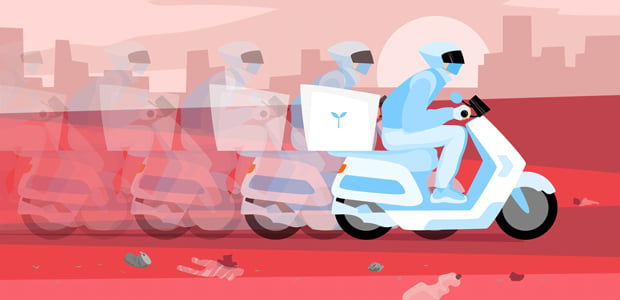
On any given day, you’ll find Tom, a Deliveroo rider, astride his moped in front of a shuttered unit in an industrial park in Sussex.

More than a year after COVID fuelled stockpiling of necessities and grocery staples, we still see empty supermarket shelves. Many assume this is because of an increased focus on online sales by the large grocers, especially in the US.

When my business partner, Jack, and I started UnderPinned in August 2018, we had countless images of what running a startup would look like. Time has shown that many of them were poorly conceived. Some, downright fanciful. It’s only been two and half years, but it feels like aeons ago now, and I’ve often thought back to that time, wondering what I would tell myself if I could hop into a time-machine and talk to a younger, bright-eyed and bushy-tailed Albert.

“Cautious optimism is hugely important,” the CIO of a large coffee shop chain told us at the end of 2020. The sentiment of caution is familiar: the lockdown life we have all come to know is characterised by endless cancelled plans, delayed returns to the office and an underlying sense of uncertainty. Any optimism that we entertain must be held up with the slightest suspicion that our well-laid plans may indeed fall apart.

As a 90s kid I wanted nothing more than a glittering career in the music industry. I soaked up the Spice Girls’ confidence and felt like I could summon the power within myself to become famous. When TV shows like X-Factor and Popstars gained popularity in my teen years, a career in music seemed within arm’s reach. I believed that if I worked hard and didn’t give up, success would be there for the taking.

As a business owner – Identifying barriers and overcoming them is key to success. Jessica Williamson, successful entrepreneur and business coach has identified the three main challenges that create barriers in businesses.

As we emerge into this new, post-lockdown, post-brexit world, many businesses feel it’s time to take the next big growth step – international expansion. Huge opportunities await across borders, but no doubt everyone’s aware that new market entry is a time and labour-intensive process, and can be very costly if not successful.