Features

It is safe to say that most companies in the UK faced more challenges than ever before in 2020. However, one hugely positive thing that came out of last year was the growth of peer-to-peer business support, underpinned by the help and encouragement business owners showed one another.

So, your business has been doing great locally – but you don’t want to stop there. You want your business to expand on a global scale and reach out to customers across the world. You’ve already taken care of the international process lines you’re going to use to provide global customers with your products or services. But… have you thought about translation?

The hospitality industry is a dynamic environment in a constant state of movement and evolution. Thanks to technology, the industry has changed at an unprecedented rate in recent years. With hotels open and working full time in the ongoing pandemic, technology is more important than ever and will play a key role in recreation.

In a year that saw mass layoffs, permanent closures and the GDP shrink to just 8.2%, some companies still managed to achieve growth.

We are increasingly becoming a cashless society. Cashless payments make payment processing easier than ever before, helping you drive more sales and provide great customer service.

Even though it may seem COVID is almost coming to an end (in the UK at least) and retail stores reopen, it remains hard to tell if the ecommerce bubble will ever burst.

Thanks to COVID-19, remote working has become the ‘new normal’ for many workers across the globe. While many profess to prefer this way of working, the impending re-opening of offices and a gradual return of many colleagues to the 9-5, is causing increasing anxiety to those who will remain almost, or entirely working from home.

As a travel company dedicated to putting travellers first, user research has always been an important part of our work. However, in 2020 it took centre stage when the unpredictable happened and a global pandemic changed entire industries overnight.

As a start up business owner there is no doubt that you may have overcome challenges to get to where you are today. But one area that many business owners may struggle with is the relentless heightened momentum that is needed to steer a business to success without hitting burnout. Keeping up momentum when you have limited staff and are trying to jump from department to department throughout the day can leave business leaders not knowing what to prioritise.

Whether it’s in a forest, field, garden, tree lined avenue, or plant-filled corner of your home, spending just two hours a week with nature is enough improve our mental and physical health.

Running a zero-waste business always starts with passion. Passion for the products, passion for ‘being better’ and passion for the planet. In order to ensure that you’re going to have the biggest impact, you need to consider all elements of your business from manufacturing and supply chain to the packaging that you use.

If there’s one thing startup founders can take from 2020, it’s that the future is unpredictable in many ways. With the reminder that unexpected factors can affect plans at any time, a key takeaway is to stay agile and build an organisation that can respond to almost any circumstances.

It goes without saying that in 2020 COVID-19 shook humanity to the very core. Millions lost their lives and even more lost their livelihoods. But even amid all this chaos and uncertainty, there’s one group of people who are somehow still finding possibilities in a pandemic.

One presumption about tech-for-good startups is that they generate less profit than traditional tech companies. This is a myth – they need to take care to prevent the nobility of the cause from getting in the way of their financial ambition, but there is no fundamental conflict between good business and business for good.

Innovation, by its very nature, involves change and disruption. This is undisputed, but many businesses can, naturally, have some reservations about disrupting themselves too much. After all, change can often seem like a scary thing. But businesses have now been forced to change by something well beyond their control. The aptitude to risk has changed and ‘pandemic’ will be referenced in the PESTLE analysis of every university student’s dissertation for years to come.

Sustainability, more than a word or an ambition, but a daily reality and practise. Since we opened Huckletree in 2014, we have worked hard to make sure that being environmentally conscious was in each and every strand of our DNA and who we were as founders.
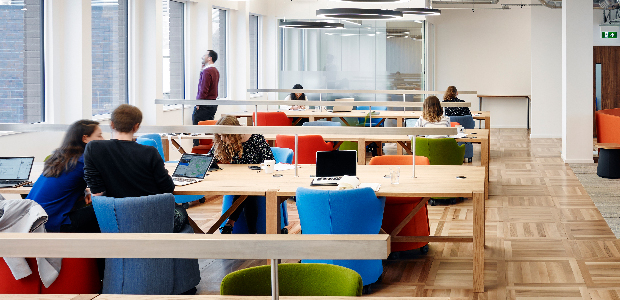
Over the last 30 years, there has been a steadfast campaign calling for remote working to be offered to employees. Calls for more flexible working options seemed to fall on deaf ears. Businesses were sceptical of change, unable to assess the differing productivity levels of those who worked remotely and those who worked in an office, so they consistently opted for the tried and tested. Us&Co – Professional Workspaces explores.

Cyber is becoming an increasingly important part of every business, from small to large enterprise. Regarding the added issue of security – how do you protect what you value most?

Today’s consumers are an evolved, diverse and versatile breed with ever-changing expectations. They make educated choices, are equipped with relevant information, and continuously challenge the enterprises they interact with. That said, enterprises that go the extra mile to understand their customers and their customers’ needs have an added advantage.

We’ve all dreamt about handing in our notice and leaving our full-time job to go it alone and start our own business. And, for many, this dream has become a reality, with the world going startup crazy in the last 12-months.