Features

If you sell online then there a number of statutory or regulatory requirements you are obliged to fulfil or to which you must adhere.

2020 acted as a catalyst for trends we have seen in our economy for some time, from the rapid digital transformation across every aspect of our lives, to the dramatic rise in demand for e-commerce. Now more than ever, customers are expecting the ‘next day delivery’ option to be the norm, and it’s vital that all business leaders, regardless of the size of their operations, recognise the impact this can have on their business.

Marketing in the 21st century has become one of the biggest priorities for companies in all industries. Every year, it becomes important to show the general public your company still deserves their dollar and their support. People no longer settle simply for what they have ‘always known’ or what fits best in their budget.

It is common knowledge that the manufacturing industry is facing an existential crisis. Recent reports from Deloitte and Fictiv indicate that COVID-19 has only increased an already bleak narrative.

Technology today plays a major part in our daily routines, as well as our working lives. It has had a huge impact on the workplace and will only continue to do so at an incredible rate, due to the technological advancements of our time. What’s more, the events of the last 12 months have massively reshaped work culture across the globe. In particular, the need for technologies that can be used to virtually replicate an office environment, will continue to grow in importance as we move into 2021.

There is no denying the far-reaching impacts of COVID-19 on the UK economy. The pandemic has tested the resolve of even the most robust firms, causing enormous upheaval and unpredictable market conditions. As such, many UK businesses were forced to rely on Government support schemes to stay afloat.

The twin forces of Brexit and the coronavirus pandemic have wreaked havoc on business confidence in the UK. It therefore comes as little surprise that almost two thirds (64%) reported the combination of the two made 2020 the hardest year they have faced, according to a recent survey of commissioned by One World Express.

Medical innovation has become a significant focus for venture capital investment in the last ten years. A growing, ageing population combined with the opportunity to develop global solutions is driving a spike in investment innovation that helps people better manage wellbeing or enables them to get well sooner.

Whilst the UK is home to a large number of innovative startups, and has even been proclaimed the ‘unicorn’ capital of Europe, it also has a disappointingly high gender funding gap. According to a report commissioned by the British Business Bank, for every £1 of VC investment, less than 1p went to all-female teams and only 10p to mixed-gender teams. The initial reaction may be to point fingers at the VC industry, however interestingly the report also noted that in fact only 5% of all pitchdecks received are from all-female teams.

The world is not going digital anymore, it is already there. Many industries have now embraced technology in almost all their operations, and the Financial industry is no different. Bitcoin, Robinhood, Monzo, Fintech are just examples of how technology has enhanced services in the Financial industry.

Last week we officially reached the milestone of a year since the first national lockdown. With lots of change and uncertainty – both at home and work – many of us turned to Google for advice and support.

In today’s technology powered world, the management of businesses across every industry, no matter how big or small, is heavily reliant on digital platforms and software development.

The pandemic has changed when, where and most importantly how we communicate at work. With thousands of traditionally desk-based workers becoming remote for the first time – as well as frontline workers finally receiving the recognition they deserve – two things are happening.
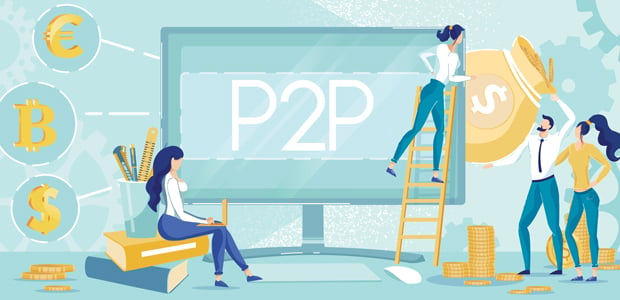
Until the early 2000s, banks held almost a monopoly in credit. Around that time, enabled by the emergence of the internet a new type of digital lending started to emerge and with it a new way to invest in private debt: peer-to-peer (P2P) lending. This innovation allowed retail investors to put their money in small loans so that consumers could achieve their financial goals. We spoke to Kimmo Rytkönen, CEO and Founder of Income Marketplace about the rewards of P2P investing.

Working while parenting has always been a balancing act, but the pandemic has led to any existing structures and routines being abandoned.

Entrepreneurs and business founders typically work long, hard hours, where the norm is much more likely to be a 70 plus hour working week rather than a more traditional 35 hour week for those in more conventional roles.

For all businesses, especially startups, to prosper systematically, sharing feedback effectively is essential. When functional feedback sharing is made a part of the company culture, it turns out to be beneficial for everyone. Even the most talented and passionate employees need a sense of direction from their superiors.

The quality of your onboarding strategy can either define, or undermine, your startup. New talent is the lifeblood for a business that craves marketplace competitiveness. Without key people priorities, your business might struggle to access the right knowledge and expertise.

Property managers are tasked with tracking multiple assets and actions over several properties through all stages of development – from planning to building and maintaining. These days, the role of the property manager is becoming increasingly streamlined and data-driven through the adoption of smart technology.

Founders must spin endless plates and wear lots of hats when firing up their entrepreneurial engines, whether that’s managing marketing and recruitment, or tackling development and accounting.