Features

When wanting to transition into biotech startup, it’s important to consider your strategy to succeed. Biotech companies need to address an unmet medical/technological need in the market. Without careful evaluation of market potential, there is a risk of failure.

This article could have been entitled ‘data and financials’ but so many of you would not have got even this far. But the truth is that data and your financials are not just numbers, as without a clear understanding of both of these then nothing else stands much of a chance. Data needs to be properly collected and analysed, and any assumptions and financial forecasts are then driven from this data.

C-suite staff are the cornerstone of every business, with their decisions accounting for just under half (45%) of overall company performance. Despite the C-suite titles being the most sought-after in business, it can often be an intense and all-consuming position.

There is a lot that goes into running a successful business. From managing employees, to budgeting to meet financial obligations, to keeping customers happy — a company leader is always on their toes. Like it or not, sustainability and green marketing have quickly become another thing to balance on an already large plate.
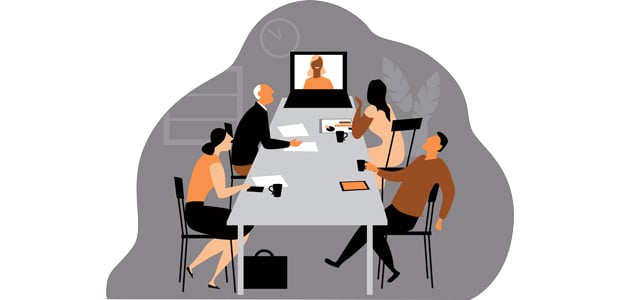
Hybrid working is happening. At least, that’s what large organisations are telling everyone. We recently examined the publicly stated positions of 150 FTSE and Fortune companies and found that two-thirds were on record advocating some form of hybrid working for their employees, compared to just 6% that had publicly stated their opposition for non-office-based working.

The buzz around artificial intelligence (AI) is everywhere – and with good reason. AI plays a pivotal role in many aspects of our lives ranging from Google maps to facial recognition to voice assistants. AI is now ingrained into so many elements of our lives. But at what cost?

Technology is a vital and core part of everyday life, and even more so now since COVID-19 struck and we faced a global lockdown.

Generational differences within a workplace are nothing new. For years we’ve listened to baby boomers and millennials clash over each other’s attitudes towards work and how each generation has varying traits that impact their ability to work.

One of the biggest reasons for startup failure is ‘the wrong team’. I’ve been building startups with different co-founders for over three decades and have seen a lot of what goes wrong.

Work-life balance is my lover and spreading its joy with others is one of my reasons for living (we are in a very open relationship, please join). But we’ve not always been so close.

When people think about mentorship in business, it’s usually along the lines of the following: a seasoned professional offering advice and support to younger and less experienced colleagues or associates. But mentorship can be so much more than this. In this challenging post-pandemic era, it is an essential ingredient, not only in building a successful company financially but also one that has a positive social impact. To understand just how important it can be, here are some ways mentorship can be considered and implemented:

As a result of the pandemic, working from home has become, by default, the new normal. As many organizations are weighing up a partial return to the workplace – at least in a hybrid capacity – now is a good time to reflect on the efforts made to encourage positive interaction amongst teams throughout the WFH experiment. For many, this will involve rethinking how the office, and the new digital tools adopted over the past 18 months, fit into their business.

There’s always been something rather bittersweet about the back-to-school season. On one hand, it marks when the mornings start to feel a little more crisp, the return to the grind after that last bank holiday until Christmas. On the other, there’s a sense of hopeful optimism – a chance for new beginnings and an opportunity to return to work feeling refreshed.

A new report shows as many as one in seven people plan to set up their own business over the next 12 months as the country moves out of the pandemic. According to the Global Entrepreneurship Monitor report record numbers of new firms are already in the early stages of starting out.

As the 2021 festive season fast approaches, many small businesses will be turning their heads towards planning, utilising and thriving during the Christmas period.

After more than a year apart, many businesses are now making plans to welcome their employees back into the workplace again. Remote working has been a test for companies during lockdown; while some have thrived and experienced growth, others have suffered under the pressure to quickly adapt.

No matter how hard you work or how much you grind you’re going to need a chunk of cash to get that startup flywheel turning. Generating that initial inertia takes energy and fuel… you’ve brought the energy, but what about the fuel?!

While some countries still refrain from even admitting problems are here, human environmental impact is becoming so obvious that the world’s greatest companies are taking action.

As many move back to the offices, whether full-time or hybrid, there’s a palpable sense that our lives are starting to return to normal. However, a change that must be seen in this ‘new normal’ is more open discussions at work around mental health.

Getting a new business off the ground is an intensive and time-consuming endeavour that will test even the most resilient of us, which is why so many new companies are established without working systems and processes in place.