Brand
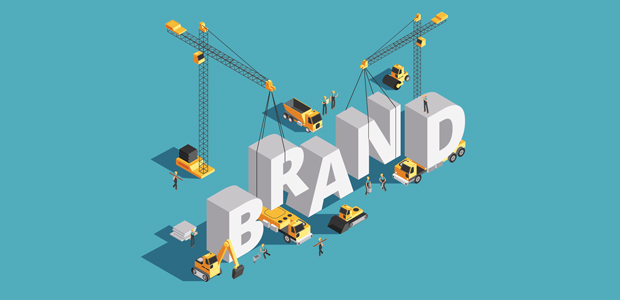
Brands can and should take a stance on social and political matters, according to new research by Kubi Kalloo and its partner Alligator Digital. A survey of 600 people in both the US and UK has uncovered that 59% of consumers believe taking a stance matters. Of this percentage, two-thirds take the issue seriously and are likely to buy from or boycott a brand based on their social media posts about an issue.

You’ve heard the maxim that ‘failing to plan is planning to fail,’ right? I’m not here to debate it. For any complicated initiative, a plan is needed – that’s true. But I do want to suggest that the long-held maxim only represents one side of the spectrum, and that the other side (overplanning) is equally dangerous to the success of a startup.
Over the last 12 months, video conferencing tool Zoom experienced exponential growth, B2B social media platform, LinkedIn, saw a 60% increase in user content creation and 55% of UK buyers revealed they will continue to shop online even when the high street re-opens its doors.
Social media will always be an integral part of your small business’ digital marketing strategy, whether you’re using it to alert fans and followers about new offerings, industry news, or showing how things work behind the scenes in your company
A UK-based digital professional has warned that as many as 70% of British businesses don’t fully understand SEO, or the methods employed by Google’s algorithm to analyse, rank, and display relevant search results. This is a particularly troubling statistic as many firms struggle to stay afloat during COVID-19 and risk squandering their budget on SEO campaigns that simply won’t deliver.

Love for a tech brand has a massive impact on customer loyalty and recommendations according to a new study. People who love a brand are three times more likely to recommend it to others and will tolerate it making twice as many mistakes as any other, before taking their custom elsewhere. Indeed, according to the Brand Love report, such a brand can mess up almost five times and people will still stay loyal to it.
Google Analytics provides you with a wealth of information about the way your site is being used, but as the pandemic has shown us, statistics can be misleading. Data can be sliced and diced in such a number of ways it can become almost meaningless.
Business process management is one of the cornerstones of operating a successful company. Implementing a specialised software solution dramatically boosts the effectiveness of BPM.

In an ever-changing landscape, marketers and digital businesses alike are forced to adapt with the times as new opportunities arise and existing strategies become redundant.
Businesses, industries, consumers and communities are all reeling under the pressures that the global pandemic has forced upon them. It’s easy to assume amidst so much uncertainty and doom and gloom that prospects are grim and that the best option is to hide under a rock until the situation passes.

The Christmas ads are now a distant memory but what we learned from the 2020 line up was that brands were, more than ever, vying for consumer attention at the end of what was a brutal year for business.

Email marketing is a fundamental part of business communications, but how many are customers actually reading? According to a recent survey by af2m (French Association for the Development of Multi-Operator Multimedia Services and Uses), only 20% – far fewer than most marketing teams would care to admit. Is there a better way to reach your customers? Research by af2m has found that SMS campaigns are blessed with a 90% open rate within three minutes of receipt!
Make no mistake, this is a challenging time for start-up businesses looking to make a splash. When we finally emerge blinking into the light after this most recent UK lockdown, we will still be operating in a business landscape that has drastically changed in the last twelve months.
If we learned anything from 2020, it’s that the world is changing faster than expected and that new trends are shaping our realities. For businesses, this means increased pressure to adapt and remain relevant to their customers.
It’s no secret that 2020 has been a difficult year for many businesses out there. Many have been faced with unexpected hurdles and challenges that have made them rethink their advertising efforts and direction.
2020 has redefined healthcare for good. In the same way that every company wanting to thrive has had to become a tech company, every company’s become a healthcare business too; safeguarding people and customers is at the core of everything.
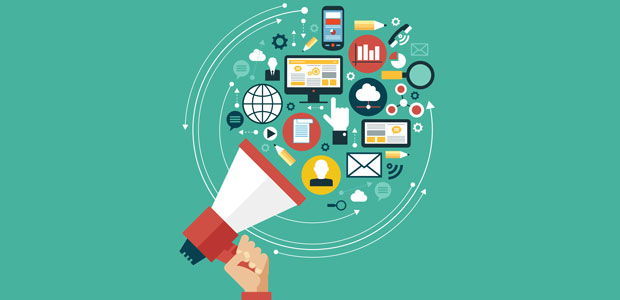
As the UK is now in its third national lockdown, consumers and businesses are turning once more to remotely delivered services and digital experiences to survive in the coming month. As the world adapted to the impact of COVID-19, 2020 saw a rapid increase in digitisation, including from age groups that traditionally had been slower to adapt.
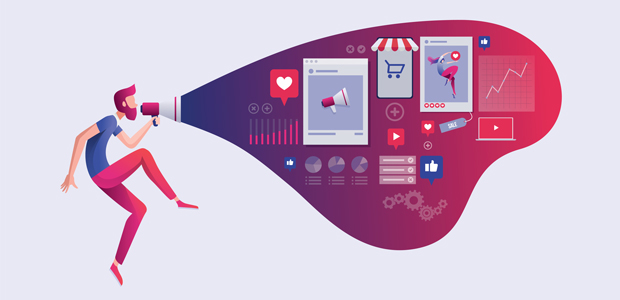
The online world is vital to many people in the current climate. Face to face coffee dates and lunch with friends have been swapped for the scheduled Zoom calls and frequent internet issues. The light at the end of the tunnel is slowly becoming clearer for us all, but that does not mean that digital marketing should be ignored once things begin to become ‘normal’ once more.
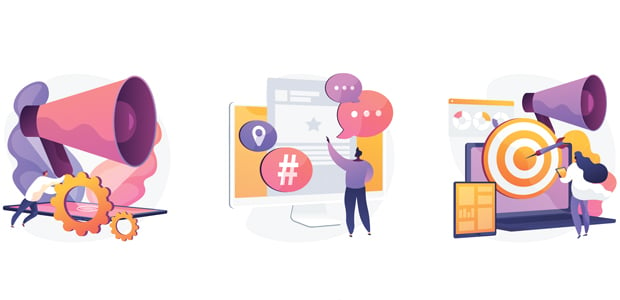
There was a time when online and offline marketing efforts were considered to be altogether separate and unrelated activities. Thankfully, most marketing professionals know better than that now – but that’s not to say that the integration of the two can’t be a challenge.