Life

“The rapidly changing world brought about by COVID-19 means leaders face many challenges, opportunities and dilemmas – never has there been a greater need to develop critical thinking, personal agility and managerial decision-making skills to help organisations survive and thrive.”

The UK’s online behaviour has changed dramatically since the country was put into lockdown on March 23rd, with the consumption of adult content notably spiking at a 292% increase when the changes came into effect.

British shopkeepers sighed a breath of relief on Monday night as the Government announced lockdown restrictions will be lifted as of 15th June 2020, allowing non-essential retailers to reopen.

After nine long weeks of lockdown, businesses are starting to re-open or, at least, planning to reopen in the near future. For some of the luckier ones this might be possible without having to make too many, or too onerous, changes. For others, the planning will need to be much mere detailed and the implementation will be much more complex.

There is nothing better than being able to walk out of the house to exercise in the park, the countryside or even to stroll by the sea. Just the ability to go outside gives us a new sense of perspective, and enables us to maintain our health and wellbeing.

Agile startups have proven that they are able to help in a crisis. Access to bright thinkers and technical experts means they can come up with creative solutions quickly in response to changes in circumstances – and many have been helping in the fight against COVID-19.

The global pandemic is creating huge uncertainty for people, businesses and livelihoods in the UK. To support those who are looking to better understand the new government financial support that is available and how it can help them, Jim Harra, Chief Executive and Permanent Secretary of HMRC, will be participating in a LinkedIn Live interview and Q&A hosted by Emily Spaven, UK Editor of LinkedIn News, on Thursday 21st May at 3pm BST.

For Mental Health Awareness Week (18th-24th May 2020), Naomi Thompson, Head of Organisational Development at Benenden Health, provides insight into how employers can create a culture of openness around mental health.
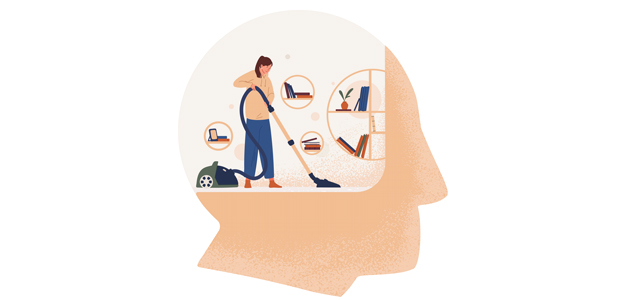
A considerable task business owners face during the outbreak is keeping teams motivated and productive in the face of uncertainty. According to the people management and CIPD poll, around 63% of employers say anxiety is the biggest challenge facing their organisation right now, followed by the inability for their teams to work remotely.
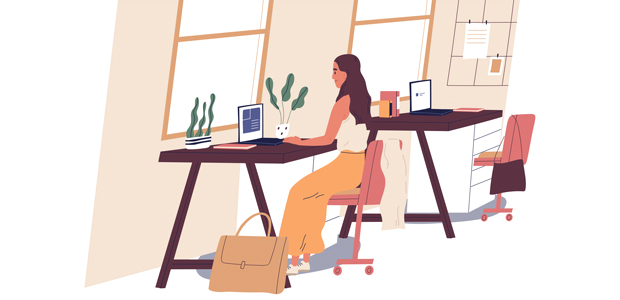
In the current climate, many of us have found ourselves in different working environments – with the majority of people working from home. With our home and work spaces becoming the same place, it’s more important than ever to ensure you take steps to create some separation and avoid burnout – a common issue faced by small business owners.
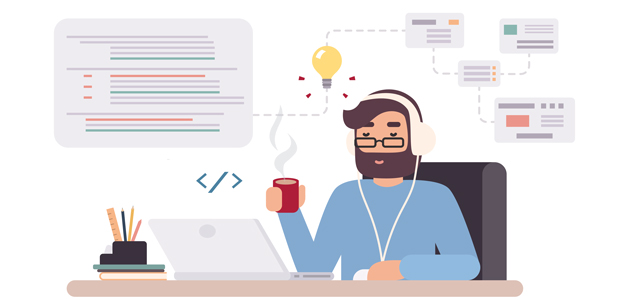
Working from home is the new norm for many professionals and it’s still not clear how long this new way of working will last. So for many small businesses this means adjusting and managing the logistics of running a business remotely for the foreseeable future.

Right now we are in uncharted territory. COVID-19 is here, we don’t know how long for, and it is affecting so many people in so many different ways. Everyone is feeling different things and everyone has different circumstances. You are not others, others are not you.

The first step in an energy company collaborating with a startup is to ask itself a simple question: why? In part one of this series, we answered that from a wide-angle perspective – because the industry needs to innovate to keep up with the pace of change, and collaboration with startups appears the quickest, surest way to do so. Because the old model of fiercely guarded, siloed research has reached its limit.
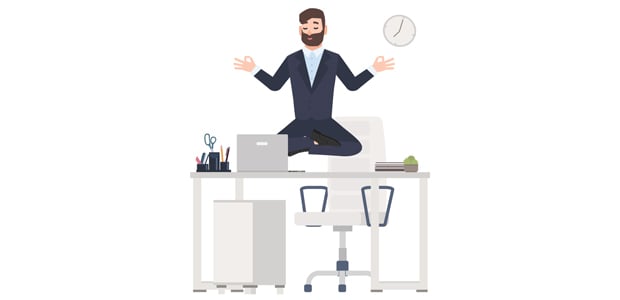
Amid the current pandemic, the economy is taking a brutal hit, and as fledgling businesses, startups have a particularly fierce challenge to keep afloat. To try and help companies that aren’t eligible for existing relief schemes during this time, such as the CBILS loan, the government has announced a £1.25bn fund to try and help these companies – including startups – survive.

For the majority, the word entrepreneur conjures an image of a male in his twenties or early thirties. It’s unlikely the picture of someone in retirement age would come to mind and even less likely a woman in her 60s. However, a new wave of silver start-ups is emerging and with good reason! One such disruptor is Sheila Holt. Having traded on a smaller scale for a few years, Sheila embraced her entrepreneurial spirit and began scaling her finance business, Sapphire Lending Ltd, at the age of 60.
The current pandemic has brought shock and uncertainty to businesses across the world. From global heavyweights to SMEs that are the backbone of the British economy, the question for many leaders is, how can we keep afloat during this crisis? Thankfully we live in a digital age where many businesses can be taken online. Along with government support, there are many tools that can be easily accessed to pivot during this period.
The last few weeks has seen an unprecedented shift across the country from working in offices to working from home. Entire teams are working remotely and in truth this is a far bigger challenge than having just the odd person working from home.
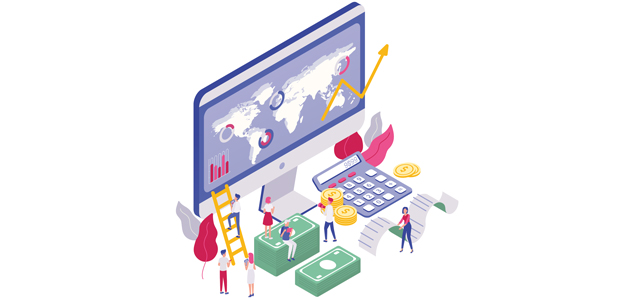
More than ever, cash flow is a key issue for small businesses, and understanding it is crucial to making informed decisions at the right time. The government will be asking businesses to demonstrate that they have an understanding of the state of their cash flow as it stands, and in the future before allowing access to the grants and schemes being offered.

The biggest enemies of good decision-making in times of deep crisis, like COVID 19, are neither uncertainty nor ambiguity; they are over-confidence, procrastination, and incomplete or biased data.

Skim read the annual report of a major energy company from 2010 and you won’t come across many instances of the terms: ‘innovation’ or even ‘startup’. Now, it is a different world. Even the slowest moving established energy companies (perhaps especially the slowest moving) recognise that innovation is key to survival in a changing market and that collaboration with startups is a good way to go about it.