Life

When most people think of startups, they picture hip loft offices, beanbags and charismatic CEOs with boundless enthusiasm and a seat-of-the-pants attitude. While this may be the case for some new businesses, particularly within tech, the picture for many startups is starkly different.

The longer the coronavirus lockdown goes on, the more my conversations with startups have varied from the norm. Just another example of ‘the new normal’ maybe, but recently I keep overhearing conversations comparing being in lockdown as being similar to being under siege.

Businesses in the UK, and across the world, are facing unprecedented challenges in order to survive and thrive in the wake of COVID-19. Scaling businesses are facing an additional and unique set of challenges, as many will be in the ‘critical growth’ phase which is often loss-making – embarking on a stage of expansion in order to achieve future revenue growth. This makes the current climate daunting to approach.

With COVID-19 continuing to be at the forefront of everyone’s minds it can be hard to prioritise the right things for your startup when it comes to managing money. This is undoubtedly a tough time for everybody, but for startups, freelancers, sole traders and small business owners, it’s hitting particularly hard.

Across the globe, companies are introducing innovative ways to help their workforce focus. Wildly unconventional benefits and perks have surfaced over the last few years, with research estimating that increasing happiness can boost productivity by around 12%.

It’s always been clear to me that I’m not a math person. Or at least that’s the story I’m used to telling myself. Soon after graduating from Political Science and International Relations, I started working for Panama’s foreign service in Geneva. This was an opportunity of a lifetime, representing my country on issues I cared for like gender, climate change, and mass migrations.

There is no question that these are unprecedented times, incredibly difficult for everyone mentally, physically, socially and economically.

In 2020, companies throughout the world are investing significantly in colleague training. 94 per cent of British businesses’ suggesting, ‘that even in the current economic climate, learning and development is at the heart of their strategy’. The report by UK L&D noted how none of the companies who are spending more than the national average of £300 on training for each employee have a retention rate of less than half a year. Clearly, staff morale and job satisfaction are enhanced by sufficient training.

As a startup there is probably a high possibility you are not currently doing what you planned to do when you were child. ‘When I grow up I want to create my own business’ isn’t heard as often as policeman, astronaut or pilot we surely all have to agree.

Found & Flourish is a female founders and aspiring entrepreneurs online membership, media & events platform. We have over 10,000 women within our network and run on average 40 events a year. Our mission is to empower women in business to launch, grow and scale their dream businesses. We also provide services, resources and community to support the women at every stage of their entrepreneurial journey.

The current Covid-19 pandemic is causing havoc for businesses across the world. If you are an employer with a small business, you are likely struggling or are concerned about the future of your company in the current economic climate.

Any business at any time has to constantly be considering how best to trade in the present, and how best to trade in the future. This is equally true in the good times as it is in the difficult times. For many, this strange period where the world is caught up in the coronavirus pandemic is certainly one of the much more difficult times, but for some lucky businesses it is actually a period of rapid growth and great opportunity.
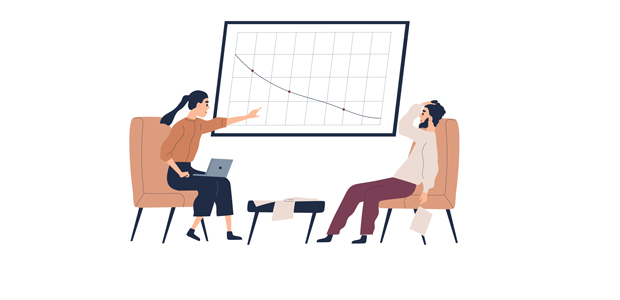
It’s part of the natural ebb and flow of running a company. Sometimes there’s peaks, sometimes there’s a trough. Some seasonal businesses experience them every year so have them planned into their annual activity. But what if you have an extended period of downtime enforced upon you?
With many office-based businesses still required to work from home, it can be stressful trying to manage your company and protect your employees, customers, and interests. Capital on Tap’s CEO, David Luck shares his ‘business health MOT’ checklist, to ensure you’ve got the best plan in place for your business’ longevity.

In the current climate, overcoming the fallout from the coronavirus crisis will be a top priority for most, if not all, businesses worldwide. However, this does not mean we can ignore the underlying challenges that continue to impede global progress towards goals like ending the gender diversity crisis.

For the UK, innovation has become a top priority. Indeed, adapting to the coronavirus economy is the most important objective for most businesses and those that innovate successfully will thrive. However, R&D has become a much more public discussion over the past few weeks. In the recent Budget, the Government put significant emphasis on increasing R&D activity. It recognises that the UK could be more of a global innovation hub.

Coronavirus is on everyone’s lips, not literally but figuratively. And for very good reason. It seems so long ago already that the only thing in the news was all things Brexit, and how companies will need to adapt in order to survive, and now that has been brushed aside by a much bigger and more urgent threat – coronavirus.

If you ran a hotel right now, apart from running around looking for toilet rolls, you’d be doing some essential maintenance to the building. The sort of thing you never do because there’s always ‘the day job’ of running your establishment.

Many of the world’s most successful entrepreneurs claim they’ve learned their best life lessons from making mistakes and bouncing back. But that doesn’t mean that expensive errors should be embraced. Spotting problems early on and better understanding the challenges ahead can help limit the cost and potential damage when things don’t go as planned.

“To me, ideas are worth nothing unless executed” – Steve Jobs. You know you have an incredible idea with which you could disrupt the market. But to do that, you need first to transform it into a software product. And you’re possibly wondering what the starting point is, and at what stage you need to take to the market. You’re worried because you know of people who did not make an impact despite their great idea. These thoughts are but natural and every entrepreneur goes through them.