Features

Startups Magazine has been lucky enough to interview Kevin Smith from Boom & Partners, a business that offers bespoke mentoring for startups to help them grow and thrive. Having teamed up with Kevin and Boom & Partners many times already, we thought it was time to get his expertise on some of the most pressing conundrums for startups

In the midst of a global pandemic our leaders are necessarily focused on the immediate. Survival – in life and in work. Entrepreneurs and executives alike are shoring up business, optimising current operations and cashflow; the need to stay afloat taking precedence over the long view. But with the passing of this crisis, may there come a sustained shift in values?

For those founders at the beginning of their entrepreneurial journey, whether for the first time or as a serial founder, there is a question that I overhear time and time again and that question is ‘should I be a sole founder or a co-founder?’

Given that up to 50% of any population identify as introverts, organisations with an unbiased recruitment process will have a fair proportion of introverts in their workforce. If their promotion panels are fair and equitable, some will reach positions of leadership. However, many introverts spend much of their working life pretending to be more extraverted in order to fit in and be accepted. This comes with a heavy price tag; overwhelm and burn-out. Introverts need strong, well-defended boundaries and a personal strategy for replenishing.

Over the last few years, I’ve been teaching business owners and their staff to set up a few simple pieces of equipment to film their own smartphone videos and get comfortable in front of the camera.

Over the past three months, small businesses have faced intense struggles, with only those deemed ‘essential’ by the government able to stay open due to the lockdown. Although these restrictions are now beginning to ease, the financial impact will have been significant.

For all businesses operating in the digital arena, there has long been an advantage to be gleaned from better understanding how your customers behave online. Can you identify which website visitors are on the verge of clicking ‘buy’? Can you spot a disgruntled customer desperately searching around an online FAQ for the product support they require? Is it possible to determine whether a prospective subscriber is ready to commit, or whether they need further incentives to push them over the line?

As companies across the globe are closing their physical offices, the business world has transformed dramatically within just a matter of months. More emphasis is placed on business being conducted online. For example, retailers, IT service providers and even personal trainers are utilising their online platforms and video chat software to remain engaged with their customers.

Analyst relations. For many startup founders and marketing teams, it’s still a bit of an unknown. There’s no question that it’s a valuable marketing strategy, but there’s a surprising lack of literature advising startups on how to make it work for them, when to start, and what to do in a briefing. This article looks to state the case for analyst relations in a startup context whilst providing some valuable insight from the analysts themselves.

When starting a business it’s easy to get consumed by P&L and that all-important bottom line (understandably so), but as Sezer Sherif, Founder and CEO of brokerage and investment advisory firm Vector Capital Group explains, that doesn’t mean you can’t build a business with a strong code of ethics and corporate social responsibility (CSR).

Alongside a few others, I recently gave a talk to a university conference where I explained my progress in the past year, successes and changes, and my plans. What was interesting, hearing my own answer alongside the other start-ups called in to do the same, was that things have generally ‘paused.’ We have stopped every financial outgoing we possibly can and are reaching out to investors and clients alike only to be told that they are in the same position – ‘expect nothing soon.’

An important global competition is under way that will determine the fate of many nations. By this, I am referring to the global artificial intelligence (AI) ‘arms race’ which has seen countries battle to develop the next generation of intelligent technologies.

Law firm Taylor Wessing’s work with the Mayor’s International Business Programme, and its work day-to-day with VC-backed tech companies has shown that most UK companies look to the US or Asia before Europe when looking at new markets. However, Europe is on our doorstep, and has its own advantages which shouldn’t be ignored. This article by Mark Barron, a corporate technology partner at Taylor Wessing, will cover what you need to think about in choosing Europe as the first stop in your international journey, and a few of the key advantages in doing so.

Thanks to coronavirus, our working culture has swiftly moved into sharp focus.

As spring turns into summer and the fears of lockdown turn into the uncertainties of release, many early stage companies are effectively having to start all over again, either because they have been temporarily closed and have been in something of a coma like state, or because they have pivoted and the business plan has changed from the original. The question being asked by so many, is ‘what do we do and how do we go about it?’ and is focused around the fundamental question that takes all founders back to the origins of their business.

The world is embarking on a period of great technological innovation. This means that innovators themselves need a place where they can grow their ideas. Technology startups are fast becoming a growth area for semiconductor manufacturers, as they are often at the coal face of design innovation, pioneering the journey towards the fourth industrial revolution.
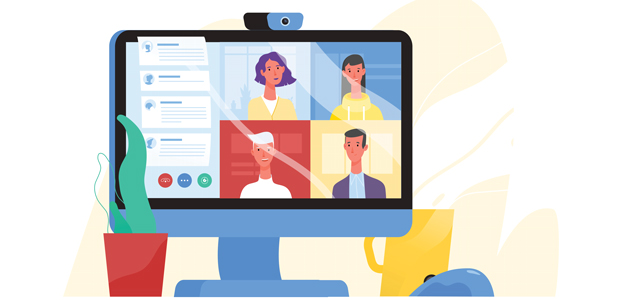
The world feels upside down, right? Mankind is not meant to stay locked inside. We need wide spaces, open-air, opportunities and horizons. As the world stopped and placed us in a timeless lethargy we find it hard to remain optimistic. The same question goes round and round in our heads as we stare at the azure of the sky through the window: How is Coronavirus affecting the future of work?
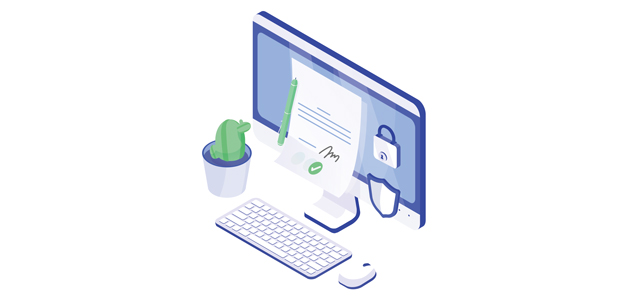
Many startups know what building a culture means in their startup, and most founders will – smartly – work to prioritise that closely to ensure their company culture is warm, positive, and creative. But few know what building a digital culture means. Without a digital culture, your business will struggle to scale, and will struggle to expand internationally. It’s often ignored and that means you can make it a real positive difference between you and your competitors.
OK, we admit it. We’re nuts about leadership. We could talk about it till the cows come home and then we’d settle them in for the night and tell them a bedtime story about it.

Like many good things in life, The Hustle House started out over a couple of G&T’s. Free ones at that. Maybe it was because Fiona had her laptop out in a restaurant on a Friday night, or maybe it was because the waiter felt bad for seating them late. Whatever the reason, the free G&T’s set the tone for a discussion on possibilities, on the notion of leaving behind the comfort blanket of corporate life and taking the plunge into the start-up world.