Features

A few years back, there was a two-day tube strike in London. As with most tube strikes, it forced stressed commuters to change up their route into work at short notice. When it was all over, economists who looked at Oyster Card data made a surprising finding. About one in twenty commuters who changed up their route on the days of the strike stuck with their new route.

Even in the bleakest of times, entrepreneurs have found a way to innovate and create disruptive products that have enhanced our daily lives or solved a problem. Take the humble chocolate chip cookie, baked for the first time after the Great Depression. During a period of severe economic hardship, this new treat offered some richness and comfort and remains immensely popular to this day.

Over the past few months, the world of business has been turned upside down due to COVID-19. During such unprecedented times, maintaining customer confidence and loyalty is a key focus for companies. The way in which businesses manage its customers throughout uncertain times is often the difference between losing or retaining clients, and ultimately business survival.

Those of us in the recruitment services space are pausing, with a significant heap of excitement and a little touch of alert to perceive how the scene is going to change for us in the coming year. Is it true that we are prepared for 2020?

Every company has its own culture, defined by its values, and governing principles that the leadership and employees equally share. While most people consider culture an unimportant element, it has a real impact on performance, retention and the company’s ability to adapt to changes. A disengaged team will leave founders staring into the horizon alone.

In the weeks following the brutal murder of George Floyd and the global protests it sparked, we saw hundreds of companies posting a black square on social media as part of #BlackOutTuesday – an outward display of support and solidarity to the Black Lives Matter movement and the black community.

Have you been toying with the idea of building up a tech company that could one day match the likes of Google, Apple, or Facebook? Well, this may seem a dream too far-fetched, but nothing is impossible with the right strategy, skill, and vision.

Many progressive startup founders choose to incentivise and reward their early hires with equity. The key benefits of a share scheme are that employees become more productive, more loyal, and more aligned with the company’s goals.

The UK’s recent lockdown has seen a surge in demand for on-demand. By addressing one of the most challenging aspects of lockdown, food delivery services alone have experienced a 29% increase in popularity, and even industries historically steeped in tradition – such as theatres, pubs and restaurants – have had to embrace on-demand options. Digital businesses, in collaboration with more traditional high street counterparts, have kept access to services viable during the pandemic.

The COVID-19 pandemic has massively accelerated the pace of change in the business world. Leaders and employees have had to adapt to operate in a challenging environment, where the only certainty is change. Not only have organisations had to rapidly adjust to the changing needs of its people, customers and suppliers, but it has also navigated the financial and operational challenges. This has led to many businesses prioritising the now, focusing on reshaping its operations to stabilise revenue and align with short term demand.

Until recently, for many smaller businesses, their website was purely a shop window with few, if any, transactions done through it. However, thanks to social distancing measures it has now become the primary means of business for almost every company. Ensuring your website is not vulnerable to hackers and other criminals is therefore more important now than ever. The crippling reputational and financial cost of a cyberattack can put a small company out of business.

At the start of 2020, my aspirations looked very different. In January 2020, I was geared up to go to the gym three times a week. The year was looking bright and I was ready to step things up. Now, I just want to get the battery on my watch fixed.

One of the biggest trends in software development has been the rise of Software as a Service (SaaS). With SaaS, vendors and customers follow a pay-as-you-go subscription model, which eliminates the large upfront payment and aligns their incentives more easily: vendors get more recurring revenue while customers are freed from having to host and maintain their own applications.

I was young when I realised I came from a family of businessmen. At the age of eight, my paternal grandfather had been engaging in business deals between Africa and Belgium. One of my uncles had also started an import-export business based in Brussels. Then when I was ten years old, my father jumped on the bandwagon and launched a business engaged in the export of exotic meats from Botswana to the EEC. This is what began to pique my curiosity in business.

Technology, especially new technology, has always had something of a divisive effect; that is it can be seen as black or white, working in good ways or bad. If we look back in history, any technological advance is greeted with great enthusiasm by early adopters and shunned and ridiculed by those with a more traditional outlook on life.
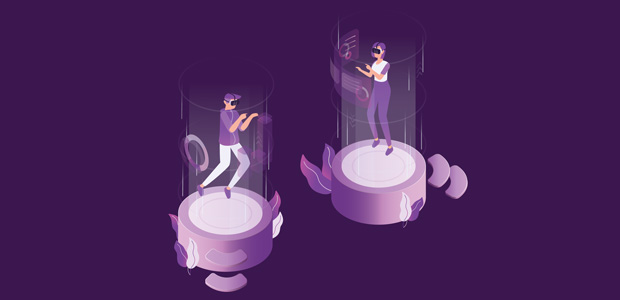
Just as monetising mobile was the biggest opportunity of the previous decade, monetising the 3D worlds is the biggest opportunity of the next decade. It’s time to get onboard. From radio to telephone, TV to desktop computer and now mobile, the last 150 years have been filled with technological progress that has transformed our private and professional lives. Today, we are approaching another media transition: spatial computing – commonly known as immersive technology, XR or VR/AR.

While more established businesses might be unnerved by the prospect of homeworking becoming the norm, startups are in the privileged position of being able to adapt to a ‘virtual’ workplace with relative ease.
The 23rd of June this year marked four years since the UK’s EU membership referendum, and the rest of 2020 will likely see some decisive action on the UK’s intention to leave the EU as a result. Much has been written over the last four years about the UK’s currently gilded status as the preeminent global hub for financial services and fintech, and the risks of the UK losing this status to another European competitor once Brexit happens.

Scooploop is a social media neighbour and community networking site. It is a platform that you can use for your business, charity or personal use, and lets you join in with conversations, find out local information and get to know people that you may not have met yet.
Identifying your ideal client is one of the most difficult things, and yet the most important thing to do for your business. Before I start going into the how, let us spend a few minutes thinking about the why. Why does everybody bang on and on about this ideal client business!? Believe me I used to feel the same way. Then one day it clicked into place.