Features

Over the past few years, we have been plunged into a working life of makeshift desks, online meetings and working predominantly alone, often from home. Managers and their teams have adapted quickly to conducting the majority of business remotely, becoming rather adept at doing so.

Welcome to a new series of articles for Startups Magazine. In this series we will look at some of the more common challenges that are faced by early-stage businesses and some of the top tips designed to overcome these challenges or, at the very least, to mitigate their worst effects.
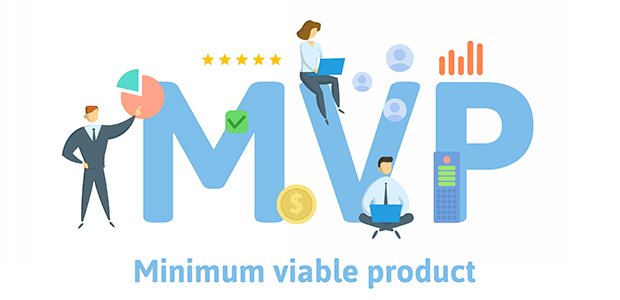
Bringing a minimum viable product (MVP) to market is a landmark moment in the development of any tech startup – and for many founders, it marks the critical first realisation of their idea.
As human beings, we primarily learn from trial and error. If our actions have positive outcomes, we feel compelled to repeat them; a behavioural pattern often driven by incentive and reward. Whether it’s buying one drink to get the second free, or donating old clothes to get money off the next order, incentives are key to understanding people and their priorities.
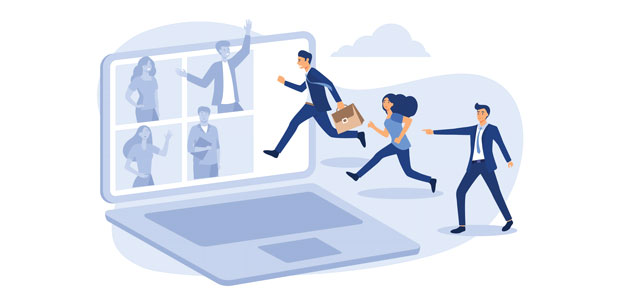
As the saying goes – no-one can whistle a symphony, it takes an orchestra. For all the well-publicised (and valid) advantages of our new-found freedom to work wherever we want, some key elements of our working lives have become a little diminished.

After making a small return last year, 2022 London Tech Week returned with a bang this year, with a new venue, an incredible line-up of speakers and thousands of people and companies there to connect and learn about how technology can make a positive change and impact.

In this era of digitalisation, data analytics has made it easy for businesses to understand the needs and preferences of their customers. Innovative workplace technologies are swiftly hitting the market, enabling organisations to adapt and prosper in a constantly digital environment.
Following the Queen’s Speech, and years of consultations and lobbying from the micro mobility sector, it looks like the e-scooter industry is in for a bumper year. The vehicles have until now been legal to buy, yet illegal to use on the UK’s public roads except through authorised ride sharing schemes. However, this will now change through the creation of a new vehicle class for e-scooters specifically.

Once upon a time, not very long ago, most businesses upheld an office-centric culture. Demanding boots on the ground, companies were limited to hiring employees that could be physically present five days a week, capping their talent pool and offering little flexibility. Now, in the wake of the pandemic, the seismic shift towards remote working has triggered a borderless working world, in which international companies can hire remote employees located anywhere.
Together employers and employees need to understand, and remove, the barriers in the workplace for greater inclusion for all. Diverse and inclusive workplaces can not only grow your business, but they can also lead to real social change. The desire for more diverse workforces is apparent, with employees strongly supporting organisations that are taking action to create a workplace which is diverse and inclusive.
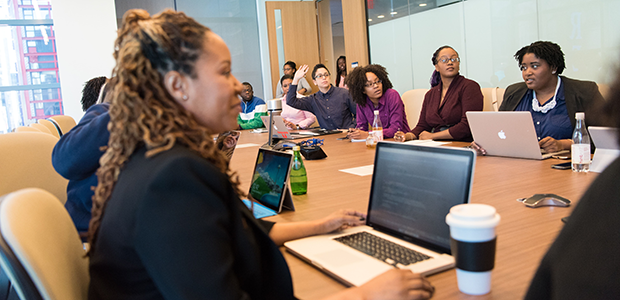
Britain’s SMEs are facing a crisis. In a time where everything possible is transitioning to digital, SMEs are struggling to acquire sufficient skills to benefit from constantly evolving digital technologies. Here, Kristian Torode, Director and Co-Founder of IT business support and communication technology specialist Crystaline, investigates the reasons behind the digital skills gap, and SMEs can become as future ready as their larger counterparts.

Research has shown that global users spend an average of nearly seven hours per week watching videos. Whether they are on YouTube, social media, or embedded on websites, videos have the unique ability to convey an audio and visual message to the viewer. In the world of digital marketing, this two-pronged attack can wield the power of persuasion.
As your startup business grows, so does the need for increased working capacity.

When you’re a startup founder, every decision has opportunity cost. It’s one of the reasons that running an early-stage business can be so stressful because even if you make the ‘right’ decision, there are consequences.
Reverse logistics is crucial for any company involved with logistics, delivery or the supply chain process. To help you get started, today we will list everything you should know about reverse logistics and how to have a successful operation.

Zeinab Ardeshir, Co-founder of PillSorted, the healthtech that’s raised £4.5m to work with the NHS in getting medications to patients more efficiently discussed their journey so far with Startups Magazine.

When it comes to gender equality in the workplace, the financial services sector is regularly in the spotlight. Traditionally male-dominated, progress has been made in recent years to ensure women are encouraged to pursue a career in the financial services, backed by private and public initiatives like the Women in Finance Charter. This is promising, with more women taking on visible leadership roles.

With dramatic increases in online shopping resulting from the pandemic, the e-commerce space experienced an unprecedented boom. Merchants and payment providers had to quickly adapt to and many managed to capitalise successfully, benefitting from consumers’ shift to online purchasing.

Over the last 10 years financial technology has become more than a subsection or merging of two industries, and has developed into a fully-fledged industry in itself.

“Start Up Bromley is fantastic… a role model”, David Smith, Economics Editor of The Sunday Times, said earlier this year when he was part of a panel of entrepreneurs and business influencers in Bromley’s Central Library.