Features

On the scaling up journey, too many business owners fall into the trap of being at the hub of everything– creating an ‘owner’s trap’ that can be difficult to break out of.
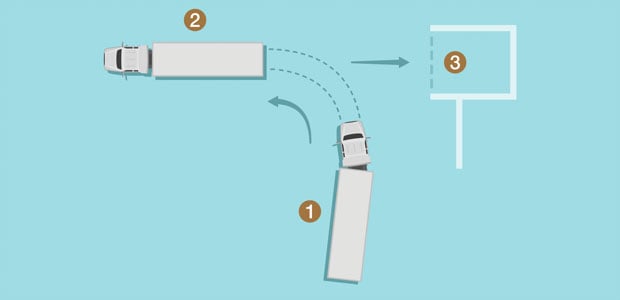
Supply chain and logistics departments often ignore reverse logistics, meaning $1trn worth of products is lost every year in the US alone.

Redesigning a website is one of the most challenging things you can do for your business. It’s expensive, time-consuming, and requires some technical know-how if you want to achieve the best results. But don’t worry. We’ve got some tips to help make the process easier and more successful.

One of the many consequences of COVID-19 is the increase in those working remotely, with almost 50% of people working from home at some point during the pandemic. This type of working has many benefits, as does working in an office, and as we have begun to return to normal this has provided a new challenge for many companies. How do you navigate managing a workforce where some people are remote, some are hybrid and some are full-time office-based? In this article, we will explore some of the best techniques for achieving synergy within a geographically diverse team.

Employers have a legal responsibility to take care of their employees and to make everyone aware of how to handle potential hazards in the workplace. Apart from these legal reasons, they also have a moral responsibility with their employees and with society at large to guarantee the health and safety of the collective.

Data has come to dominate many aspects of our lives, with Big Tech companies tracking almost everything we do online or on our phones. It is estimated that by 2025 we will have created nearly 200 zettabytes worth of data as more and more devices record more and more information. That is an unimaginably large amount of data. A zettabyte is one sextillion (one followed by 21 zeros) bytes. The Bible is just four million bytes.

For some business people, the opportunity to establish an overseas business is irresistible. Globalisation, increased online communication, the lure of international supply chains, and emerging markets are encouraging businesses from every industry to travel to foreign lands in search of new customer bases and better material sources.

How many times have you read the words ‘this tweet was posted in error by an intern’? It happens far too frequently and regardless of whether it’s true or not, it highlights the lack of any strategic approach to social media. Whether you have a large team, are a startup, or all of your social media content is handled by you as the founder – the common mistake many businesses make is by treating the medium as just another sales channel.

The pandemic forced the world to change its working habits, with many working from home full time for the past two years to ensure employee safety. However, over two years on since the pandemic was declared, workplace habits are beginning to change. With 80% of people surveyed by Mckinsey stating they enjoy working from home and 41% of people saying they are more productive, is working from home here to stay? Mark Bond, Group Chair, Mentor and Coach at Vistage discusses.

First impressions count. How a company handles the first few days and months of an employee’s experience can have a serious impact not only on their new team member’s confidence and productivity but on the business’s ability to retain top talent.

Funding rounds and cash injections are fantastic for startups – but what we don’t often see discussed are the business challenges that rapid growth can present. For example, the cash injection following our Series B funding round helped us triple our headcount in just six months – but because our onboarding process wasn’t built to handle so many new employees joining, we realised this simple inefficiency was hindering everyone’s success.

As we celebrated World Youth Skills Day earlier this month (15th July) – the annual celebration of the strategic importance of equipping young people with skills for employment and entrepreneurship as they begin their career journey, we wanted to highlight some tips from business leaders on how we can support the next generation as they enter the workforce.

When establishing a startup, or later on during the whole scale up journey, there is one general concept that holds good, and that is that you should try to under promise and over deliver. When producing a Pitch Deck or Business Plan don’t just focus on the best case scenario and don’t always just go for the highest valuation as there can be many downsides in doing this; raised expectations is only one of them.

Due to the impact of the pandemic, traditional working structures have been upended. During various lockdowns and restrictions, the global workforce had the opportunity to reflect and re-evaluate what they wanted from a career. From more flexible work arrangements to greater autonomy or even a complete industry change, this mindset shift is coming to fruition in the form of the so-called Great Resignation. And employers are faced with the consequences.
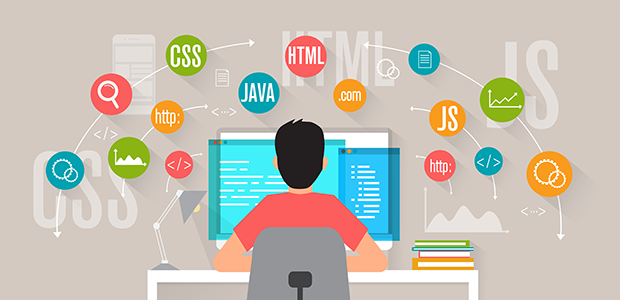
For many software professionals, coding is a pursuit of passion, and being promoted to higher positions is not a top priority. However, the desire for new challenges may leave software developers considering other opportunities.

Even before the global health crisis changed the face of enterprise forever, digital transformation was soaring higher and higher on the business agenda for boards of directors worldwide. When it comes to establishing and holding a competitive edge, digital solutions can set businesses apart with improved operational efficiency and agility.

Hybrid working became the norm two years ago. How has it developed to become a realistic working model for the future?

I have always worked in tech, so have needed to understand the technical nature of the products we are building. This process has generally been over-complicated for me so I now always try to write a guide for non-technical people like me. It turns out that once you understand it you can explain it to other non-technical people much easier.

One of the most difficult things to being a founder or running an early-stage business is the lack of human resources and the sheer amount and diversity of work that needs to be done. This can so often lead to founders getting caught in a cycle of fighting fires and finding themselves not able to have a planned approach, nor to being able to look at the overall picture of what needs to be done and when.

As temperatures soar during this heatwave, at what point does it become too hot to still work?