Beauhurst, the provider of data on growing British companies, has released a report mapping out the UK’s ‘herd’ of unicorns. Coined in 2013 by Aileen Lee, Founder of Cowboy Ventures, the term ‘unicorn’ refers to a young, private company whose valuation has reached £1bn or more.

Security Matters, an Australian-listed Israeli tech solutions company with clients in the electronics, minerals, plastics, security, and agriculture industries, has a solution used in security and defence that can help reduce the volume of garments and textiles that are incinerated or landfilled every year.

For the whole of August, I embarked on a smartphone detox. There were a few reasons as to why, but the most prevalent was a worry around burnout. For the past 18 months I’d be working hard setting up and growing Shine Workplace Wellbeing, while also ensuring I was spending ample time with my two young sons.

The old saying that ‘from little acorns mighty oaks grow’ came about to show that sometimes something very large can grow from something very small.

Before you can begin to hire a team, it’s vital to have an understanding of the laws and principles around employment as a whole, and to have checked your business is ready to take on employees.

It is one of the biggest challenges for any small e-commerce startup. How do they find an operating model that supports dynamic growth.

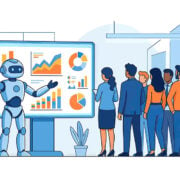
Global compound growth rates of robotics, automation and AI companies are expected to grow by more than 40% per year, with revenue generated by these companies reaching $237bn by 2022 according to some estimates and $498bn by 2025 according to others.

The typical anatomy of a sales team in a modern tech company is that of Sales Development Representative (SDR) as the front line sales person. The ‘warmed-up’ lead then gets handed over to a more senior AE (Account Executive) to close.

“We can no longer continue to operate in this linear B2B / B2C world when it comes to business. People buy people and all relationships are human to human,” Sallee Poinsette-Nash.

We are currently riding the crest of a wave for female representation in the startup community. The past decade has seen more female-founded startups emerging, and more enjoying unprecedented success at the very highest level.

In today’s fast-paced world, standing still is no longer an option. As your business grows and develops, it’s more important than ever to help your people upgrade their skills and adapt to new ways of working.

When I think about all of my conversations and meetings last week there was a very common thread tying them all together, and that was of people or businesses reinventing themselves.

Few industries have felt the impact of technological disruption more than the banking sector. Over the last few years several new kids on the block have emerged to take their seat at the top table and muscle in on the activities of the high street giants by specialising in areas that are being underserved.

As highlighted by last Friday’s global Climate Strike, the world is increasingly aware that we stand on the edge of an imminent climate and ecological crisis. It was heartening to see that, around the world, so many people took to the streets to call on government and business to make serious changes.

The business industry is constantly changing, so it’s imperative to stay at the top if your game in order to keep profits increasing. With businesses always competing for customers, it can be difficult to break through the noise and become a successful and established brand while continuing to grow.

Psychotherapist Noel McDermott is an expert on mental health in the workplace and runs Mental Health Works Ltd. He works alongside employers providing wellbeing in the workplace advice and solutions, teaching them tools to keep staff healthy.

Just as last week’s Mentor’s Journal led me neatly into my article, ‘The Power of Networking’, so this week started off very much in the same vein with all my early meetings either coming from existing relationships in my network, or me utilising my network to join some dots together.

Welcome to the first of a periodic series of articles that will take a more in depth look at some of the topics that make frequent appearances in my Mentor’s Journal series.

New data from SeedLegals, the UK’s largest legal platform for startups, has revealed a rise in the frequency of smaller funding rounds for UK startups, with a tech-enabled model of ‘agile funding’ enabling companies to raise money on-demand.

As part of this weekly series ‘Funding the Wonderful’ in partnership with Crowdcube, every month we will showcase a handpicked selection of five startups which are raising on the Crowdcube platform.