Jo White, Marketing Manager at customer relationship management software specialists Capsule, looks at the top sectors destined for startup success in 2020 and beyond. She explains how startups can leverage the latest technology to build lasting and meaningful personal relationships to deliver the excellence in customer experience needed to make it big.

Quite often the best ideas are born out of adversity, and that was certainly the case for Immersive Rehab, a startup specialising in the creation of interactive and engaging physical and neuro-rehabilitation programmes in Virtual Reality (VR).

The environmental cost of owning the latest phone is huge. CO2 produced by the manufacture of smartphones is predicted to reach 125 megatons in 2020, and by 2040 will account for 14% of all CO2 emissions.

Any business at any stage of its life must be able to adapt and change to changing circumstances. One of the very real benefits that early stage businesses have is that they are small and fast on their feet and are therefore perfectly structured to be able to react swiftly to changing circumstances.

Atypical is combining the finest natural ingredients with cutting edge customisation technology to create luxury bespoke skincare. Each product is individually made and personalised to suit individual skin types, skin goals and lifestyles. Empowering people to co-create their own skincare products with the help of Atypical Cosmetic’s clever customisation algorithm, using real data to create a bespoke product that helps meet their skin goals.

The celebrations continue for International Women’s Day this weekend with the ‘Women owned: Women’s worth event, which is designed to empower communities all across the world. Hosted by Charisma events, this event is designed to encourage everyone to come together in honour of International Women’s day – females, males and non-binary – everyone is welcome to discuss key issues around business leadership and financial tips to help bring success.

UNLEASH has announced the suspension of their upcoming event UNLEASH Spring, London ExCeL, that was due to take place on 24th-25th March, because of health concerns over the coronavirus outbreak.

With the UK currently home to more than 5.9 million SMEs, the likelihood of reaching success for any small business owner depends largely upon their ability to make their company stand out from the crowd. Differentiating your brand from others can be a challenge in any industry, but with the right knowledge and mindset it can be achieved.
The Australian Business Visa Company, has been founded specifically to help UK companies considering their options for international expansion to Australia. With a trend of nearly two in five businesses looking to leave the UK, and Australia receiving over 30,000 personal visa applications each day worldwide and expecting a 50% increase in the foreseeable future ABV co. is well placed to assist UK businesses looking at new options.

You’ve dreamt it. You’ve started it. Now comes the hard part: talking about it. Whether you’re revolutionising banking or taking on healthcare, words are a big part of growing your business. They get investors excited. Bring recruits up to speed. And convince customers to give you a try.
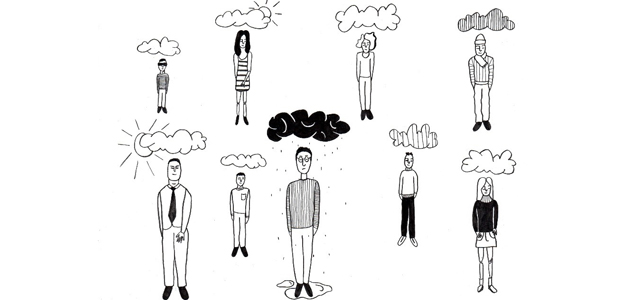
I was 39 when I came out of the mental health closet – about six years too late. Once I emerged, my stress levels were so high they had morphed into a condition called agitated depression, which led to a dramatic mental breakdown, four months off work and an attempt on my own life.

The word entrepreneur was first coined by the French some 200 years ago. Today its meaning and cultural context would be almost unrecognisable to its originators.

As coronavirus continues to spread, more people are being encouraged to work from home in the coming weeks and months. If this isn’t something you’re used to doing, the prospect probably invokes one of two feelings. Either you’ll be looking forward to a break from commuting and queuing for the kettle, or you’ll be horrified at the thought of enduring your own company all day, every day.

Today nearly 2 billion people do not have reliable access to clean water, and by 2030, according to the UN, that number will rise to half of the world’s population. Access to clean affordable drinking water represents probably our planets greatest resource issue.

Around 67% of start-up leaders attribute personal health issues to their working lives, according to research released by leading global consumer health company, RB.

At the start of a company’s life, building a business is all-consuming, especially for founders going it alone. For those with an entrepreneurial background, juggling the quest for investment, continuous product or service development and a huge amount of administration is taxing.

A startling statistic from the European Commission’s: when it comes to European startups, 83% of startup founders are male. At the European Institute of Innovation & Technology (EIT), we want to see more women entrepreneurs: more female ownership of startups, and more businesses owned by women. It’s about equality and social inclusion, it is also about a good economic sense and using Europe’s biggest untapped entrepreneurial talent pool – women.
Nigel Botterill’s entrepreneurial journey began in much the same way as many others. The Founder and CEO of The Entrepreneurs Circle, a company whose mantra is to educate, motivate, help and inspire business owners to achieve more than they ever thought possible, was following a classic corporate path and had forged a very successful career with Barclays, who he joined at 16.

An accompanying survey of 2,100 people also uncovered that over half of Britons would prefer to work for a startup than a large corporation, regardless of the risk. The research was undertaken by the team behind global affiliate network, in the wake of the launch of its Access programme, that allows startups and entrepreneurs to access the affiliate channel.

Some people are afraid of networking and others love it! It is true. We have all come across people that love nothing more than going to networking events and chatting to as many people as possible – some of these really get the benefits that good networking can bring to them and their business, and others simply love networking because it fits their outgoing personality.