
Planet saving startups and entrepreneurs now have just one week to apply to this year’s Postcode Lotteries Green Challenge, one of the world’s largest competitions in sustainable entrepreneurship. Postcode Lotteries Green Challenge rewards British, Dutch, German, Norwegian and Swedish startups that successfully combine sustainability, entrepreneurship and creativity to help tackle some of the world’s most pressing environmental challenges. This year’s competition closes at midday (GMT) on 1st April.
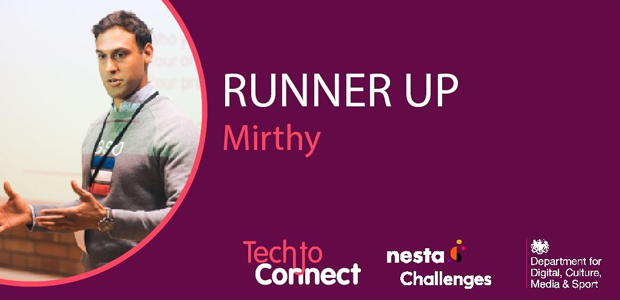
The Tech to Connect Challenge was launched in the summer of 2019, in order to develop early-stage ideas for technology that enable more or better interactions between people. The challenge looked for the most innovative ideas, helping them turn these ideas into prototypes that have the potential for real change.

A science-backed checklist for startups who want their marketing to get noticed.
Startups shouldn’t try and be liked – Instead, they must strive to be noticed and remembered – that’s any new businesses biggest marketing challenge. Why is that?

As the coronavirus pandemic continues to disrupt and dominate our lives, feelings of anxiety are completely normal during times of uncertainty and in some cases isolation. Everyone will be impacted in a different way and it is important to remember that you are not alone. Already there are so many stories emerging of human kindness and compassion and people pulling together to help and support each other.

Whether you employ a handful of employees or your team has seen exponential growth over the past few years, knowing where you stand in the coming weeks and months in the wake of the COVID-19 pandemic isn’t crystal clear.
Every leader has a distinctive emotional signature, which they imprint on every person they meet. That emotional signature is one of the most powerful tools of motivation. How you make other people feel will determine how motivated they are, and that will determine how well your team performs.

The government backed Coronavirus Business Interruption Loan Scheme (CBILS) has been rolled out at unprecedented speed, and the size of the financial packages being made available to support businesses and employees are also unprecedented. But these are also, of course, unprecedented times.

Across the globe, millions of employees are being advised to begin distant or home working, but managing and coordinating a remote workforce is unfamiliar territory for many business owners.

The UK’s tech industry, the fastest growing sector in the UK, will maintain resilience despite the Covid-19 outbreak, according to new analysis from global recruiter Robert Walters.
Dhaka, Bangladesh; 2013 – around 1,200 people died and a further 2,500 people got seriously injured in a garment factory collapse. The ugly side of fast fashion reared its head.

Upscaling can be a daunting task for any business, many will find it difficult to step outside their comfort zone or be reminded daily the risks with investing in new opportunities. While this approach may work in our personal lives, it can be detrimental to new business opportunities as well as the entrepreneurial mindset when it comes to upscaling your business.

With the outbreak of COVID-19 there is increased concern around next steps for businesses, particularly regarding the impact this could be having on supply chains and contractual obligations that need to be met. As the situation evolves and disruptions are becoming commonplace, there is every chance that you may need to find alternative means of carrying out your contractual obligations.

The coronavirus pandemic has turned off the lights in millions of offices, factories and shops across the UK. But for many businesses who have switched to home-working the cost of their now empty property will still need to be met. And that dilemma is now causing growing concern among businesses – many of whom have seen revenue totally stop in the wake of the Covid-19 crisis. Today one of Britain’s leading law firms has advised companies with concerns over meeting the cost of commercial leases to hold ‘sensible’ discussions with landlords as quickly as possible. Harper James Solicitors also advise firms yet to get a plan in place to do so – before it is too late.

These are strange times, unsettling times, and if I am honest this is not a normal question that I overhear much in more normal times, but recently THE question that I keep hearing is ‘do I have to work remotely and what does that mean for my customers?’ or, put another way, ‘does remote working have to mean working remotely?’

Over the last month I have been developing an article about how mental health can be affected by social media, and what this means for you and your start-up. However, there’s something on my mind, and I suppose I must bite the bullet and talk about Coronavirus.

We invest in people that are very similar to us. That in itself it can be a good thing, the problem is that men invest mostly in men! Having spent the last eight years in venture capital investments working with many entrepreneurs during their journey from early stages into growth, I realised that there are differences in the way the women entrepreneurs in my portfolios experienced the fundraising journey.

Congratulations! You are officially moving from the status of startup to scaleup. It’s a big move that brings lots of opportunities, and you have managed it because you have been successful. What that success looks like will be different for different companies. For some, it’s because of sales: either a few big global sales, or in other cases, huge numbers of small scale sales. For others, it will be because you’ve landed investment. In some parts of the world, grants allow a startup to accelerate their growth and really anchor themselves in the market.

As the founder of a startup, you’ll have developed and nurtured a great idea over many months, maybe even years. Perhaps you’ve isolated a problem and worked out how to solve it. Or been frustrated by the lack of options available in a particular sector and hit upon the perfect way to fill the gap.

Is the coronavirus filling your days with anxiety and dread? Are you waking up each morning feeling like it is all a bad dream? Here’s how to restore a balanced mindset and get back a level head in the current circumstances.
Cloud computing might be a relatively mature technology now, well-adopted by many types of SMEs, but changing your cloud strategy can still be daunting. Do the benefits of multi-cloud outweigh the costs? Is it worth the additional time spent managing multiple services, especially for a smaller business? I think that it is, and here’s why.