
Scotland’s CAN DO Innovation Summit, held virtually for the first time on 3rd February, attracted 1400 registered delegates including entrepreneurs, academics, investors and innovators from across the globe.

I feel like a mother daughter-bond is like nothing else out there, and I’m sure Loral Quinn and her daughter Eishel will agree as they co-founded Sustainably back in 2016.

Over the next 12-weeks, 110 women who are working to launch and grow sustainable businesses in the media, digital, technology and creative sectors in the North West will be supported to kick-start their careers as freelancers.

Over the last twelve months companies have had to adapt quickly to new situations they may have once been unfamiliar with. If these experiences have taught us anything, it’s that if you respond quickly and efficiently to changing surroundings, you can continue to excel.

If we learnt anything from the past year it’s that having control over cash flow is the cornerstone of business health. The impact of COVID and other external factors like Brexit mean that things are constantly changing for small businesses, meaning they have to continuously adapt. This means that you will need to consistently map your cash flow and review your forecast as things change. For example, things like furlough coming to an end in April will need to be factored into forecasting.

Creative workspace and accelerator, Huckletree has announced the opening of applications for its eighth cohort of the Alpha Programme, a 12-week pre-seed accelerator designed to turbocharge the launch and growth of the most exciting and impactful businesses in the UK and Ireland.

Satori is transforming healthcare in the 3D printing industry by offering accessibility, cost, and time efficiency through its affordable, desktop-sized, professional 3D printer, the ST1600.

A new app that encourages people to make small but impactful changes to their lifestyle has launched in the UK, guided by behavioural science and designed to instil habits beneficial to the planet. The app, called Ailuna, allows users to be more aware of their environmental impact, and take science-backed steps to a greener lifestyle.

Renowned technologist, investor, podcaster and business author, Arunkumar Krishnakumar a Partner at Delphos International, is releasing his second book – Restartup: A Founder′s Guide to Crisis Navigation – on the 4th of February along with his co-author, Maxson Tee.

With COVID-19 restrictions rushing businesses to channel their resources online, 2020 marked an unprecedented turn in building an efficient marketing strategy with great emphasis on premium website content.

In the current pandemic, many businesses are facing financial hardship. A survey conducted by The Federation of Small Businesses show that just under 5% of 1,400 firms taking part in the study expected to close this year, equating to 250,000 small enterprises nationwide.

Yorkshire-based tech startup, socialsendr, has evolved the functionality of its platform introducing LinkedIn to its social portfolio to better support clients with their social media marketing.

The world’s first causal AI platform, created by deep-tech scaleup causaLens, is being leveraged by financial services companies (including Aviva Investors, 2IQ, TIAA, CLS Group and a plethora of prominent hedge funds), to automatically extract valuable causal insights from financial data and boost the profitability of their trading strategies.
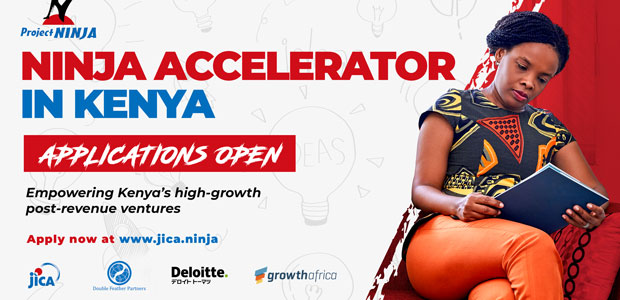
As part of its Next Innovation with Japan project (Project NINJA), the Japan International Cooperation Agency (JICA) is expanding its startup accelerator program (NINJA Accelerator) to Kenya, scheduled to take place in Nairobi on 7th April, 2021, in partnership with the Double Feather Partners (DFP) / Deloitte Tohmatsu consortium, and GrowthAfrica.

Small and medium sized businesses that have suffered due to COVID-19 don’t expect to recover to pre-pandemic levels until summer 2022, according to new research published by Santander UK.

If this pandemic has taught us anything, it’s that change and disruption on this colossal scale, really has the potential to highlight the pros and cons of big business vs startups. While the startup cons no doubt include a vulnerability to externalities, through factors such as short cash flows and unreliable customer books, the flip side is the flexibility with which to grasp the new opportunities.

As we enter a second year of the COVID crisis, many founders are struggling to manage their finances amidst falling revenues and enforced redundancies. Whilst government support is being made available to businesses, there is plenty of uncertainty about the future and how to navigate through serious economic volatility.

The Christmas ads are now a distant memory but what we learned from the 2020 line up was that brands were, more than ever, vying for consumer attention at the end of what was a brutal year for business.

Israeli agri-tech startup, Edete Precision Technologies for Agriculture is due to begin commercial scale field trials of its artificial pollination technology in almond orchards covering dozens of hectares in the Australian state of Victoria. This follows the signing of an agreement with one of Australia’s largest almond growers. The field trials are due to commence in August when the almond trees begin to blossom.

A new survey by Arctic Shores has uncovered revealing insights into the candidate application process since the pandemic, shining a light on the challenges currently faced by hiring departments in the new world of remote working.