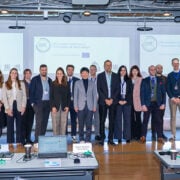
The fifth edition of Digital Enterprise Show confirms its celebration in person at IFEMA, bringing together the entire technological ecosystem. DES2021 will guide Spanish companies to take advantage of NextGeneration EU European recovery funds and find the technological partner to drive the transformation of their business model.

New data released today by Innovate UK, points to a dramatic increase in the number of young people setting up their own businesses in the last decade – with the number nearly doubling (98% increase) from 2009 to 2020. What’s more, despite the pandemic – and in some cases inspired by the impact of COVID-19 and the subsequent lockdowns – numbers continued to jump in 2020, with a 15% increase in the number of young people starting their own businesses from 2019.

Yeo Valley Organic, Britain’s largest organic brand, has created scannable QR codes that have been shaved into the hides of all 400 of their own British Friesian cows, to celebrate the national rollout of their connected packaging.

Asides from having a great idea, one of the most important things you need to do as a startup, is consider your budget. It’s important to have a clear understanding of what you can spend, what you can expect to make, and how the two balance out. Without undertaking this process, you risk ending up in a situation where your finances are out of sync, causing significant issues for your business.

Last week we officially reached the milestone of a year since the first national lockdown. With lots of change and uncertainty – both at home and work – many of us turned to Google for advice and support.

Small businesses have been some of the worst affected by the COVID-19 pandemic, lacking the resources needed to recover in the same manner as bigger companies. The new Help to Grow scheme announced by the UK Government plans to help small and medium enterprises (SMEs) develop their digital competencies and boost their profits, while helping the nation expand its technological infrastructure. Here Neil Bellinger, head of EMEA at automation parts supplier EU Automation, explains what the new initiative means for the manufacturing sector.

A recent study cited by a leading Fintech publication found that whilst 30% of the fintech workforce is female, only 17% of senior fintech roles are held by women and just over 5% of founders are women. These statistics are pretty shocking as Fintech is such a dynamic world of discovery and innovation.
Cash flow is the key motivation for SMEs applying for finance, according to an exclusive index of UK brokers by Europe’s leading small business lender iwoca.

Global car-sharing startup Getaround has already removed 10,000 cars from the streets of Paris. Could your city be next?

UK startup itsettled is looking to help SMEs struggling under the burden of late payment with their recently launched #GetTheUKPaid initiative.

SDG Monitor started from a common mission of three sustainability professionals to help the United Nations to reach the Sustainable Development Goals (SDGs) by 2030. SDG Monitor is a true startup of COVID-19 Pandemic.

Fintech, Foodtech and Healthtech companies are defying pandemic pressures and driving strong hiring growth among British startups and scaleups, according to new research from leading start-up job site Work in Startups.

The 2021 workforce will have a completely different composition, facilitated by tools such as Global Teams, just launched by people management operating system Employment Hero.
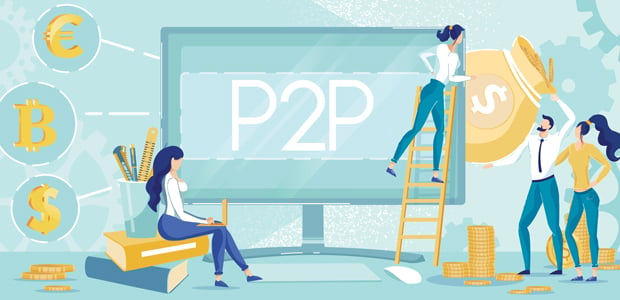
Until the early 2000s, banks held almost a monopoly in credit. Around that time, enabled by the emergence of the internet a new type of digital lending started to emerge and with it a new way to invest in private debt: peer-to-peer (P2P) lending. This innovation allowed retail investors to put their money in small loans so that consumers could achieve their financial goals. We spoke to Kimmo Rytkönen, CEO and Founder of Income Marketplace about the rewards of P2P investing.

Small businesses who want to improve their data quality and become better data-informed, but may lack the right skills to execute a successful strategy in response, have received a boost with the launch of a new Data Scientist degree apprenticeship by the University of Nottingham.

When you think about TikTok, chances are you’ll picture 16-year-olds girls dancing to the latest songs, or a video of a cute dog doing a trick, but the reality is that the social media platform is so much more than that.

One of the most common questions that entrepreneurs ask at the early stage of a company is – how do you secure funding? After all, it’s one the most crucial steps in developing a company and will give entrepreneurs the ability to hire employees, develop their product and take the company to new heights. And as the company matures, the process can be slightly different along the way – there are different objectives when raising seed funds, versus Round A, B, and C because at each stage the company itself is at a new level.

In today’s technology powered world, the management of businesses across every industry, no matter how big or small, is heavily reliant on digital platforms and software development.

Social media, a once frivolous and niche messaging tool developed by side-line internet users, is notoriously difficult to predict when it comes to its evolution and future.

The COVID-19 pandemic has caused disruption and setbacks for many, but it has also presented opportunities for others to turn their part-time passions into fully fledged businesses.