With restrictions set to lift imminently, allowing workers a return to the office, workplaces will no doubt be quickly planning their summer office parties. At Just Eat for Business, we’ve already seen a spike in companies planning their get-togethers to increase the social interaction and employee wellbeing we’ve been lacking post- work from home.
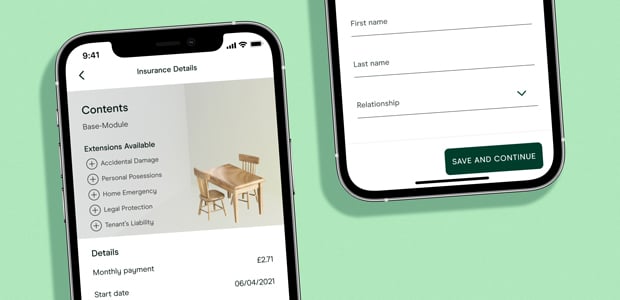
Digital insurer Getsafe recently reached two significant milestones: With 10,000 customers in the United Kingdom and close to 200,000 customers in its native market, Germany, Getsafe is now the largest neo-insurer in Europe. The company currently offers contents insurance with five extensions in the UK and a larger product portfolio in Germany.
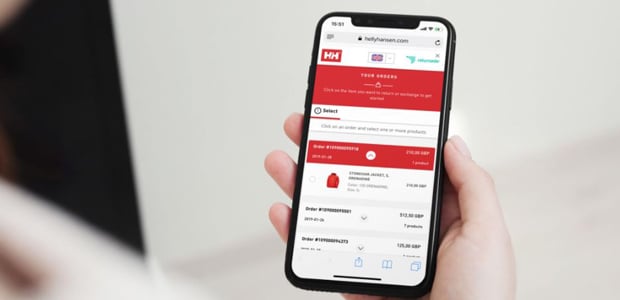
Over the course of the last year and a half, online shopping and e-commerce has, at times, been the only way consumers have been able to shop, leading to record breaking rises in people engaging with online retailers. This record volume of e-commerce purchases in 2020 has resulted in a corresponding surge in returns made by consumers who have either changed their minds or aren’t satisfied with their purchase after delivery.

Companies providing services like home workouts, high-end meal kits and even crochet tutorials all have boomed during the pandemic. Not everyone has had a smooth path through the pandemic though; businesses have had to become more agile and invest in technology. Many entrepreneurs and individuals have adjusted their attitudes, spending more time on worthy causes or making sure they are planning for their own futures.
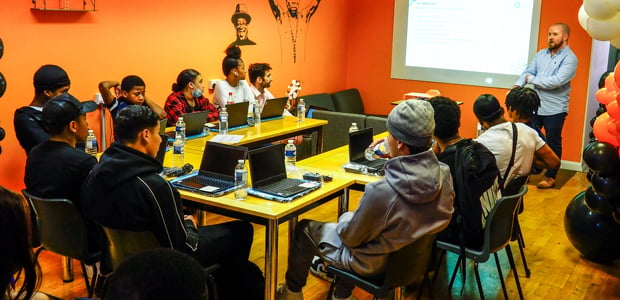
The UK’s first-ever ‘Laptop Library’ has launched to help support and educate the nation’s most underprivileged children. The initiative, launched by grassroots charity CC Foundation in partnership with leading IT service provider Totality Services, will give hundreds of children access to use and borrow laptops.

Digital Catapult’s Machine Intelligence Garage programme is onboarding 10 new pioneering startups who are pushing the limits of machine and artificial intelligence to solve everyday problems.

According to a recent survey, just 29% of the UK’s manufacturing and engineering workforce is made up of women. Now, while this highlights a step in the right direction when compared to figures from previous years, leading multi-disciplinary engineering firm, adi Group, believes more must be done to secure the industry’s workforce for tomorrow.

Greyparrot, the London based tech company disrupting the recycling industry by providing waste analytics to monitor, sort, and audit waste at scale, was selected among hundreds of candidates as one of the World Economic Forum’s “Technology Pioneers”. Previous to founding Greyparrot in 2019, co-founders Mikela Druckman, Ambarish Mitra and Nikola Sivacki had built some of the most cutting edge deep-learning computer vision systems in the world. Now they are committed to applying this technology to the recycling sector, extracting the value of materials that would otherwise end up in landfills, oceans or incinerated.
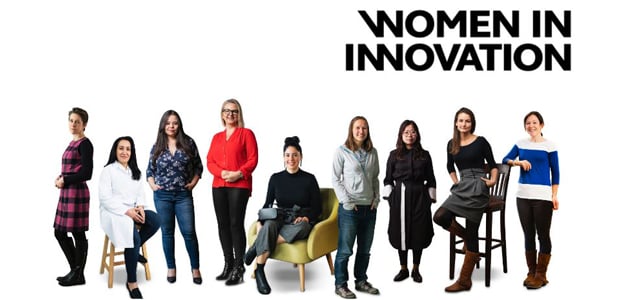
Innovate UK is releasing new data which reveals the proportion of women setting up businesses has not only remained stagnant at just over a quarter of the total number of new businesses for the last decade, but seen a slight dip since 2010/11 when it was at 28.7%, compared to 27.3% today. Innovate UK’s Women in Innovation Awards looks to help balance the playing field in business by providing more support to female entrepreneurs from across the UK.

The commute as we knew it may be gone for good, new research conducted by e-bike subscription service DASH Rides reveals. DASH and Sapio Research surveyed over 2,000 city-dwelling, full-time workers, who used to work primarily in the office and now work primarily at home, and discovered that three quarters of those returning to the office will be actively avoiding public transport or seeking new ways to travel.

If you have ever replied to a ‘what was the number one song on the day you were born?’ viral post, taken a personality quiz without checking the terms and conditions or just accepted a friend request from a stranger then you could have opened yourself up to fraud.

Are work ethics losing their relevance to the pursuit of profits and ambitious objectives of growth? In contemporary times, there is a paradigm shift in the hiring strategies of most organisations. The great focus of business owners is to hire employees with versatile skills and creative perspectives. Without a doubt, this is the way forward to create an agile and competent workforce. As a business owner, you need an accomplished workforce exhibiting inspiring skills. However, what about their work ethics? Are you underplaying the significance of work ethics?

As we approach the end of compulsory remote working, many businesses are retaining some element within their operations. Remote working technology enabled virtual connectivity when physical proximity wasn’t possible, but how has this affected business operations in the long-term? Here we explore the impact of remote working technology on business and society.

There are three essential elements to a startup’s communication toolkit. All help to sum up what you do in an instant, engage potential partners, customers and investors, and intrigue them into starting a conversation about working with you.
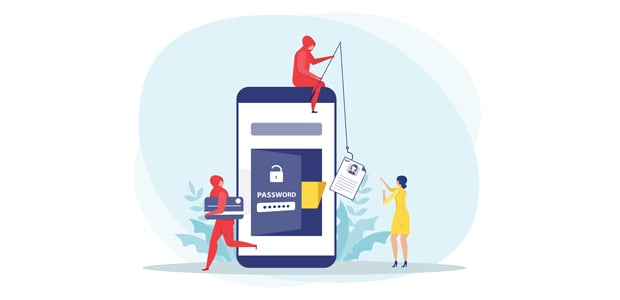
Fraud has always affected business and it can be particularly devastating for those companies that are in the start-up phase. A recent report has found that fraud (particularly cyber fraud) has increased by 28% in the last year, largely driven by the Covid-19 situation. This article looks at the warning signs, what might be done to stop it and what to do if you expect that it might be happening.

The Hustle Awards 2021 is very nearly here and we cannot wait to celebrate with you all next week – whether that be from the lovely Finsbury Business Centre and Clerkenworks or from the comfort of your own sofa. From startups to freelancers, The Hustle Awards aims to recognise all the founders, co-founders and team members that have disrupted, impacted and taken a risk or a leap of faith with their business. But who has made the shortlist…

WeVee, the first fully-integrated electric vehicle leasing platform, which launched in the UK (home to Cazoo, Cinch and Carwow), is now valued at $14m after its latest investment injection to support the global expansion of the eMobility lifestyle platform, allowing it to broaden its service lines.

New customer demands and fierce competition: the pressure on companies to innovate is high across all sectors – and established companies and young startups alike are struggling to meet these demands. Increasingly, this is leading to cooperation between corporates and startups. In this way, the speed and agility of young companies meet the professional structures and long-standing know-how of established companies. Both startups and corporates can benefit from each other’s strengths in such a collaboration and ignite a firework of innovation together.

“It’s easier to act your way into a new way of thinking, than think your way into a new way of acting.” said Jerry Sternin in The Power of Positive Deviance: How Unlikely Innovators Solve the World’s Toughest Problems.

You’ve come up with a business idea, created your presentation and you already know what needs to be said. The very next step is to find potential investors and persuade them to fund your business proposal. In order to do that, you need to be able to effectively present your business.