Features

More people than ever before are using their smartphones to browse the internet – 90% of the world’s internet population in fact! As such, it is essential that start-ups are equipped to deal with the demand by optimising their websites for mobile and developing apps to help reach and engage with customers more effectively.

The COVID-19 pandemic has done no favours to charities in terms of funding, with a study in late 2020 showing over 80% of charities will have a lower income this year, impacting those they help the most.

Regardless of what business you are in, a data security breach is an increasingly likely scenario that all businesses must mitigate. With escalating cybercrime, the widespread growth in Cloud computing, and the explosion in mobile devices and varying tech and app use amongst employees and partners; key aspects of enterprise security are now, and will forever be, beyond our control.

Sustainability in business practice is becoming more of a necessity than ever before. Customers are making moves to living a more sustainable lifestyle and therefore expect business leaders and their companies to follow suit. It can be a minefield knowing where to begin when it comes to acting sustainably, it’s an incredibly broad term and can be confusing to know what steps to take first.

Arguably there has never been a better time to start your own salon business, with more bricks and mortar locations becoming available throughout lockdown, the timing for finding that prime location to set up your salon business could be ideal.
At St. James’s Place, we work with a large number of fund managers within the UK venture capital industry, notably in the tax-advantaged space, investing across many different sectors. This provides us with a unique insight into the small business ecosystem.

When I hear that female founders have been the hardest hit due to the effects of COVID-19 and the UK’s numerous lockdowns, it pains me greatly, not least because, studies such as The Rose Review estimate that if women in the UK were founding businesses at similar rates as they are in other countries, about £200bn would be added to the UK economy!

Whilst many people enjoy watching the sparring between business angels on TV this type of investing may feel like something for others i.e., the millionaire business owners. Because of this, rather than exploring this exciting asset class, we put our investments into safer options we are more familiar with such as mutual funds and stocks. Gavin Heys, Envestors Private Investment Club explains.
Legal & Governance Hub, are a business law consultancy supporting startups, scaleups and SMEs. I am Gulnaz the Founder who trained at a startup boutique law firm, which was my first real exposure to learning about business. I worked in marketing, finance and even sales with my own client following! Starting my career in a startup was a great move, I had lots of responsibility and autonomy.

Closing the skills gap in organisations and industries around the world has a key role to play in our pandemic recovery. Factors such as geography, poor infrastructure, financial hardship and a lack of public resources are preventing many from accessing training that could transform their futures. Yet recent research shows that if digitally lagging sectors—such as manufacturing, mining, healthcare and education—double their use of digital tools, Europe alone could add €2.5 trillion to its GDP by 2025.

As Loneliness Awareness Week just took place (14-18th June), Naomi Thompson, Head of Organisational Development at Benenden Health, wanted to explain how employers can support team members struggling with loneliness as we slowly move away from COVID-19 restrictions.

According to MoneySuperMarket, around 22% of the UK’s two million freelancers are busy delivering essential business support. As more companies embrace hybrid working models, recruiting external consultants can complement the skills of in-house staff. Here Ashmita Das, CEO of Kolabtree, the freelance platform for scientists, explains how small and medium-sized enterprises (SMEs) can integrate freelancers successfully.

When launching their business, entrepreneurs get very excited at the prospects of finding clients, but also anxious about how to do it. While there are many priorities for them in terms of business operations, building up the right teams, or maintaining their cash flow, organic marketing isn’t one that should be neglected or postponed.

The UK’s National Health Service has been designed primarily by men, for men. Even in 2021, the majority of those in senior leadership positions (63%) are male, a startling figure when you consider that almost 80% of the NHS workforce are female.

If office space providers are to survive the shift to greater flexible working, they need to keep up with the increasing demand from businesses for shorter, flexible contracts. Long term, restrictive office commitments no longer appeal to SMEs, who are increasingly looking for complete flexibility in their requirements, to scale up and down as required, and remain agile.
Do you believe the next generation of tech giants will be European? At Scale-Up Europe, we do. That’s why, a few days ago, our group of stakeholders from across the world of European technology innovation presented a shared ambition for the continent to house 10 technology companies valued more than €100bn by 2030.
Over the tumultuous year we’ve just faced, productivity has been challenged in ways most had never considered. The strain of financial, career and health uncertainty has been a formidable foe for employees and employers alike. As we celebrate World Productivity Day this year, we do so with the learnings of the past 12 months under our belt.

Starting over with a new business idea or career path is never easy, but sometimes it is absolutely necessary (this applies to other things in life as well). I have started over multiple times. I quit a stable job in HR to start my own business. People called me crazy, but I followed my dreams and persevered. It was anything but easy, but it brought me to where I am today and I wouldn’t change that for the world.

A company’s brand is so important. It’s the business philosophy, its culture and ethos, its products, its team, the customer service, its corporate reputation.
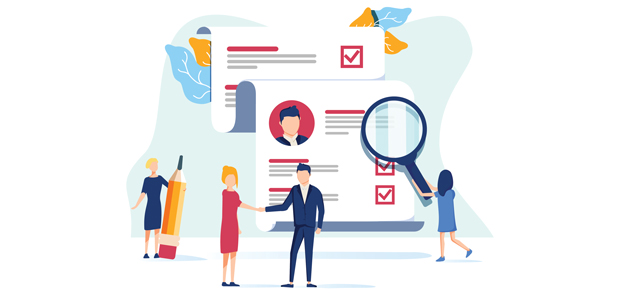
Writing a compelling job ad to entice graduates can be challenging, especially if writing isn’t your strong suit. How can you create the best possible job ad to attract the best talent to your business? Based on many years of experience, I have put together the perfect formula to attract stellar talent.