Features

Do you ever wonder how long you spend scrolling on social media platforms? Or, have you ever found yourself deep in a TikTok binge until the early hours of the morning? It’s a remarkably common occurrence, and it’s not your fault: social media apps are intentionally designed with addictive features. This comes at a big cost for both our physical and mental health.

Lorna Green, Director of Enterprise and Growth at Innovation Agency – part of the AHSN Network, is an integral part of the NHS’ efforts to drive innovation into the UK’s healthcare systems.

The impact of the global pandemic on UK M&A has been somewhat mixed. Following an extremely volatile period last year, which saw many businesses struggle to navigate the new norm and many others successfully ride out the storm, we have seen a strong rebound so far in 2021.
During the pandemic, virtual events have given everyone a chance to socialise with loved ones during difficult times. It has also helped work events continue in a new dynamic, with many employees favouring the virtual experience over in-person events. But now, in a post Freedom Day world, there is a strong desire to return to physical events.

Not a people person? Prefer animals to folks? Does the prospect of networking leave you cold? You’re not alone. A study by Harvard academics found that networking made some people feel dirty with an aching desire to brush their teeth!
There are several tactics and approaches which can help leverage a smooth scaleup process even in unpredictable times. Taking a business from startup to a rapid-growth-scaleup has always been challenging. There is a reason that not every startup can become a ‘unicorn’.
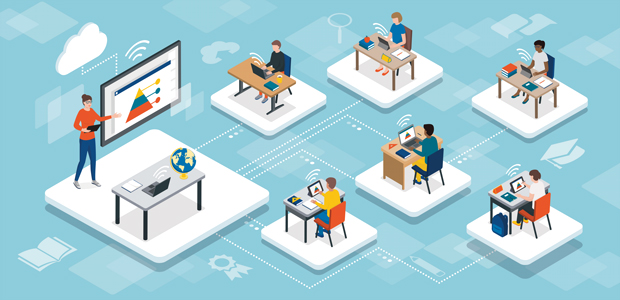
In response to the pandemic, the traditional schooling method was transformed. As children transitioned to home learning, technology had to step up its game to support parents and teachers in continuing their children’s education at a regular pace.

There are many upgrades you can make to your workplace that make your startup a great place to work. However, there aren’t many workplace upgrades like the following tech items that improve the quality of your service while enhancing productivity and company profitability.

It’s easy to understand the alure of starting up and running your own business; the highly attractive personal, professional and financial rewards bring a great degree of job satisfaction. But there is no doubt that the pressures can sometimes be all-consuming.

At this year’s Online Growth Summit hosted by Blooming Founders, Inga Driksne, operations advisor to early-stage founders, with a wealth of experience in supporting founders during the hiring process, shared her thoughts on recruitment best practice for startups and small businesses who are looking to embark on their first hires. Startups Magazine reports.

Apple announced big updates for iCloud and iOS 15 at the company’s annual Worldwide Developers Conference this June, with a particular focus on privacy and data tracking. Newly unveiled features from the tech giant include the ability for users to load remote content privately without disclosing their IP, as well as using ‘burner’ email accounts to sign up for email offers.

Scaling your business, whilst maintaining efficiency, is possibly one of the hardest things to do in performance advertising. The reason for that is down to the way the platforms are set up. There are two traditional scaling methods – horizontal scaling and vertical scaling.

The billions promised by the government for catch-up tuition sounds like a lot of money, but when you work it out on an individual basis it’s barely enough to cover a few hours of one-to-one tuition per student. I believe that edtech rather than tuition provides the answer to meet the catch-up challenge, and his micro-tuition experiment proves that this approach can work.

Since the 1990s media artist Chris Hales has taken a solo DIY approach to create interactive film installations and performances that have been shown worldwide. His current interest is in customised film, in which user data (a video grab, a voice recording, selfie photo, or text responses) is incorporated into a short film in humorous ways, giving a personal experience for each user.

2021 has seen more new businesses being registered by women than ever before. I believe that when you truly set your intention to build your own business, and when you determine that nothing is going to stand in your way, you are already one solid step on the road to success. However, for women hoping to become mothers, or who already have families, the challenge of running your own business and bringing up a family at the same time is a complex one. Unless you have a stay-at-home and supportive partner, there will always be additional challenges.
The education sector is often called out due to its difficulty to implement change – whether that is because institutions have legacy systems in place, do not have the time it takes to adopt new technologies, or the affordability aspect. To understand how the education industry as a whole can take the necessary steps forward and achieve its long-anticipated digital transformation, we must first look at the key barriers holding it back.
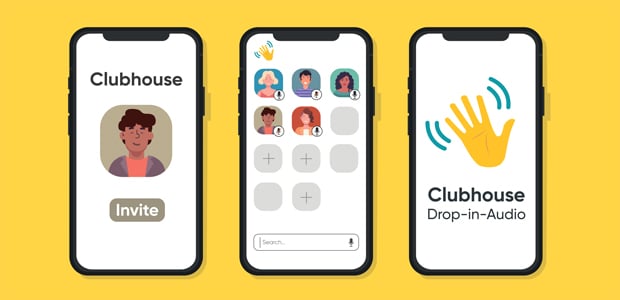
You might have, in fact you most likely have, been hearing a lot of stuff about Clubhouse over the last few months. Although this audio-first social media platform actually came into existence well over a year ago, it has featured in the marketing and branding world’s Zeitgeist most heavily since the beginning of 2021.

Sanofi’s acquisition of Cambridge UK-based, Kymab in early 2021, in a deal worth up to $1.45bn, was the largest sale of a UK biotech company on record, but was soon dwarfed by the $6.9bn acquisition of GW Pharmaceuticals by Jazz. These announcements drew global attention to the UK life science and healthtech sectors, and form part of a growing trend in these industries for increased funding, commercial and M&A activity.

There is no doubt that consumer demand for sustainable options is on the increase. It is now becoming a huge factor in the choices buyers make when shopping for goods. A recent survey conducted by Deloitte found that 32% of consumers are highly engaged with adopting a more sustainable lifestyle, with 61% of respondents saying they have limited their use of single use plastic, and 34% have chosen brands with environmentally sustainable practices and values.

Whether you are running a fledgling startup from a home office or heading up an international company employing tens of thousands of employees across the world, the challenge over the past 16 months has been the same. Those business owners who successfully navigated their business through the COVID-19 pandemic should take pride in coming through such an uncertain period in one piece.