With the IMF warning that the ‘Great Lockdown’ global recession will be the worst since the Great Depression, organisations are being forced to reset and reinvent faster than ever before. The race is on for entrepreneurs and business owners to craft new plans, develop new products and deliver new solutions in order to survive.

Quickly responding to the impact COVID-19 and lockdowns are having on tech startups, Capital Enterprise has collaborated with OneTech and Mindful Team, with support from J.P. Morgan, to launch the Startup Resilience programme. Over six months, startup founders will be provided everything from webinars and community slack channels, to mastermind sessions and accountability groups, to be helped through this period of uncertainty.

Unfortunately, the Covid-19 pandemic continues to take its toll on our everyday lives, therefore, it is important we maintain high spirits and support each other and our local communities as much as possible. As non-essential stores remain closed until further notice, there is little we can do to help with this reality. However, for those small local shops and convenience stores that continue to provide us with our essential items and necessities, there are steps put in place to help support their success during this tough time.

During Mental Health Awareness Week last month, in the UK and for seven days, the nation paid itself some attention and shone a light on the impact of work and COVID-19 on our wellbeing. For the rest of the year, however, we must continue to look after each other and our mental health in and out of work.

Death. A big topic, and generally as much a part of the everyday news cycle as politics or celebrities. From natural disasters to major atrocities, the subject never really goes away. That being said, it feels quite different at the moment. With death tolls now a media centrepiece, it’s playing a much bigger part in public conversation. At Farewill, where our 90-strong team of designers, engineers and psychologists are working to bring the death industry into the 21st century, we’ve noticed a real change in the way people are discussing and dealing with it.

Wearables allow users to monitor their health, receive alerts for potential health issues, and preemptively contact a doctor. With many people housebound during COVID-19, wearables help people track daily exercise habits and maintain a healthy lifestyle while many gyms remain closed. Here, Emily Clark, Content Developer for The Manifest looks at the market for healthcare wearables and discusses how people use wearables for healthcare and the limitations of these wearable devices.

The world over, money related bundles have just been reported by countries in an offer to re-establish their economies in the midst of the coronavirus pandemic holding nations over the globe.
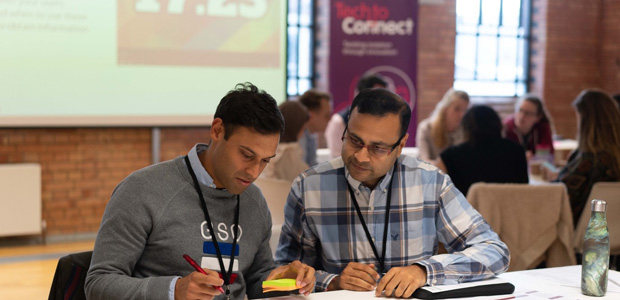
The Tech to Connect Challenge was launched in the summer of 2019, in order to develop early-stage ideas for technology that enable more or better interactions between people. The challenge looked for the most innovative ideas, helping them turn these ideas into prototypes that have the potential for real change.

The Bank of England has revealed that it may take the cost of borrowing below zero for the first time in its over 300-year history; following moves by Eurozone countries to introduce negative interest rates. The move could effectively mean that savers pay to have their money with banks and are incentivised to borrow money and increase their spending.

Figures published by the Office for National Statistics (ONS) recently published have showed that the number of people claiming unemployment benefit went up from 856,000 to 2.1 million in April, with almost 1.5 million officially unemployed.

Technology charity, Jangala, has deployed a new product ‘Get Box’ to bring WiFi access to vulnerable individuals in the UK during the COVID-19 lockdown.

With recent news showing the British economy shrunk by 20.4% in April, several business owners are concerned about whether their businesses will recover and what the ‘new normal’ will look like. Here we chat to Pete Reis-Campbell, CEO and Founder of Kaizen, who discusses how he navigated the pandemic why remote working is the future for many companies.

Small and medium-sized enterprises (SMEs) in Nottinghamshire and Derbyshire can now benefit from fully-funded University of Nottingham expertise through a programme which has been re-purposed to help businesses prepare for economic recovery following COVID-19.
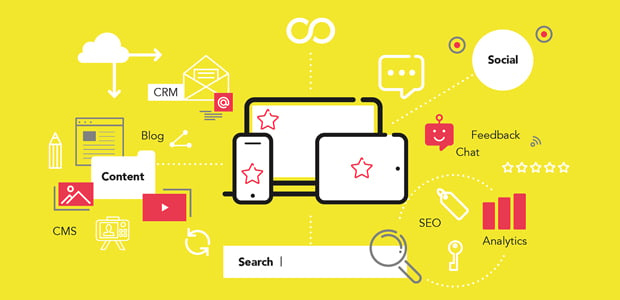
Over half (55%) of SMEs believe that their competitors have a better digital presence than they do, according to new research by leading creative agency, Sparkloop.

According to UK Government statistics some 660,000 new companies are established each year and many of these will have plans to scale rather than to remain a micro business. Some founders will of course be happy to run their startup as a side hustle, and others will only be looking for a lifestyle business. But for many others that are looking for something larger, ‘how do I scale my business?’ is a question that I am often asked.

The world is now facing a public health crisis known as Covid-19 and a financial crisis. The crisis on our hands manifests differently for individuals and companies. The uncertainty over our ability to revert to our normal state creates pressures on mental health, relationships, and business performance.

Authors John Smythe and Ruth Saunders announce the publication of their book ‘Female Entrepreneurs – The Secrets of their Success’, written to inspire and encourage female entrepreneurship.

Data Tech startups are wanted for Lloyd’s Lab Cohort number 5! Lloyd’s are looking for looking for early and late stage companies who can help tap into alternative data sets to paint a more accurate picture of risk and help the market underwrite more profitably.

AI tech startup Greyparrot has raised £1.825m to tackle the growing waste crisis by introducing digitisation and automation to recycling. The round was led by Speedinvest, a leading early-stage industrial tech investor, with participation from Force Over Mass.
Conducting a regular business audit is a vital document that is needed to help monitor and inspect the financial situation of a company. To prevent losing track of assets and overheads a business has, audits help bring clarity to managers where their cash in-flows and out-flows are going to and from.