
Finland-based startup Rundit, a platform for portfolio management and monitoring, has raised €1m in seed funding to further its mission of making investor reporting easy and transparent so that VCs and LPs can make better data-driven decisions.

On the back of new quantum algorithm breakthroughs, quantum software company Phasecraft has closed a record seed round for a quantum computing company in the UK. Its new £3.7m seed funding round is led by VC firm LocalGlobe with Episode1 along with previous investors.

Inevitably, the world will change once we have emerged from lockdown. With a heightened sense of hygiene and further concerns about workplace safety, employers will need to look closely at ways to reduce contact and move towards what is being touted as the Low Touch Economy. But how can this happen with as little disruption to business as possible?

Europe’s Hottest Accelerator, SETsquared Bristol has announced the six companies that have been awarded their 2020 Breakthrough Bursary. Angel Investors Club, Engineer2Engineer, Latchaid, Lurncampus, FluoretiQ and YelloButterfly will join SETsquared Bristol’s incubation programme in January 2021 to grow their technology startups.

As we continue to work towards the government’s net zero emissions by 2050 commitment, businesses are naturally becoming increasingly aware of the need to be more eco-friendly. Other strategies, such as the Clean Growth Strategy, which aims to promote economic growth at the same time as decreasing emissions, mean that the focus on having a positive effect on the environment is now higher than ever.

HumanForest is an exciting new mobility startup, committed to you and the planet. Offering Londoners 10 minutes free every day, on a truly green e-bike. Here, Startups Magazine speaks to Agustín Guilisasti, Founder of HumanForest to find out more.

Fierce competition gives boost to startup community as three winners of the first ABB Electrification Virtual Startup Challenge 2020 will receive $30,000 investment each to work in close collaboration with ABB Electrification R&D teams.

As interest in security continues to be a major issue for motorcycle owners, Monimoto – the smart tracker for motorcycles, has successfully secured €404,400 in total funding from 392 investors.

Plexal, the innovation centre and coworking space based at Here East in London’s Queen Elizabeth Olympic Park, has announced a partnership with Omani innovation development company AL JABR to support startups in Oman with navigating the challenges posed by Covid-19.

Innovative SMEs and startups are utilising the opportunities created amid the disruption caused by the COVID-19 pandemic, according to a report published by the Great British Entrepreneur Awards & Community and business finance marketplace, Funding Options.
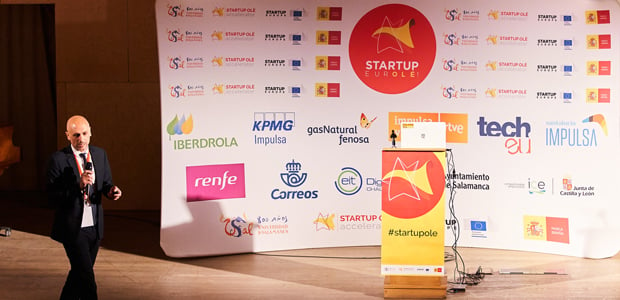
After seeing such success in 2020, Startup OLÉ is continuing with its international events, and launching the third Latam Digital Roadshow with the support of its main partners.

When it comes to job satisfaction, Denmark tops the list of the best places to work in digital in Europe – beating the UK, Germany and France – according to the 2020 Digital Talent Global Work Happiness Index.

To date, the artificial intelligence (AI) industry has had quite a difficult history with diversity standards. Despite studies probing inclusivity and bias, statistics for gender and racial diversity in the sector are alarmingly low. And given that we are living in an age of strong activism in these spaces, it is high time that the tech industry follows suit with some practical steps.

The COVID-19 pandemic has drastically changed the way the world works, and with UK workers working at home for the foreseeable future, it can be difficult to connect the workforce together. To support workers, flexible office specialist, Workthere, has shared five tips on how you can stay connected to your colleagues, both in and out of the office.

In the fifth part of business mix’s series of articles, they harnesses our Associate and Partner network and focusses on learning from those that have walked this path before and getting inside the mindset of the successful challengers. This time White Bear Studio is in the spotlight.

Poncho, a digital startup backed by Kamet Ventures, has launched to address the growing childcare crisis and the resulting unprecedented pressure facing working parents. This comes as one in six childcare providers is expected to close by Christmas and 87% of parents report having needed to homeschool at least one child since May.

Startups are all about growth and achieving their potential almost from day one. For any business to succeed, though, it needs to have dedicated employees who put the time and effort into making things happen. Of course, you can’t expect to have that if you don’t do everything you can to make your workers feel valued.

Relationship marketing is significant for all businesses. It is the customers who keep your business running. SEO for big brands can get them the necessary clients. But that is one aspect and keeping them is quite another story. Customer loyalty for your business can go a long way in maintaining a strong relationship with the customers.

Gone are the days where profit reigned supreme in a business’ strategy. Now, investors, customers and talented employees are all looking for businesses with a purpose they can buy into.

Fintech business lender MarketFinance has launched a Business Booster Fund that will make grants of £5,000 available to UK small businesses. The initiative forms part of the MarketFinance commitment to SMEs and giving back to the community. These grants are aimed at supporting passionate and driven UK-based entrepreneurs, giving them a kickstart as they head into 2021.