
Businesses, and indeed stock markets, hate uncertainty. Sadly, there is no doubt that 2020 has been full of uncertainty at every stage. And whilst the main focus, for very obvious reasons, has been on Covid-19 and all the trading and other ramifications that that has brought with it, it has not been the only source of major disruption this year.

PitchBook, the data provider for the private and public equity markets, has released All In: Women in the VC Ecosystem, its second annual report examining global Venture Capital (VC) investment in female-founded startups. The report, published with support from Microsoft for Startups and Beyond the Billion, shows the coronavirus pandemic has disproportionately impacted female founders and CEOs negatively, despite undeniable, long term gains in VC investment over the past decade.

It should come as no surprise that a strong environmental ethos within an organisation is a driving factor for many jobseekers when choosing where to apply for work. However, a recent report has detailed just how important sustainability aligned with social responsibility really is in terms of recruitment.

During 2020 virtual collaboration accelerated exponentially, creating an instant need for virtual facilitation skills. But as more and more companies move towards online and virtual meetings, the opportunities and challenges associated with remote sessions have been thrown into sharp relief.

Virgin StartUp and Crowdcube have partnered to help the next generation of purpose-driven founders grow their businesses and achieve real change through their Collective Impact programme.
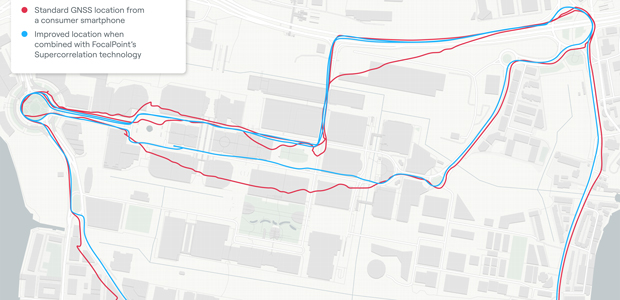
u-blox has signed a deal with the Cambridge-based technology company, Focal Point Positioning, to integrate technology that will improve the accuracy and reliability of GNSS devices – enhancing positioning performance and security for growing applications such as smart cities, location-secure IoT and health and fitness wearables.

Fixter, the UK’s first end-to-end online car maintenance service provider, has urged UK motorists to book their cars in now for MOT, car service and repair work to avoid potentially costly parts price rises and supply issues in the event of a No-deal Brexit. To soften the potential blow, Fixter is offering a parts cost price protection guarantee for January 2021 MOT and service bookings across its UK network, giving car owners valuable peace of mind in these uncertain times.

Ask yourself, what would your 2020 have looked like without Zoom, Slack and Google Drive? If anything has stepped up and carried the load of remote working this year, it’s these tools.

In 2019, Elon Musk made headlines by touting AI as a “fundamental risk to the existence of civilisation”. Ironically – for a man in his line of work – Mark Zuckerburg countered this argument, describing the warnings as ‘pretty irresponsible’.

Almost half of UK businesses have seen an employee move on because their mental wellbeing wasn’t being looked after, with a quarter losing a key member of their workforce, according to new research from not-for-profit healthcare provider, Benenden Health.

A staggering £4bn of investment went to UK tech companies in the first half of 2020. The British Business Bank’s recent Government report, together with recent surveys by leading investment platforms like Stakeholderz, show that despite the challenges posed this year, investors are continuing to back the UK’s high growth tech companies, with many indicating they will invest the same or more over the next year. Tech has long proved to be a lucrative and attractive sector for investors and entrepreneurs.

Startups Magazine and Fiverr have come together to bring Female Founders a Micro-Grant, to win £5,000 Fiverr credit. This competition has now closed for new entries.
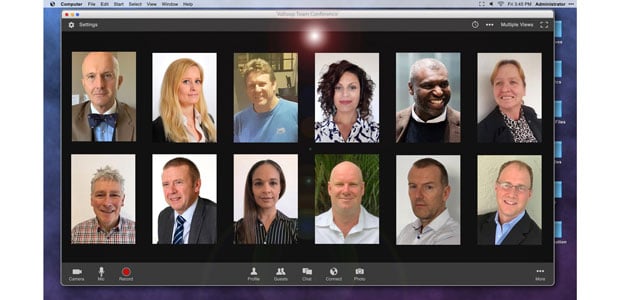
Valloop, founded to empower employees and management to buy the companies they work for, has emerged from stealth ready to back small business founders wishing to exit.

If you have just started a business, you would probably want to know how to get more customers from the get-go. It can be from knowing the way to success or even just having the welcoming body language that can either make or break a deal. You need to be careful as a salesperson – being nervous is easily visible.
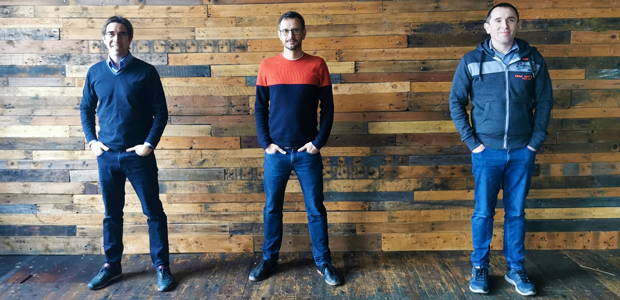
Manchester-based tech start-up enee.io has been awarded £170k from Innovate UK’s Sustainable Innovation Fund. The six-figure grant will enable the firm to further develop and commercialise its pioneering technology providing automated and remote monitoring of industrial battery systems used to provide back-up power for critical infrastructure including hospitals, data centres and mobile phone masts.

All hope abandon ye who enter here. If 2020 had a tagline, that would be it. It’s been a rotten year for the startup community. The Coronavirus pandemic has caused unprecedented economic damage, imperilled revenues, and poured cold water on investor confidence.
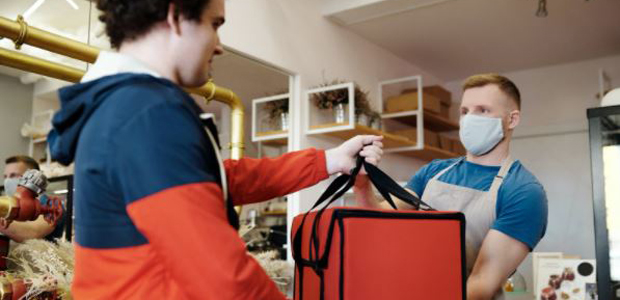
Back in January, it looked likely that employee share schemes would see reasonable growth across the country through 2020.

Kanban has been around as a methodology since the ’40s but is now getting more attention partly due to the increase in remote working and the popularity of agile and lean in every sector. While Kanban was originally applied to manufacturing, it can work in virtually any setting. It can be used as a stand-alone tool, or in conjunction with other agile management methods. Implementing it, however, can be easier said than done. Let’s take a look at the steps you need to take to implement a Kanban system in your organisation.

This has been quite a year and if 2020’s taught us anything it’s that we need to take very good care of ourselves, as our business’s biggest asset. Your wellbeing is the source of energy and creativity that your business needs.

I love startup life. It has been my passion for many years now. In 2007, I launched my first company, Skimlinks from my apartment living room in Sydney. It grew to become a $50m-a-year revenue business, headquartered in London with offices in San Francisco and New York.