
Entering a flash recession, with signals the UK economy is already on the recovery following the financial difficulties of the coronavirus pandemic, there’s never been a more important time to secure additional investment for SMEs to help continue growth for their business.

Mazuma, online subscription accountancy service, has announced the launch of a new technology offering, featuring a modern, highly accessible app and a contemporary website. Both of which outline additional resources and provide further advice for small business owners across the UK.

incspaces, a space as a service operator with locations across London and Manchester, is opening a brand new 24/7 flexible workspace in the heart of Leeds. The 19,000 square foot venue will play host to both young startups and established businesses embracing the ever growing flexibility of the future of work.

Whilist travelling is one of the most truly amazing experiences – meeting new people, trying new foods and even learning new languages – it is not without its challenges. Although we are living through the most connected time in history, it can still be a struggle to find WiFi on the go (that actually works). Here, Startups Magazine speaks to travel technology startup, Rent ‘n Connect to find out why their products can save you from all those hair-pulling moments.

As a social impact entrepreneur and investor, I like to think I know a business opportunity when I see one. The 2030 ban on sales of new petrol and diesel cars provides us with a massive opportunity. Entrepreneurs and investors should be incredibly excited about this new technology and the potential to innovate. As far as I’m concerned, Electric Vehicles (EVs) are the new smartphones.

In today’s fast-paced, technological environment, people are constantly retaining information through the internet and social media. There are many opportunities for individuals to access expert advice from all sorts of industries through the likes of online interviews, podcasts and Twitter feeds. Still, does this mean that all the advice that we have access to is useful?

Although this may sound like one of the easier questions you have read this week, this question is so much more than these seven words primarily show.

Last year, the Government introduced a new grant via the Kickstart Scheme to support the creation of new jobs placements at businesses across the UK. Unfortunately, the rules of the scheme meant that businesses needed to create a minimum of 30 job placements to apply directly for a grant.
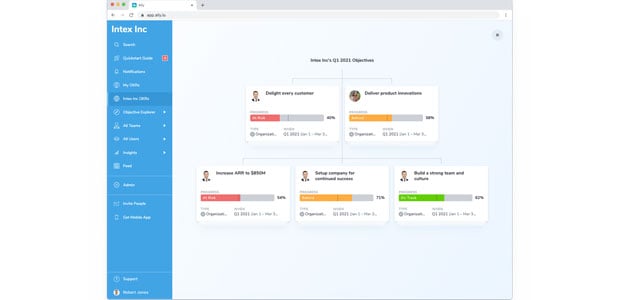
Ally.io, a hypergrowth technology company specialising in goal-setting and business execution software, has announced a $50M (£36.5M) Series C funding round led by Greenoaks Capital. Tiger Global, who led the company’s Series B round, and Madrona Venture Group also joined the round, as well as previous investors Accel, Addition Ventures, Founders’ Co-Op, and Vulcan Capital.

Vinehealth, a platform to improve the quality of life and survival of cancer patients through highly personalised patient support, has secured a £1m Biomedical Catalyst grant to deliver their innovative cancer companion app to four NHS trusts within a randomised controlled trial, thus generating robust evidence of the platform’s clinical and cost effectiveness in improving patient self-management and data collection.

Cambridge GaN Devices (CGD) has raised $9.5m in Series A funding. The investment was co-led by IQ Capital, Parkwalk Advisors and BGF, and includes investment from Foresight Williams, Cambridge Enterprise, Martlet Capital, Cambridge Angels and Cambridge Capital Group. The funding will be used by CGD to expand its product portfolio of energy-efficient power devices and to double the size of its team.

A cloud-based CRM provider has announced another instalment of their successful virtual event series, designed to help UK businesses tackle 2021 and set strong foundations following a challenging 2020. BuddyCRM’s Build Back Better – Sales Masterclass will commence on 18th March 2021 and is free for delegates to attend.

Social impact startup OX has successfully secured three grants with a total project value of £1.2m in the past four months. The grants, awarded by Innovate UK and the Advanced Propulsion Centre, will see OX work on separate projects with Potenza Technology and Penso to expedite the delivery of the world’s first clean transport ecosystem.

Why do startups fail, and what can founders do to prevent it? Many entrepreneurs and investors opine on this question, but few offer data-driven answers. Our goal is to identify and share clear learnings on this, and the timing could not be more critical.

In June of 2020, the US Supreme Court handed down a ruling that barred employers from discriminating against queer and transgender employees. This was the latest of many fights happening worldwide to introduce or strengthen legislation to protect the LGBTQ+ community in the workplace.

Social media will always be an integral part of your small business’ digital marketing strategy, whether you’re using it to alert fans and followers about new offerings, industry news, or showing how things work behind the scenes in your company

Launching a new startup is always a huge risk, but with effective user research and testing, product leaders can gain valuable insights from end users to reduce risk from the outset and build a culture of learning from their customers. We recently held a virtual event titled ‘From Idea to Launch: How startups succeed with UserTesting’ and we were joined by product and startup experts, including Arielle Kilroy and Justin Berkovi, to get their top tips for ensuring success.

Small changes consistently applied over a period of time WILL have a big impact on your business. For example, if you simply commit to spending 30 minutes every day engaging with your target audience on social media, this daily activity on your part will gradually compound into a significant impact on your business.

In this article, Andrew White, Partner and UK & European patent attorney at intellectual property firm, Mathys & Squire discusses how building a strong Intellectual Property (IP) portfolio puts you in a better position to secure business investment when you need it and why linking your IP strategy to your business goals – including investment plans – is crucial for making it all come together effortlessly.

Online learning has become the new normal since last March, and since the most recent lockdown was announced, searches for how to learn new skills online have increased by 218%, suggesting more people want to utilise their spare time at home to learn.