
Networking. Some people love it, some people hate it. But everyone knows it’s essential if you’re setting up a new business. Or is it? Tell anyone that you’re setting up a business without any industry contacts, and they’ll raise their eyebrows at you. Wouldn’t it be better to get to know the industry first, they’ll ask? Shouldn’t you build up your network before diving in?
When you are building a plane in the sky – startup speak for tricky innovation in a tough environment – things slip. In the case of fast-growing businesses, important people priorities and processes fall down the agenda. Diversity and inclusion is one of them. It can be deprioritised by default, in a race to stay afloat, pay your teams and spend time on what will get you where you need to go, quickly.

The PR industry continues to go from strength to strength with a steady 5% growth in 2020 and the five years previous to that. This demonstrates that organisations recognise the value that communications play in their overall business strategy. Consumer research has shown that 48% see journalism and earned media to be the most credible source of information.
With the vaccine rollout continuing across the world and a potential end in sight to the COVID-19 pandemic, we have looked at three of the top payment trends businesses should get to know as life gets back to some normality and the hospitality, travel and other sectors start to open once again.

Founded by childhood friends, Lucy Cohen and Sophie Hughes, Mazuma is a UK-based provider of online accounting services for small and micro businesses. As qualified accountants, the pair spotted a gap in the market in 2006 for low cost and stress-free accountancy which specifically serviced SMEs and the self-employed. Fast forward to today and the company is celebrating its 15th anniversary.

Kickstart Innovation, one of Europe’s zero-equity, open innovation platforms based in Zurich, is currently launching its sixth program, and welcoming applications from businesses across the world. The application period is from 15th April to 17th May.

Virtual reality is no longer a novelty, but VR events are an innovation in the event industry and marketing. A virtual event is a potent tool for promoting your brand or for organising conferences and concerts. This is an entirely new project that allows you to hold an event while staying at home, despite emergencies, such as the 2020 quarantine or other events.
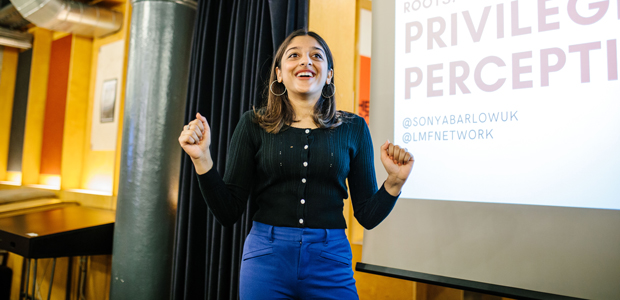
With the annual Hustle Awards event planning in full swing, we are excited to announce that Sonya Barlow, award winning entrepreneur, founder of the LMFnetwork, diversity business coach and motivational speaker, as her efforts are focused on bridging the skills gap and creating inclusive cultures.

With a number of people using eCommerce for the first time and employees working at home, the costs of cybercrime exceeded $1tn in 2020, up 50% from 2018.

As we enter the ‘roadmap’ to recovery from the COVID-19 pandemic, businesses are reassessing their people operations. Some have adopted a ‘hybrid’ working model, allowing employees to split their time between working from home and from the office, and others have even given up their office spaces entirely.

An independent London teleshopping channel is offering small businesses with a unique product innovation the chance to sell their products for free in a TV advert worth up to £5,000 on Sky TV as part of its ‘Road to Recovery’ campaign.

When a startup embarks on the entrepreneurial journey it can be very daunting, and you may need some help and guidance along the way. Here at Startups Magazine we have created our second Survival Guide issue, sponsored by Digi-Key, which will give you in depth advice and information from some of the industry’s leading experts.
As part of the last budget, Chancellor Rishi Sunak announced that the limit for contactless payments is to be increased from £45 to £100. As a large portion of UK businesses have been closed for months, there’s an obvious reason to want to stimulate the economy by making larger purchases easier. While this increase in the contactless limit seems to be a good move on the surface, we must look at the impacts of this change and debate the case for alternative payment methods.

The global early-stage venture capital firm, Antler has unveiled the seven startups it has invested in during its third UK cohort.

Ethos is the home of social discussion. A socially responsible alternative to platforms such as Facebook and Twitter, the channel provides a safe and connected online space that encourages conversations which discuss a variety of social issues. It aims to encourage others to learn from, engage, and interact with unique content that inspires and motivates a new generation. Here, Startups Magazine, speaks to Alejandra de Brunner, Founder and CEO to find out more.

Vistage, business performance and leadership advancement organisation for small and medium-size businesses, has found that over 3 in 4 (74%) of SME leaders expect economic conditions to improve in the next year. The report has also found that a majority (84%) of companies anticipate revenue will continue to improve in the same period of time.

Clim8 Invest (Clim8), the investment platform to help consumers invest in companies that are focused on tackling climate change, has announced the launch of its mobile app.

Market engagement platform Grip has partnered with the inaugural Event Tech Live (ETL) USA & Canada, set to take place from 8th until 9th June 2021.

COVID-19 has given rise to a mass adoption of technology. Many organisations have switched the office and physical meetings for Zoom calls, digitised their offline practices and undergone rapid digital transformation.

With COVID-19 restrictions constantly changing and evolving worldwide, many employees taking business trips to other countries, or already working abroad, have found that they are suddenly either banned from returning to their home country or not allowed to leave the country they have visited. Employers must ensure they are able to support employees who are stranded away from home.