
Earth Day commences on the 22nd of April. Earth Day marks the anniversary of the birth of the modern environmental movement in 1970. It celebrates the importance of recycling in preserving our natural resources and securing the future of our planet.

Implementing digital transformation into your business is essential for success. But with technological advancements dominating the business world, it’s important to assess the digital additions within your company to discover if they are making the expected improvements.

As we celebrate Earth Day, I thought there is no better chance than to share one of my favourite startups in the sustainability/ tech4good industry, and that is Thrift who aims to encourage people to buy and sell second hand items more, to result in less items wasted and ending up in landfill.

57% of employees say feeling recognised would reduce the likelihood that they would take a call from a headhunter, according to the latest State of Recognition Report from Achievers Workforce Institute, the research and insights arm of Achievers.
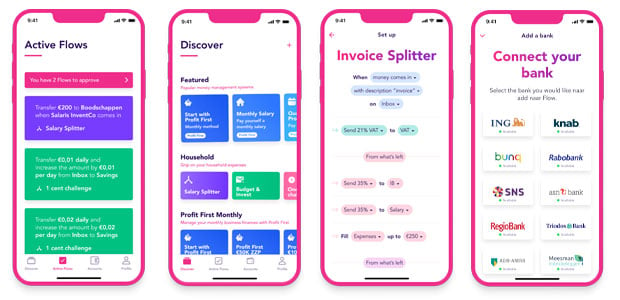
Flow Your Money (Flow), the money management app for freelancers and consumers has raised a €3.5m seed investment round led by Eleven Ventures. The round was joined by RockSalt, the venture arm of SaltPay, as well as Silverflow co-founder Robert Kraal (former COO Adyen), Hristo Borisov (founder and CEO of Payhawk), Marnix van der Ploeg (Booking.com) and Travel Health Group’s owner Arnoud Aalbersberg. The investment will enable Flow to scale up its platform, which makes it possible to automatically distribute incoming and outgoing money flows, taking the step towards ‘self-driving money’: smart, fully autonomous money management. Flow now also can expedite European expansion plans as it sets out to become the largest player in this fast-growth market.
Creator Fund, the early-stage VC fund investing in deeptech emerging from universities, has announced a $20m fund.

As the IPCC announced its final warning that the coming years are critical in saving the Earth’s depletion. However, the road to achieving Net-Zero seems unclear, as nearly one in three (30%) say their company is not doing enough to combat climate change.

AWS has announced it has committed more than $30m to early stage startups led by black, latino, LGBTQIA+, and women founders as part of its AWS Impact Accelerator.

HumanForest and 22 Bishopsgate are partnering to encourage occupiers of 22 Bishopsgate to move around the city in a healthy and sustainable way.

Branding and marketing experts Solopress have analysed the techniques employed by some of the biggest names in business.
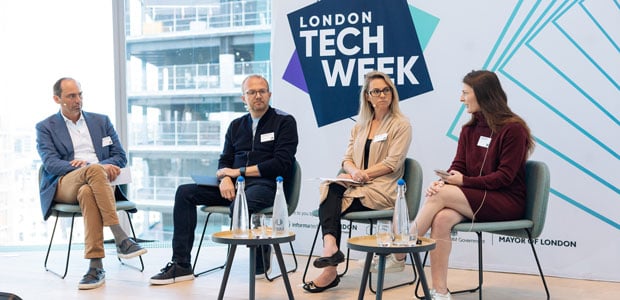
In light of Earth Day 2022, new research suggests that although UK climate technology is playing a crucial role in tackling global climate change, challenges in accessing funding and a lack of support from the government is impeding the development of the industry.

You’re reading this because you care. Because you want to make a difference, but the harsh reality is that you care more about your day job, the bottom-line, fund-raise, your next hire. Because that pays the bills and keeps the roof over everyone’s head. Once that’s all done, then you can worry about being sustainable.

Treeapp, the mobile app which enables anyone to plant a tree for free everyday, has officially partnered with fellow B Corp the Big Mamma group. To celebrate Earth Day on the 22nd of April, Big Mamma will be planting one tree for every veggie and vegan pizza sold at Ave Mario, Circolo Popolare and Gloria Trattoria.

For most, if not all freelancers, the invitation to work for free will land on our desks, often early on in our freelance careers.

Despite feeling overwhelmed about how to take climate action, research from Ecologi, a climate action platform has shown that eight in ten business owners want to be greener, just don’t know where to start.

The supply chain network faces another major crisis after shaking the global economy during the COVID-19 pandemic.

Every day, millions of contracts are drafted, however, due to poor and manual contract management processes, companies a reportedly losing as much as £10m in inefficiencies. Recognising this as a widespread problem, Niels Martin Brøchner, Jarek Owczarek and Viktor Heide founded and developed Contractbook, an automated contract management platform that is now used by over 150,000 businesses, including NHS Trust, TED, The Student Hotel, Mutebox and Eon.

Arbor Steel has raised £200,000 in a pre-seed funding round to bring its digital identity citadel to customers. Developed following a £100,000 InnovateUK Grant, the platform provides a secure and efficient way to share personal data and interact with services whilst maintaining control.

The best way to understand how an industry works is to get involved in whatever capacity you can. For example, if you want to open a shop, go and work in one. Doing this will give you an insight into what it takes to run a shop on a day-to-day basis. It will give you an understanding of what customers want, the potential pitfalls and the products that sell best. Working in a shop doesn’t mean you’ll make a success of your retail business, but it will give you a solid foundation to build on.

If you use a managed service provider (MSP) for your small business’s IT needs, you may have noticed that your monthly spend with them has increased. This is because Microsoft has raised the price of the monthly subscription licence for the Office 365 suite.