
We talk a lot about how leaders need to make sure everyone in their team is happy and comfortable. It’s important to create a culture that promotes well-being and performance, but while leaders take care of the people they lead, who is taking care of them? Ollie Phillips, Founder of Optimist Performance, pens some thoughts on loneliness amongst leaders, and how to address it.

Research suggests employers are not taking the opportunity to automate workflows and upgrade office spaces as part of their hybrid work strategies – despite employee calls to digitalise manual processes.

Collaboration between Derbyshire Councils and SafetyCulture provides free use of iAuditor to help local government officers carry out property inspections for the Homes for Ukraine scheme

Data is the lifeblood of any business. Critical to organisations of all sizes and sectors, it powers growth, enabling business leaders to make the decisions that come from insight and evidence. But when businesses are in startup mode, protecting data can fall to the bottom of their “to-do” list. Here are five simple tips which will give you the peace of mind that comes with knowing your data is backed-up securely.

Volume, the transparent checkout startup, has closed a pre-seed round of $2.4m, in an oversubscribed deal led by firstminute Capital and joined by SeedX and Haatch Ventures. Other participants include angels Christian Faes (LendInvest), Russ Carroll (ex-Klarna), as well as angels from MADE.COM, Mastercard, Visa and American Express. Volume improves on current open banking capabilities to reduce the long checkout process, while simultaneously killing hidden fees charged by payment intermediaries.

Employers are being warned about selecting employee benefits that are too inflexible in the way they support the health and wellbeing of employees. RedArc, the nurse-led health wellbeing service, believes that although employers are doing the right thing in proactively providing health and wellbeing support for staff, they need to be cautious about overly prescriptive benefits that may not give staff enough of the right kind of support.
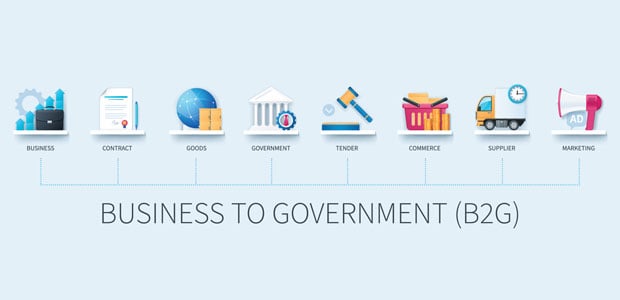
Perhaps now, more than ever before, B2G marketing is crucial. The government has committed to spending billions of pounds over the coming years in order to ‘level up’ and alleviate somewhat of the financial stress caused the by the ongoing pandemic, meaning there will be government contracts galore – welcome news for business owners around the country.

Entrepreneurs would all be delighted to find the magic solution to growing their business tenfold but what if the answer isn’t a magic solution but rather simply following a number of key drivers which lead inexorably towards that dream growth?

Challau, the metaverse platform which enables users without a VR headset or high-end computer to enter immersive 3D environments, has raised a pre-seed round from 7percent Ventures, whose team first backed Oculus VR.

Have you ever been described as ‘too much?’ Too worried? Too… anything. What if our too much is actually our superpower? Does the below resonate with you?

Anyone that has started their own business, and even those that have thought about it but not made the jump as yet, or indeed decided not to do so in the end, all recognise that it is a big decision. A very big decision. And as such, it is a decision that is often deliberated over for a long time before it is acted upon. Certainly, a lot of research and clear thinking needs to be done before committing.

Promoting diversity and equality is not just a socially responsible initiative, but a strategic business decision, imperative to innovation and success. Why should startups invest early in diverse people, and how they can do this to make a greater social impact whilst also improving business?

Challau, the metaverse platform which enables users without a VR headset or high-end computer to enter immersive 3D environments, has raised a pre-seed round from 7percent Ventures, whose team first backed Oculus VR.

As COVID-19 has entered its third year, entrepreneurism and gig work is on the rise. Over 10% of the UK workforce, and over 20% in London, now work in the gig economy. People are demanding greater flexibility and autonomy in their professions, thus work culture objectives are shifting too.

The Tech Trailblazers Awards welcome entries from enterprise IT startups that help companies or data centres save money while saving the planet. The Awards are open to entries from 27th June until 11.59pm PT on 31st August 2022.

Fundraising is full time job, there is so much time and effort that goes into raising money, but it is worth it. We all know what the stats and figures show that there is a massive gender disparity when it comes to funding, and therefore although being a tough job – it’s even harder for women.

Hybrid working is the new norm and brings advantages to both businesses and their employees. However, it also creates a new set of challenges and requires a shift in activities to support employee empowerment.

FourJaw, whose manufacturing data analytics platform is unlocking five-fold increases in shopfloor productivity, has secured a second round of angel investment and Innovate UK funding worth £1m, to accelerate its growth and support high-value-added manufacturers across the country.

The threat landscape is rapidly expanding and in 2022, there’s one thing at the forefront of every corporate agenda: cybersecurity. In a world of sophisticated cyberwarfare and rising geopolitical tensions, cybersecurity threats are evolving at an even faster pace, impacting entire businesses, crippling operations, and risking hard-won reputations.

The businesses and their 60 employees will continue to operate from its HQ in Donacaster, south Yorkshire, and five other UK and Ireland sites, and ambitious plans are in place to create further job opportunities across their commercial, delivery and support functions.