
According to McKinsey, more inclusive and diverse organisations are 35% more likely to outperform their competition. Also, they tend to capture new markets more effectively than their counterparts. However, diversity is still an issue in the UK workforce. Almost half of employees feel that their employers are not doing enough to achieve the right balance.

Congratulations startup founder: you’ve had the lightbulb idea, built a game-changing solution, developed a killer product and you’re finally market-ready. But now comes the hardest part: getting your solution out of stealth mode and into the waiting hands of your target customers.

Sustainable finance is not just a box-ticking exercise – it must be a marriage of environmental and social impact. It has become a popular buzzphrase for investors as they seek to put their funding into companies that aim to solve the world’s biggest problems, most notably climate change.

Sustainable IT solutions partner, and certified B Corporation Klyk announces their ambitious sustainability targets and the launch of their IT repair café on June 24th. Over the next five years Klyk aims to cut CO2 emissions by 1,200 tonnes and reduce electronic waste (e-waste) by 145 tonnes.

Trustly, the leading global payments platform for digital Account-to-Account transactions (A2A) today announces the acquisition of the UK-based Open Banking Payments platform Ecospend. Ecospend’s strong UK A2A product and full bank connectivity will complement and enable Trustly to deliver a market-leading product in the UK, and further accelerate its UK roll-out – one of Europe’s most rapidly growing A2A regions and a core growth market for Trustly.

It is no secret that during the midst of the covid pandemic, thousands of people decided to start their own business. The under 25’s boomed with innovation during lockdown, and a new study has shown that e-commerce, freight and real estate were the top sectors for the start-up businesses in under 25’s.

As the metaverse becomes the norm, startup brand managers can’t really afford not to embrace 3D brand design for their organisations, it offers businesses a competitive advantage while offering no end of creative possibility in communications.

UK workers want more financial education resources from their employers and believe receiving it as a wellbeing benefit can strengthen their commitment to their jobs, according to the ‘Can We Connect’ report, released today by global financial wellbeing platform nudge Global.

Sustainable parenting platform, YoungPlanet, has seen a 235% increase in app sign-ups during the first five months of 2022, compared to the same timeframe in 2021. The app is used by families across the UK to give and receive pre-used children’s items for free; helping parents to prevent unnecessary landfill waste.

Getting the backing of a Venture Capital Fund (VC) is often a key milestone for any growing business, it is, therefore, important to strategise both your preparation and approach.

May 2022: The key to increasing investment in more female-founded companies is by increasing the representation of female VCs, suggests VC-backed, female-founded retail technology app Slip. Although less than 20% of investors in Slip are female, Co-founder and CEO Tash Grossman believes that increased female investor representation would support the growth of more female-founded businesses.
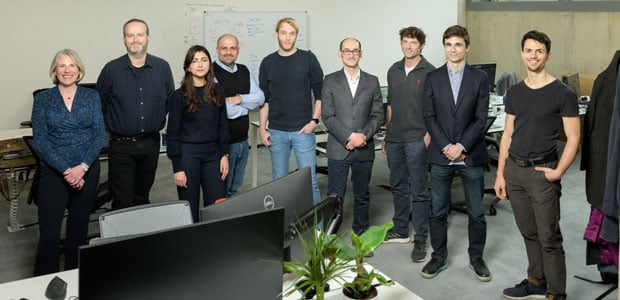
Salience Labs has raised a seed round of $11.5m to develop an ultra high-speed multi-chip processor combining photonics and electronics to accelerate exponential advances in AI. The round was led by Cambridge Innovation Capital and Oxford Science Enterprises, with Oxford Investment Consultants, former CEO of Dialog Semiconductor Jalal Bagherli, ex-Temasek Board Member Yew Lin Goh and Arm-backed Deeptech Labs participating.

Cancer is the main reason employers claim for their staff across all group risk benefits (employer-sponsored life assurance, income protection and critical illness), so it’s especially important that employers know how to make the most of the support available under these policies.

Racing to disrupt both access and sustainability within the cycling industry, kid’s bike subscription service, Bike Club, gears up for national and European expansion after closing £16.75m in new investment.

Nearly two thirds (63%) of employers say they offer early parenthood support, according to research from Peppy, leaving those employers who don’t, extremely vulnerable to losing staff to other more family-friendly organisations at the point their staff become parents.

As the years go by, technology continues to advance at a steady pace. From initial trials of self-driving vehicles to sophisticated mobile phones with endless features, we are living in an increasingly futuristic world. On one side, the constant growth in innovation may excite the younger generations, who are used to handling digital devices from an early age. On the other, the older population may feel somewhat intimidated by the continuous rollout of new technologies.

From seven-second TikTok videos on our phones, click and collect McDonald’s orders and generous returns policies on our clothes, our modern existence is characterised by the need for speed, ease and flexibility. Convenience is what we expect and what we now demand from technology providers. There was a time when consumers were prepared to wait a year for a software update and willing to pay extra for new features. Today, expectations have changed and been replaced by an expectation of flexibility and the convenience of pay-as-you-go subscription billing methods.

Hybrid working is being adopted by businesses all over the world and equally, is becoming an expectation of employees looking for a new job. What was initially a strategy to keep people safe has now become a highly-sought norm that has revolutionised the workplace forever.

There are a lot of factors to consider when deciding whether to rent or buy your business premises. Both options have their pros and cons, and it can be difficult to decide which is the best option for you. In this article, we will discuss the pros and cons of renting vs buying business premises so that you can make an informed decision about what is best for your business.

In today’s business world, it’s not just what you know but who you know (and who knows you) that matters. In the past, this used to refer to the closed shop of the old boy’s network. Now, thankfully, that’s no longer the case – at least for the most part. One of the key reasons for this is the internet or, more precisely, social network sites and more precisely still – LinkedIn.