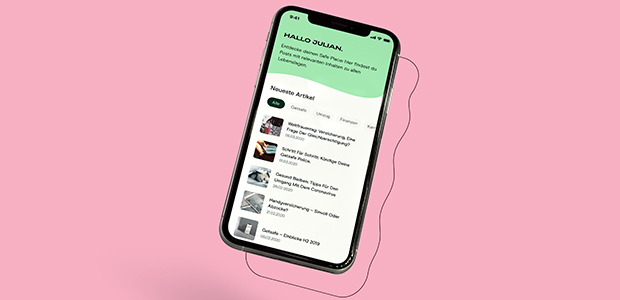
Even with the help of price comparison sites, finding the insurance that is right for you can prove to be the proverbial needle and haystack conundrum. However, Startups Magazine speaks to Johnny Stubbs, Head of UK Insurance and Business Development at digital insurer Getsafe, who are using technology and AI to enable customers to learn about, buy, and manage insurance conveniently from their smartphone, all without any paperwork, and within just a few clicks.

Businesses are being given access to a fully-funded suite of AI and automation tools to help them cope with the impact of the COVID-19 pandemic. Free to access at GoSmarter.ai, the project is funded by the UK Governments Research & Innovation department, Innovate UK, and has been developed by Artificial intelligence (AI) company Nightingale HQ.

In today’s connected world, it’s hard to imagine a time when the term ‘Internet of Things’ didn’t exist, or when flying cars were only featured in the musical fantasy film – Chitty Chitty Bang Bang. Technology has changed our world in so many ways, (and arguably not always for the best) but one of the positive benefits that it has had on modern society is the way it’s revolutionising the education sector. Most will agree that it has countless benefits for teachers and students, such as providing extra help, communication, organisation, and virtual experiences.

The AIWAYS U5 all-electric SUV will be available from €37,990 when European sales start in Germany this summer. With a 410km range (WLTP) from its DC fast-charging compatible 63kWh battery, according to the company, the AIWAYS U5 offers the best price-to-range ratio in the European all-electric SUV market.

The UK Government needs to do more to encourage startup businesses in the wake of COVID-19, according to Dr Keith Arundale at Henley Business School.

Artificial Intelligence, VR, AR and machine learning are all some of the hot topics at the moment, especially as our latest issue has a strong focus on AI and emerging technologies, so we thought there isn’t a better time to catch up with Andrson, a sound-driven A&R platform, which is a brand new AI and machine learning-powered tool using sound-based search to connect emerging artists to the right industry professionals.

Talking all things AI and new and emerging technologies at the moment, as we prepare for our next issue – out tomorrow! Startups Magazine spoke to Andy Baggott, Marketing Manager at Kafoodle – a fast-growing food tech company launched in 2016 with the goal to simplify food safety and kitchen compliance, helping the hospitality industry manage their ingredients, recipes and allergen information.

Following the global sports hiatus brought on by the coronavirus pandemic many sports have now returned to action, much to the delight of fans worldwide. We’ve recently seen the likes of Europe’s top football leagues finish up the remaining games of their seasons and now eyes are well and truly stateside with the NBA, MLB and NHL returning over the past few weeks.

Lysander Bickham, Founder and CEO of Loving Earth’s Oceans (or Leo’s Box for short), shares his story of setting up an eco-friendly subscription startup while still at school, and offers five simple steps any business can take to improve its sustainable practice.

International business performance consultancy Ayming, has launched its new Sprint Claims service, which completes R&D tax credit incentive applications for SMEs in less than one week.

The Founder and CEO of a UK-based EV charging port provider has been awarded a prime position on the prestigious Forbes 30 under 30 (Europe) list for the Manufacturing and Industry sectors.

To celebrate Startups Magazine’s latest issue release (this week), which is focused on AI and emerging technologies, here at Tractable, recent winner of Best UK startup in the Hustle Awards, we decided to explain a bit about how we’re bringing AI to the world on a commercial basis. Accidents and disasters affect millions of people every year. And the recovery process always starts the same way – assessors inspect the damage, approve an insurance claim, and unlock the funds to begin the rebuild.

The finalists of the 2020 Lloyds Bank National Business Awards were unveiled this morning as the programme’s organisers praised British businesses for their resilience, agility and innovation over the last 12 months, despite being faced with untold economic and logistical challenges as a result of COVID-19.

EMV Capital led a £2.3m pre-series A syndicated round in the Edinburgh-based 5G and Satcom antenna developer Sofant Technologies, with participation by Kelvin Capital, Old College Capital, Wealth Club and Scottish Investment Bank.

Attitudes towards sharing are always intriguing to observe. What we will and won’t share with others has changed continuously over the years and in line with broader consumer trends.

This smart mouth guard protects more than just your pearly whites, it unlocks real-time feedback to protect players on and off the rugby pitch.
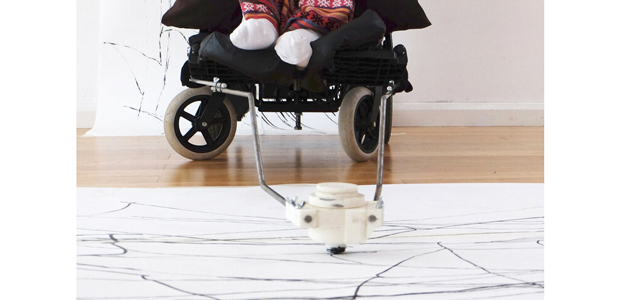
Having recently visited the CRL workspace in Hayes to meet this year’s cohort, sponsored by Mouser, I was overwhelmed with some incredible startup founders and the ideas that had inspired them. One of which was a pair of friends Pete Barr and Eli Heath, who together have created a social enterprise startup to enable people with disabilities to draw, through adding tools to a wheelchair.

When iconic computer game, The Sims, was first published in 2000, few knew that one day entire industries would be conducting business within a virtual Sim-like environment. And yet, in the world of wholesale fashion that’s exactly what’s happening in the light of the COVID-19 pandemic.

According to the Office for National Statistics 213,285 businesses failed in the UK in the first half of 2020, a 14% increase on the same period in the previous year. Without looking much more deeply into the numbers it is not possible to say for certain how many of those that failed were due to the coronavirus pandemic and subsequent lockdown but we would not be far wrong to say that the 14% increase, or 26,193 businesses failures were as a result of the pandemic.

Figures from the Office of National Statistics have revealed that during the height of the coronavirus lockdown period, employment in the UK fell by the largest amount in over ten years, since the height of the 2009 financial crisis. This situation could worsen in the coming months as the Government furlough scheme draws to and end.