Features

Now more than ever, the power of design thinking is being recognised. From Airbnb and Netflix to Tesla and Samsung, companies are looking to this ideology to change the way they view business problems, using it as a catalyst to introduce customer-focused design that works.

For freelancers and small business owners, mentors can help take your career to the next level. As such, Tide explores what to look for in an ideal mentor, and how to successfully find and approach one.

Remote working has been in the technology ecosystem for many years. I have personally been doing partial remote work for the last ten to twenty years and what I have found is surprising. Most individuals are not used to this style of work which is accelerating a nationwide transformation of company culture.
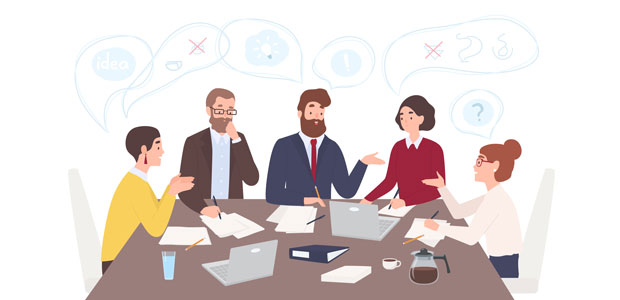
It’s received wisdom that successful startups solve real world problems. But there’s a commonly overlooked footnote to this mantra: you can’t try to solve a problem unless you’ve lived it first. Because without gaining the authentic understanding of lived experience, you’ll never find a solution that works in practice as well as in theory.

As we continue to work towards the government’s net zero emissions by 2050 commitment, businesses are naturally becoming increasingly aware of the need to be more eco-friendly. Other strategies, such as the Clean Growth Strategy, which aims to promote economic growth at the same time as decreasing emissions, mean that the focus on having a positive effect on the environment is now higher than ever.
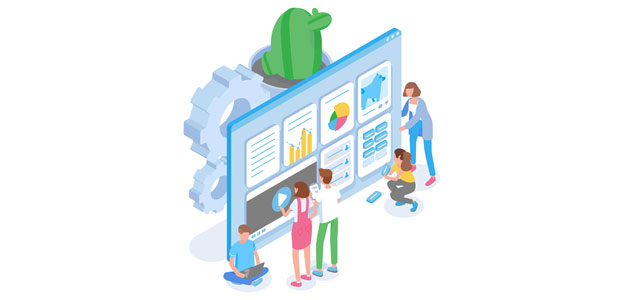
Online streaming giant Netflix, which has over 150 million paid subscribers in over 190 countries, collects data from its users. Using advanced analytics to understand customer behaviour and buying patterns, the company makes extremely relevant customer recommendations, helping it achieve an impressive 93% customer retention.

A few years ago, journalists at The Daily Telegraph arrived at their London office on a Monday morning to discover that ‘Occupeye’ sensors had been installed over the weekend on the underside of each of their desks. The management team defended the installation ‘…as part of the Telegraph’s commitment to green energy measures,’ claiming they were simply conducting a four-week study aimed at optimising the building’s use of lighting, heating and air conditioning. The study’s subjects were not impressed.

Ask anyone which location they’d associate with startups, and my money would be on “Silicon Valley” being their answer. But in the past few years, global investors have been shifting their collective gaze to Europe. Forbes reports that the first half of 2019 broke the record for tech investment in Europe: £17.2bn was invested in the continent’s tech startups. Similarly, Europe was pretty much on par with the United States when it came to the existence of startups backed by venture capitalists.
Many startups would have been forgiven for spending the last three months focusing purely on survival. Yet, as lockdown restrictions lift, an alternative story is beginning to emerge.

Launching a new business is not for the faint hearted even when market conditions are ‘perfect’. Doing that in the midst of the worst global pandemic in over a century is, by any standards, rather bold.
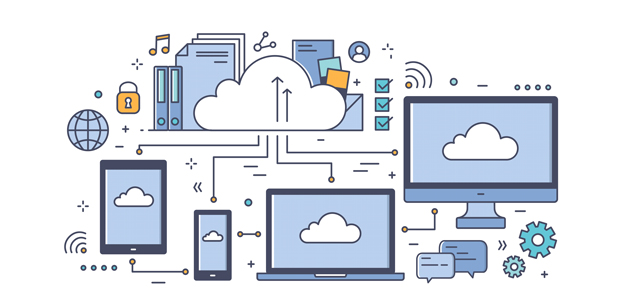
It has now been five months since the Government announced the development of a centralised NHSX contact tracing app that was set to monitor and contain the spread of COVID-19, safely releasing the UK from its strict national lockdown.

As much as we hate this phrase, Babble was born in the cloud. We don’t have any fixed technology so naturally, when Boris gave the order to stay at home our business found it easy to adapt. Our employees work, collaborate and communicate around one central platform, available on any device, anywhere. Our contact centre isn’t fixed to an office with phones and headsets, and our cyber security isn’t something we ever need to worry about.

Taking single use plastics out of circulation is no easy feat, but the answer might lie closer than we think.

As lockdown restrictions begin to ease, many employers are having to think about how they go about bringing back employees to the office, and what this might look like in the future. Anthony Rose, CEO and co-founder of SeedLegals here gives his take on what London’s top startups are saying about the office.
Coronavirus has caused businesses around the world to face the most impactful shake up in traditional operations many of us have ever experienced, one person who knows a lot about businesses is Business Development Director at The Translation People, Alan White, so Startups Magazine spoke to him about the current climate.
The coronavirus crisis and the impact it has had on businesses and financial resources has made the prospect of growing a business seem like a distant reality for some organisations. But for British small and medium-sized B2B organisations, Brexit is an opportunity to look beyond the EU to new geographies.

Right now, your customers are likely continuing to be bombarded with emails about COVID-19 — from their local supermarket, pet store, doctor, restaurant, gym, the list goes on — particularly as lockdown restrictions begin to ease.
Knowing your enemy is more important than ever. Whether as an individual, a consumer or a brand, defining your enemy creates momentum and can be the catalyst for positive change.
The coronavirus pandemic has sent shockwaves through the global economy. Businesses of all sizes are reeling from a crunch on both supply and demand. Staff members off sick or having to look after small children, disruption to supply chains, a significant drop in revenue due to lockdowns and a reduction in consumer spending have presented challenge after challenge.
As society is beginning to adjust to a new ‘normal’, businesses across the country have been working hard to ensure they keep their services up and running and continue meeting their customers’ needs throughout this uncertain time.