Aging is a slow process, and often a very painful one. The truth is the older we get the more assistance we need. Most of the time, the system we live in does not provide the right support for seniors. As the market continues to cater more to the younger, more digital-savvy consumer, there is a hole being created by the large retailers.

Amid the current pandemic, the economy is taking a brutal hit, and as fledgling businesses, startups have a particularly fierce challenge to keep afloat. To try and help companies that aren’t eligible for existing relief schemes during this time, such as the CBILS loan, the government has announced a £1.25bn fund to try and help these companies – including startups – survive.

Curve, the banking platform that consolidates multiple cards and accounts into one smart card and app, now allows customers to move past payments onto a different card for up to 90 days after the payment has been made.

BigChange, the mobile workforce management technology company, is delighted to announce that it has been awarded a prestigious Queen’s Award for Enterprise, one of the highest official honours for companies in the UK.

Across the globe we have witnessed a plethora of brands hit impressive targets in terms of sustainability. Despite clear leeway opening up between these brands and those left behind, an opportunity presents itself for reinvention.
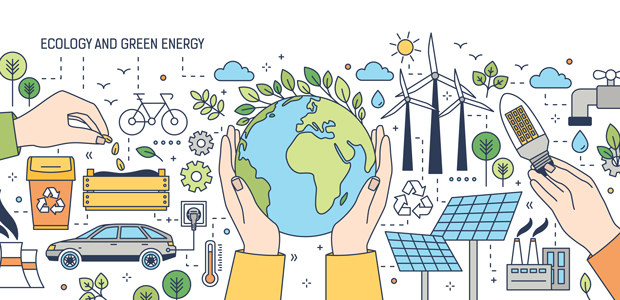
A new not-for profit social impact grant scheme has been launched, the Energy for Tomorrow (EfT) campaign. This grant scheme has been created by Centrica to support and empower entrepreneurs, particularly those from underrepresented groups, who have concepts and innovations to tackle climate change, lower energy bills, and deliver real impact to people and communities.

A leap of faith involves having a basic belief in yourself and a fundamental trust in the vision of who, what, and where you want to be in the future. This is something that Steve Arnold, the now CEO and Founder of e-days, did back in 2016. Since then his startup has grown from a side project to a successful scaleup with over 1,500 customers across 128 countries. Startups Magazine caught up with him to find out more.

After graduating from university in 2016, I found myself working for one of the biggest tech companies in the world, Amazon. Although ironically, I was working as far away from tech in operations, managing up to a hundred warehouse staff at a time. I watched the guys working in tech and the entrepreneurs starting new ventures with envy thinking there was no way I’d be able to segway my career in that direction now that I had started climbing the corporate ladder.

In my first article on ‘Burnout’ I said: “If a tree falls in the woods and doesn’t get a flurry of retweets, did it even?” It’s a good question that could be called facetious, depending on how seriously you take social media.

More than ever, cash flow is a key issue for small businesses, and understanding it is crucial to making informed decisions at the right time. The government will be asking businesses to demonstrate that they have an understanding of the state of their cash flow as it stands, and in the future before allowing access to the grants and schemes being offered.

As part of a wider initiative to support businesses during the coronavirus pandemic, a global affiliate network is offering members of the Federation of Small Businesses (FSB) 30-minute consultations on the benefits of affiliate marketing.

Skim read the annual report of a major energy company from 2010 and you won’t come across many instances of the terms: ‘innovation’ or even ‘startup’. Now, it is a different world. Even the slowest moving established energy companies (perhaps especially the slowest moving) recognise that innovation is key to survival in a changing market and that collaboration with startups is a good way to go about it.

With an underestimated market potential, Femtech will become a $50bn industry by 2050 – and Femtech startup Pexxi is at the forefront of research-led innovation celebrating the uniqueness of female bodies.

The biggest enemies of good decision-making in times of deep crisis, like COVID 19, are neither uncertainty nor ambiguity; they are over-confidence, procrastination, and incomplete or biased data.

Nottingham University Business School announces May event to help business leaders survive and thrive in the ‘new normal’. Chief Executives, HR, Learning and Development and Talent Management professionals are being brought together by Nottingham University Business School to plot their way forward from the Covid-19 pandemic which is threatening irreversible damage to the UK economy.

The Chancellor’s £1 billion package for startup businesses is another brilliant move to support the UK’s business infrastructure during the COVID-19 crisis, but it will need backing from private investors if it is going to work, say leading tax and advisory form Blick Rothenberg.

We Are F, the social media and creative boutique for female-founded brands, has connected a team of NHS GPs with the PPE they urgently require – following a campaign to raise funds for the NHS.

When most people think of startups, they picture hip loft offices, beanbags and charismatic CEOs with boundless enthusiasm and a seat-of-the-pants attitude. While this may be the case for some new businesses, particularly within tech, the picture for many startups is starkly different.

While there may be stories of some brands named in eureka moments, there is a methodical process you can follow so you don’t have to rely on random inspiration. We break down what goes into naming a brand.

Businesses in the UK, and across the world, are facing unprecedented challenges in order to survive and thrive in the wake of COVID-19. Scaling businesses are facing an additional and unique set of challenges, as many will be in the ‘critical growth’ phase which is often loss-making – embarking on a stage of expansion in order to achieve future revenue growth. This makes the current climate daunting to approach.