Right now we are in uncharted territory. COVID-19 is here, we don’t know how long for, and it is affecting so many people in so many different ways. Everyone is feeling different things and everyone has different circumstances. You are not others, others are not you.

Money most certainly does not buy happiness, but it does make the world go round. And the lack of money can lead to hardship in many ways. A question that I keep overhearing recently is about whether it is still possible to raise finance during the coronavirus pandemic. The simple answer is yes… maybe!

The first step in an energy company collaborating with a startup is to ask itself a simple question: why? In part one of this series, we answered that from a wide-angle perspective – because the industry needs to innovate to keep up with the pace of change, and collaboration with startups appears the quickest, surest way to do so. Because the old model of fiercely guarded, siloed research has reached its limit.

Cievert was founded in 2011 by former NHS therapeutic radiographer, Chris Kennelly, who began his mission to make routine healthcare a thing of the past.

Codota, an AI software for developers, acquired its competitor TabNine last year. The company has also announced the global launch of its complete version for JavaScript, merging Codota’s semantic technology with TabNine’s textual one for suitable accuracy for developers.

Robotical, the edtech startup behind Marty the Robot, has today announced that it is working with South African NGO, Got Game, on Nokia’s Helping hands project to deliver education to previously disadvantaged youths in South Africa.

Job roles within tech increased by 40% in the first third of the year thanks to a surge in-demand within the ‘hybrid-tech sector’ – namely fintech, edtech, healthtech, and agritech – according to global recruiter Robert Walters.

Youth Business International (YBI) has been awarded a $5m grant by Google.org to support over 200,000 underserved micro, small and medium businesses in 32 countries to respond to the COVID-19 crisis. The global economy is suffering from an unprecedented shock as a result of COVID-19. With typically tight margins, micro, small and medium businesses are particularly vulnerable to economic downturn.

Tide, the UK’s leading business banking platform, has launched a new Invoice Protection product in partnership with insurance solutions provider, Hokodo, to help micro, small and medium-sized businesses protect their cash flow against the late and non-payment of invoices.

Growth mindset rests on the idea that essential things such as talent and achievements can be developed through hard work and practice. Also, the concept of growth mindset explores how passion and training can help a person develop skills that people don’t originally have.

Founding Lanistar was the start of a revolution. The personal finance world has been broken for far too long – to banks, customers are simply numbers on a spreadsheet, instead of real people with feelings and desires. I knew that there must be a better way to manage money, so I started Lanistar not just to challenge the current financial system, but to completely take it over.

There is no part of society that has been unaffected by the COVID-19 pandemic. On 12th April, the UK sadly became the fifth country to record 10,000 deaths from the virus, with the Government expected to continue its tough lockdown measures for many weeks to come.
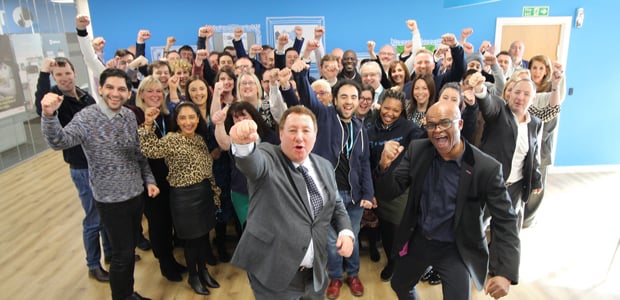
BigChange, the mobile workforce management technology company, is delighted to announce that it has been awarded a prestigious Queen’s Award for Enterprise, one of the highest official honours for companies in the UK.

Across the globe we have witnessed a plethora of brands hit impressive targets in terms of sustainability. Despite clear leeway opening up between these brands and those left behind, an opportunity presents itself for reinvention.
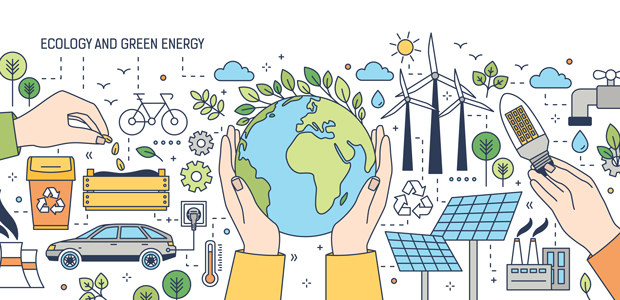
A new not-for profit social impact grant scheme has been launched, the Energy for Tomorrow (EfT) campaign. This grant scheme has been created by Centrica to support and empower entrepreneurs, particularly those from underrepresented groups, who have concepts and innovations to tackle climate change, lower energy bills, and deliver real impact to people and communities.

Science, technology, engineering and mathematical modelling save lives – we see that more than ever in this C-19 crisis. We are relying on our scientists, technologists and engineers to come up with solutions, fast, to improve health and survival rates, to support businesses, organisations and the economy, to enable virtual social connection. They are essential contributors, key workers and equal among them are many, many women.

The Francis Crick Institute today announces that it is deploying a cloud-native simulation engine developed by UK start-up, Hadean Supercomputing, to simulate how COVID-19 spreads both in the body and through the wider population. The Francis Crick Institute and Hadean are working together to accurately forecast how the virus spreads in order to help governments, public health authorities and businesses make fast, informed, and in many cases, life-saving decisions.

For the majority, the word entrepreneur conjures an image of a male in his twenties or early thirties. It’s unlikely the picture of someone in retirement age would come to mind and even less likely a woman in her 60s. However, a new wave of silver start-ups is emerging and with good reason! One such disruptor is Sheila Holt. Having traded on a smaller scale for a few years, Sheila embraced her entrepreneurial spirit and began scaling her finance business, Sapphire Lending Ltd, at the age of 60.

The modern consumer is demanding a future in which the products they use leave no trace on the planet. Brands who can’t meet this demand will see their customer base move towards those who can deliver products that are in line with this vision.

Ingenious has announced that its Infrastructure Ventures EIS Service has led a $4m A-series investment round in Shoreline. The Norway-based startup has built an intelligent field operations and project development platform to help develop profitable wind projects by constructing and operating them efficiently using intelligent schedule optimisation and simulation.