
Aiways has started taking online orders for its U5 all-electric SUV. German customers can now order a U5 from the Aiways website, and become among the first in Europe to own an all-electric 410km range SUV from Aiways.

I set up SimplyHair in 2013. I was working alongside my husband, Pip, to grow digital marketing agency, digitalbeans and also juggling a role in customer services and a side business as a mobile hair extension stylist when I realised how poor online purchasing experiences were in the hairdressing trade.
Written by Amy Filippaios, Founder of ecommerce wholesaler, SimplyHair and Creative Director at digitalbeans

Just when the lockdown period seemed to be drawing to a close, cases of Coronavirus took a sharp upwards turn and local lockdowns were enforced. Already, almost ten million people in the UK have been confined to their homes once again. Nationally, too, restrictions have tightened and fears of a second lockdown period are circulating as Health Secretary Matt Hancock refuses to rule out the possibility of another strict set of restrictions being brought in.

As we carry on focusing on female founders and women in tech ahead of our next issue, we decided to catch up with Lindsay Gledhill, a partner at UK law firm, Harper James Solicitors. Lindsay heads up the Intellectual Property (IP) team. She has specialised in IP exploitation and dispute resolution since 1997. It has made Lindsay the go-to lawyer for IP-rich firms who wish to protect and exploit their proprietary technology in fast-growing and international markets.
A post-COVID-19 Great Digital Catch Up – to support 4.5 million people to cross the digital divide – is presented as the solution to fix the UK’s digital divide in a new report by digital inclusion charity, Good Things Foundation.
Minecraft has signed up to use a spatial simulation engine that is so powerful it is also being used in the fight against COVID-19. Created by supercomputing startup, Hadean, Aether Engine is being made publicly available for game studios of all sizes, from independent developers to AAA game studios, with Minecraft developer Mojang Studios as its first global partner.

With the travel industry under threat and the off-peak season looming, the travel platform behind the ‘daycation’ trend is pioneering an innovative way to breathe life into empty hotels: turning hotel rooms into flexible offices that people can work in for the day.

Here Ramya Sriram, Digital Content Manager at Kolabtree, the freelance platform for scientists, gives five steps to ensure that you protect your Intellectual Property (IP) while working with a freelancer or remote worker.

Business bank, Allica Bank is launching a £100m funding round to help it meet the current high levels of demand for finance it is experiencing from British businesses, and continue broadening services and product lines.

In a recent survey, over half of customers polled revealed that they tend to buy from a brand with a big personality. The study found that 57.5% of customers buy from brands with strong personalities, whilst 51.2% of people have purchased from a brand because of the way they spoke online.

Boris Johnson and his government have been pushing for employees to return to their offices in a bid to get the economy back up and running; but figures from the Office for National Statistics show that in the last week of August, only 50% of workers are back in the office.

Razor’s Head of Client Services, Ellie Mosley, recently shared her story with us on having a career in technology as a new mother. Now, Razor’s CEO, Jamie Hinton responds. In his mind, it was the natural thing to do.

The stats are not promising when looking at women in tech within the UK. Last year it was revealed that women only make for 16.8% of workers within the tech field. Shocking right?
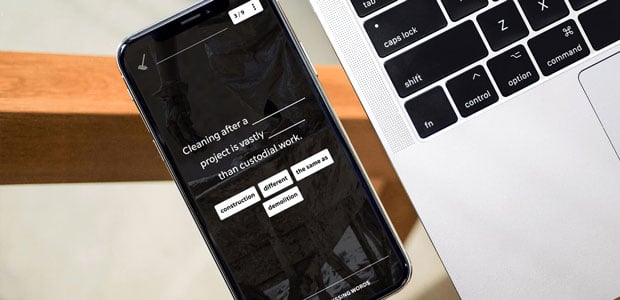
A platform for workplace safety and quality, SafetyCulture, has acquired EdApp, a mobile training solution. EdApp currently delivers approximately 50,000 lessons per day across over 90 countries. The acquisition will enable millions of workers across diverse industries to access world-class micro-learning resources, free of charge.

Inspekto has released a whitepaper on the future of quality assurance in the industrial automation market. The paper addresses the needs of automation vendors and distributors who wish to add the first off-the-shelf product for industrial vision inspection to their portfolio.
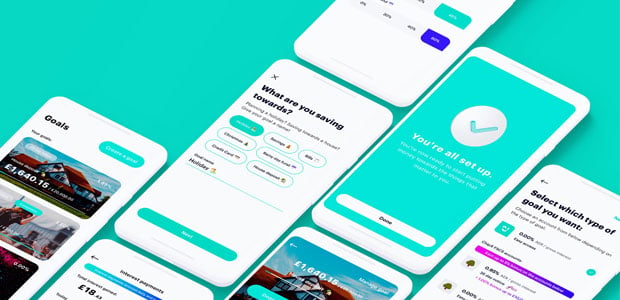
The automatic saving app offering access to market-leading returns, Chip has raised a total of £10.7m from the crowd and the government-backed Future Fund, as part of the company’s series A round.

A community-led co-working space dedicated to creating real social impact, Impact Brixton has announced the launch of Impact Day – a free working space and training programme for local individuals or organisations working towards social change in Lambeth.
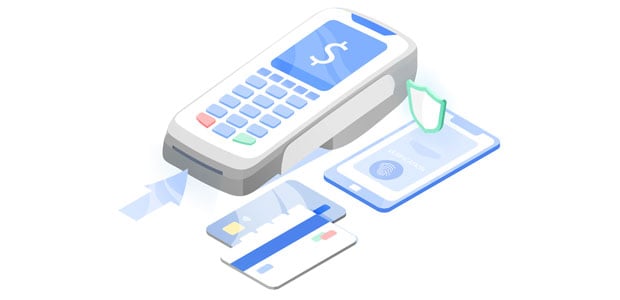
Phos, the fintech behind the software-only Point of Sale (SoftPoS), and Stanchion Payment Solutions, a global specialist in payments systems and integration, have announced a partnership to enable payment processors and banks to accelerate the time to market of innovative contactless payments acceptance solutions for European merchants.

Tailoring your marketing efforts to a global audience can be a perfect chance to expand your business and reach prospective clients that may not otherwise learn about your products or services. Targeting a global audience, however, requires having an in-depth understanding of regional laws, cultures, and purchasing behaviours. Here are four clever ways to market your business abroad.

Startups Magazine recently spoke to Tsewang Wangkang and Frederick Szydlowski, Co-founders of Embargo, a loyalty platform that allows restaurants, bars, and coffee shops to recognise and reward their customers through the use of pioneering technology.