London’s small and medium-sized businesses (SMEs) are struggling to keep pace with the rest of the UK’s employment recovery, with the capital recording the weakest job growth in May, a new report from HR, payroll, and employment platform Employment Hero shows.
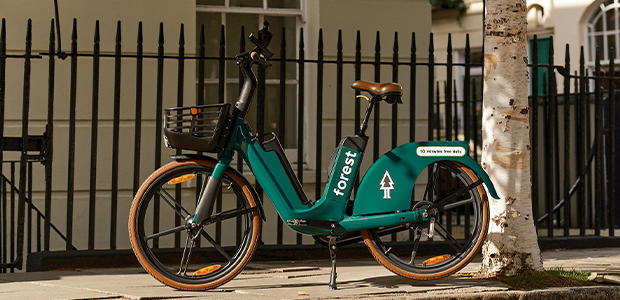
Forest, one of London’s e-bike operators, has launched its latest Sustainability Report, highlighting how the company is supporting the capital’s shift to more sustainable and affordable forms of travel.

Renow, the Nordic startup modernising how returned and second-hand goods are handled and resold, has raised €1.8 million in seed funding to expand its AI-powered recommerce platform across Northern Europe, opening new hubs in Sweden and Norway, and aiming to launch in the Danish and Beneluxian markets.

Orbit Capital is bringing venture debt to Central and Eastern Europe with its Growth Debt II fund. The fund will hold €100 million, allowing technology companies to accelerate further growth. This second fund follows on the success of Growth Debt I, which held €40 million.

Miro, the Innovation Workspace, reveals the findings of its study into the attitudes and behaviours of British knowledge workers using AI.

Redefining success: “Success isn’t just about numbers. And it’s easy to get stuck chasing them. Success means freedom – the freedom to live by the ocean, to surf almost every morning, and to build a life shaped by small, intentional choices. A life where I get to design – and choose – every single piece of it.”

UK startups are facing one crisis after another, from the lack of investment opportunities and access to talent, to economic and political uncertainties, scaling a business is becoming increasingly difficult. A recent report found that Series A funding has slumped £500 million over the past 12 months to March 2025 – hitting a seven-year low.

LemFi, the international payments pioneer has announced it has acquired UK credit fintech Pillar to accelerate their shared mission of empowering immigrant communities with fair, fast, and accessible financial services.
Skype, the platform once synonymous with video calls, shocked the world by shutting down after 22 years. How is it possible that a once-dominant business – with more than 300 million users at its peak – could fail?

Dan Thomson, Founder and CEO of AI startup Sensay, has urged governments worldwide to deploy AI in their policymaking, as the firm launches the world’s first AI-powered government to experiment with new cutting-edge ways of developing policy.

Newcastle upon Tyne is ranked the best city to work for a small business in Britain, according to new research released today by iwoca, one of Europe’s largest SME lenders.

The modern startup moves fast – testing, iterating, pivoting. But one thing that doesn’t change is the need to connect with customers in simple, scalable ways. And in 2025, there’s one underrated tool that’s quietly becoming essential across industries: the QR code.

As UK businesses race to adopt AI, nearly half (47%) of data leaders admit their organisation’s cavalier approach to the rapidly emerging technology could lead to inevitable data leaks or privacy breaches, offering a stark warning from new research from AND Digital.

AI’s reliance on existing material to generate content raises a number of thorny intellectual property issues, both legal and ethical. When sourcing material to complete its tasks, AI does not distinguish between content protected by intellectual property law and content that isn’t. As a result, there is a genuine risk that AI systems could produce infringing material. If your business uses that content, you could face legal action and a claim for financial compensation.
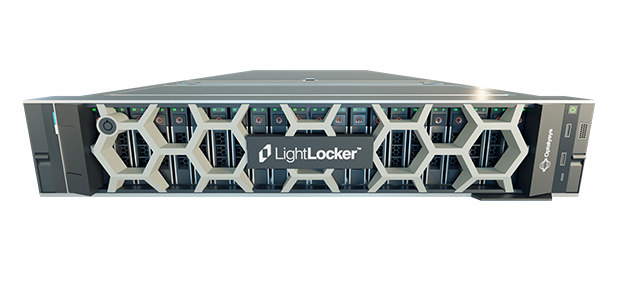
Optalysys, a company enabling the future of secure computing, has launched the world’s first dedicated enterprise-grade server for blockchain – LightLocker Node, designed to enable Fully Homomorphic Encryption (FHE) and ensure complete confidentiality on any transaction.

The landscape for growth-stage fundraising has fundamentally changed. Today’s Series C and D rounds, typically involving raises of $50–100 million or more, are significantly tougher than in recent years. Investors have become more selective, valuations more restrained, and expectations for business performance far more rigorous.

In the March/April 2025 issue of Startups Magazine, we introduced four startups that we believe are the ones to watch in the deeptech space.

I still remember learning history in school, memorising dates, cramming timelines, trudging through dry textbook passages. It was boring and ineffective. Mostly, I remember not understanding why any of it mattered.

Humanoid robots. Whether you love them, or they send a shiver down your spine, they are here to stay. With the release of multiple humanoids from big tech companies, from Tesla’s Optimus to Boston Dynamics’ Atlas, a whole host of startups are coming to the forefront of the humanoid revolution. With faster decision making, and a faster time to market, startups are well-placed to lead the rise of humanoids.

Speaking in front of an audience is one of the most common fears, whether it’s pitching to investors, leading a meeting, presenting at an event, or simply sharing ideas in front of a group.