
Amos Miller is the CEO and Co-Founder of Glidance, a startup that has developed Glide, the world’s first autonomous, self-guided mobility aid designed for people who are blind or visually impaired.
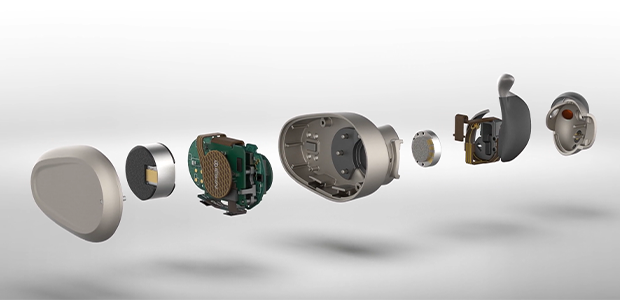
Imagine being able to control your smart home with a small twitch of your jaw, or being able to control a fighter jet with that same motion. But there’s no longer a need to just imagine. This technology exists, and it’s connecting more people to technology than ever before, thanks to startup Naqi Logix.

Global law firm Norton Rose Fulbright, in collaboration with Mergermarket, has released the third edition of its annual Global M&A trends and risks report, examining the trends shaping dealmaking around the world and including a survey of 200 top-level executives that took place across Q1 and Q2 of this year.

Humanoid, a London-based robotics company, has announced a collaboration with NVIDIA to accelerate robotic capabilities by integrating NVIDIA accelerated computing, advanced simulation tools, and next-generation Edge processing technologies for developing its humanoid robot.

Innovation has been the main star of the European Digital Mindset Awards 2025, the awards that, within the framework of DES – Digital Enterprise Show 2025, recognise companies and administrations that are becoming benchmarks for increasing their competitiveness through digitisation.

The UK’s gender pay gap deadline may only apply to large employers, but ignoring pay equity isn’t a luxury startups and SMEs can or should afford, says PayFit’s Marie-Alice Tantardini, Chief People and Fulfillment Officer.
The deeptech industry has been in the spotlight for a couple of years now, and that does not seem to be slowing down.

Malmö is a city that sits in the south of Sweden. While many think of Sweden and the cities of Stockholm and Gothenburg come to mind, the country’s third largest city is one that shouldn’t be underestimated.

Owen Clater, an 18-year-old entrepreneur, is emerging as one of the UK’s youngest employers, as the Founder and CEO of Becks & Clates, a marketing and technology agency.

Rimac Technology, a technology supplier to the automotive industry, engineered, designed and seamlessly integrated the cutting-edge battery system, e-axles, and electronic control units for the Bugatti Tourbillon hyper sports cars.

The internet is undergoing a profound transformation, shifting from a human-centric interaction paradigm to one increasingly mediated by autonomous AI agents. This “agentic revolution” necessitates a radical rethinking of product design patterns and business models. Companies that fail to cater to a growing number of machine internet “users” risk not just a decline in usage, but complete invisibility in the AI economy.

Autonomous AI is no longer simply a concept of the future – it’s here, and it’s already transforming how we build, test, and deploy software. As the CEO of an AI-powered company, I’ve seen firsthand how agentic AI, which independently designs, executes, and optimises workflows, can deliver exponential gains. Many of these are in productivity, especially in repetitive, rule-based domains around software testing.

While innovation and ambition are not bound by gender, the systems that support early-stage business growth too often are. Securing investment is a critical milestone for a startup, but the pathway is often uneven for founders.

Small-to-medium business (SMB) owners in the UK are under immense pressure. According to our research, a third say they’ve lost sleep over whether they’ll be able to pay staff – a clear sign of the financial strain many are experiencing. In a climate defined by rising costs, unstable cash flow and economic uncertainty, it’s no surprise that financial worries have become one of the biggest sources of stress for small business leaders.

One of the starkest contrasts between the wealthy and the financially constrained has always been convenience – specifically, the ability to delegate. As people move up the economic ladder, they tend to shift from doing things themselves to paying others to handle them. Today, thanks to artificial intelligence, that same privilege is being democratised.

Diraq and QM Technologies has announced the first-ever tight integration of GPUs and silicon quantum processors with the deployment of a system using the NVIDIA DGX Quantum architecture to achieve real-time communication speeds of 3.3 microseconds between quantum hardware and NVIDIA Grace-Hopper superchips, orchestrated through QM’s OPX1000 hybrid controller.

Work AI leader Glean has announced it raised $150 million in Series F financing, bringing its valuation to $7.2 billion.

Multiverse Computing has developed CompactifAI, a compression technology capable of reducing the size of LLMs (Large Language Models) by up to 95% while maintaining model performance. Having spent 2024 developing the technology and rolling it out to initial customers, the company has announced a €189 million ($215 million) investment round.

Against an ever-changing economic backdrop, UK companies have cited employee benefits costs as a pressing challenge, according to Gallagher’s Workforce Trends Report. The report also found that organisations are looking to adapt their benefit strategies to address economic pressures and the diverse needs and expectations of their workforce.

Ask a Brit how much they earn, and you’re likely to be met with awkward laughter or a change of subject. But while we’re famously tight-lipped about pay, that cultural discretion is being quietly eroded, at least on job ads. In fact, UK employers are now leading the way in Europe when it comes to salary transparency in job postings.