Sage and its partner Village Capital awarded six grants totalling $170,000 to select startups from the ‘Sage Impact Entrepreneurship Program’, powered by Sage Foundation. The grants were awarded at the Sage Impact Entrepreneurship Summit, a two-day event of learning and networking for the Core Cohort of the programme, which ran in Atlanta, USA, from 4-5th June 2025.

London & Partners and the Fidelity Center for Applied Technology (FCAT) have announced the launch of the Frontier Innovation Fellowship, an accelerator set to grow the next frontier tech giant.

A Harvard, MIT, and Wharton study revealed that VC pitches voiced by men were more than twice as likely to secure funding as identical pitches voiced by women.

One in seven businesses have lost a day or more to a cyber event in the last 12 months, according to global research[1] for commercial insurer QBE, which also emphasises that a major share of cyber attacks stem from a supplier’s vulnerability.

Pactum announces its Series C fundraise of $54 million. This round, led by global software investor Insight Partners, brings the company’s total funding to date to more than $100 million and will help bolster enterprise procurement with agentic AI solutions that work alongside humans to negotiate and close supplier deals at scale.

It is often stated that in the metamorphosis between a caterpillar and a butterfly there is a very ugly larval stage. Parallels could be drawn between this and the labour markets of the UK and Europe. While the power and ubiquity of technology is increasing, rules, regulations, and legacy attitudes are holding back the potential of entrepreneurs and startups.

Following its successful debut in 2024, the Startupland Conference is back for its second edition on 5th November 2025, once again setting the stage at RheinEnergieSTADION in Cologne.

A cohort of patients suffering from the UK’s most common cause of sight loss have become the first in the world to successfully use a pioneering new technology which could help prevent and manage the development of eye diseases affecting millions of people.

ReSpo.Vision has raised €4.2 million in its latest funding round. The investment will accelerate the company’s mission to reshape how fans experience football and how broadcasters, leagues, and federations deliver it – by bringing unprecedented insight and immersion to the game.

SETsquared Bristol, the University of Bristol tech incubator, has bolstered its team with the appointments of Caroline Thompson as Centre Manager, and Dr Becky Sage and Dr Kam Pooni as Entrepreneurs in Residence. They will be joining the incubator this month as part of Bristol Innovations, the University’s catalyst for innovation.

New startups from founders looking to change the landscape in healthcare, AI, and aerospace tech will get the chance to pitch to investors, mentors, and partners at the Future Worlds Demo Day on 11th June during London Tech Week.

In a world facing growing environmental pressures and global uncertainty, small businesses across the UK are stepping up – proving that meaningful change often begins closer to home.

Businesses that require flexible access to their cash are being penalised by low interest rates, according to analysis from investment platform Lightyear.

An app that monitors changes in dementia symptoms and a device that keeps an eye on dehydration are a step closer to helping change the lives of people living with dementia, thanks to Alzheimer’s Society’s award-winning Accelerator programme.

As enterprise leaders race to integrate AI into every corner of their software stacks, software engineers are sounding the alarm with integration burden becoming a major source of frustration.

Cambridge Tech Week has officially opened applications for its headline pitch competition – with exciting new updates for 2025.

Having sufficient liquidity is vital for a company’s financial wellbeing, showing its capacity to fulfil short-term financial obligations. Its normal rate demonstrates how easily and swiftly a company can transform its assets into cash without significant value loss.
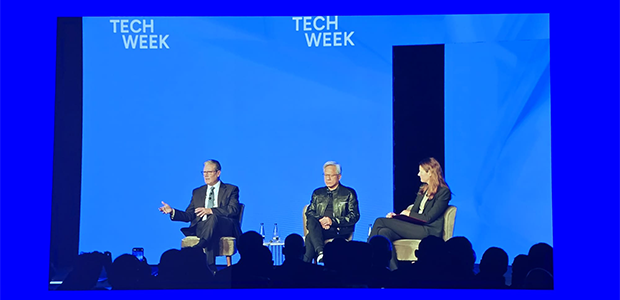
London Tech Week has started, kicking off with some huge announcements. Sir Keir Starmer opened the show with his opening address, in which he announced a further £1 billion in funding to scale up national computing capacity by a factor of twenty. This is part of essential support to the UK’s ambition to lead in the global AI race, and what will make the UK an “AI maker, not an AI taker.”

The annual state of the nation report on UK tech from Tech Nation, part of Founders Forum Group and a UK growth platform and industry body for startups, finds that UK startup founders are raising bigger early-stage funding rounds than ever before and reaching unicorn status faster.

The countdown to the 2025 Hustle Awards is on, and we’re super excited to announce our headline speaker… Stephanie Melodia!