Cambridge Tech Week has officially opened applications for its headline pitch competition – with exciting new updates for 2025.

Having sufficient liquidity is vital for a company’s financial wellbeing, showing its capacity to fulfil short-term financial obligations. Its normal rate demonstrates how easily and swiftly a company can transform its assets into cash without significant value loss.
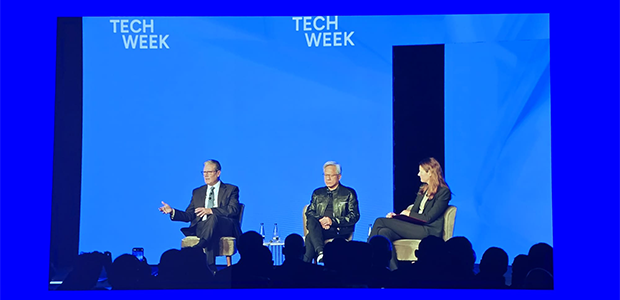
London Tech Week has started, kicking off with some huge announcements. Sir Keir Starmer opened the show with his opening address, in which he announced a further £1 billion in funding to scale up national computing capacity by a factor of twenty. This is part of essential support to the UK’s ambition to lead in the global AI race, and what will make the UK an “AI maker, not an AI taker.”

Swiss healthtech Aeon has closed a €8.2 million seed round, as it builds the world’s most advanced platform for early detection and preventive healthcare.

Lendorse, the Berlin-based startup removing financial barriers for driven international students, has raised €1.75 million in a funding round co-led by LUMO Labs and Soulmates Ventures, with participation from PI Impact and angel investor Daniel Naber.

Latent Technology, the game technology company focused on AI-driven physical animation, has closed an $8 million seed funding round co-led by AlbionVC and Spark Capital.

Starting a business is a bold move and there are many factors to consider before you do so – but among the most important are whether you have the mindset and resilience to ensure your startup is a resounding success.

Itana, Africa’s first Digital Special Economic Zone, has signed a landmark memorandum of understanding (MOU) with Nigeria’s Ministry of Industry, Trade and Investment to boost digital trade, create jobs, and attract global tech investment.

It is said that more people fear public speaking than death. While that might be a stretch, the statistic that around 75% of leaders experience anxiety about speaking in public is very real – and deeply impactful.

Customized pens are small but mighty tools. They are easy to give away, useful every day, and quite budget-friendly. They give a solid boost to the visibility of your brand. So, whether you are launching a new business or looking to boost recognition for an established one, these small tools offer big marketing value. The best part is that pens stick around. On the other hand, flyers or digital ads that get tossed or ignored. So, if you are looking for an affordable, practical way to keep your brand in front of people, start with personalised pens. In this article, you will learn about their benefits.

The global trade landscape is shifting once again and, for UK SMEs, that’s both a challenge and an opportunity. The return of US tariffs under President Trump and a new UK-US trade agreement that partially eased pressures are creating an unpredictable environment.

We’ve all seen that: great product, strong team, yet no people who are buying. In the UK, the average e-commerce conversion rate floats around 2.5% to 3% (as of late 2023 to early 2025). That means just two or three out of every 100 visitors actually make a purchase.

Law firms are navigating an increasingly competitive landscape for deal-making amid a slowdown in global merger and acquisition (M&A) activity. This competitive landscape ups the ante for the adoption of cutting-edge technology that holds significant potential to make M&A lawyers more productive, and law firms are widely embracing artificial intelligence (AI) for M&A transactions.

If you, as a business leader, do not believe cybersecurity to be important, that will have a ripple effect through your entire company.
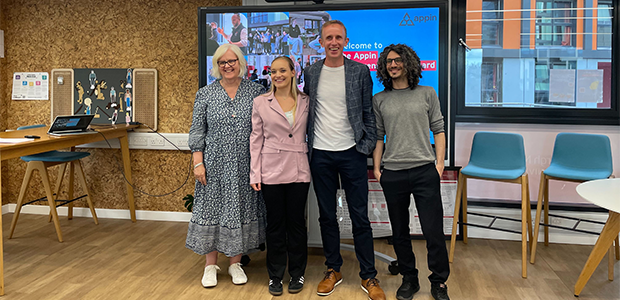
An Edinburgh Napier University (ENU) student and emerging entrepreneur has secured funding to develop her women’s health app after winning a competitive pitching competition.
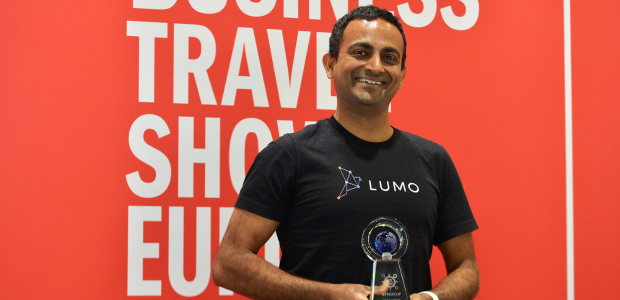
Get ready for a powerful display of creativity, technology, and purpose at this year’s Business Travel Show Europe Innovation Faceoff, where the most forward-thinking travel solution providers will take centre stage. Hosted at Excel London on 25–26 June 2025, this dynamic competition is a highlight of the show’s programme and a must-attend for anyone serious about the future of business travel management.
AI-powered fintech, Aibidia, has closed its Series B funding round at $28 million to expand its tax technology operations into the US market.
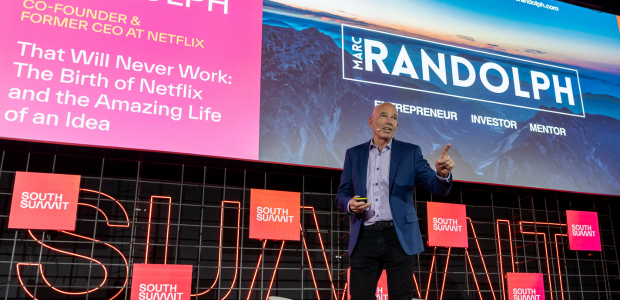
South Summit Madrid 2025, the leading global event for the innovation and entrepreneurship ecosystem, co-organized with IE University, featured a standout appearance on the afternoon of its second day by Marc Randolph, co-founder of Netflix.

A new survey of 200 tech decision makers commissioned by CommsCo PR has revealed that the UK is embracing AI at speed, with a clear sense of its positive impact in the face of global uncertainty. These findings make for positive reading in advance of London Tech Week.

Be honest… are you a control freak? Does the idea of letting someone else do what you do terrify you, or worse, have you tried, and they messed it up?