Brand

Consumer trust is essential for startups looking to achieve successful online sales. However, new companies lack established businesses’ brand awareness and proven track record. A website is often a customer’s first impression of a business, so it had better provide all the essential information they must know about an unfamiliar brand.
The blend of channels and methods of marketing distribution is changing dramatically. Nowadays 51% of companies use at least eight channels to interact with customers. And it makes sense since multichannel shoppers spend three times more than single-channel shoppers.

Through my role at our agency Nonsense, and outside of Nonsense in my capacity as an occasional mentor, and investor in numerous creative startups spanning industries from homeware to health & wellness to apparel brands and podcasting, I’ve watched countless businesses scale. More often than not, we see founders wearing many hats, taking on a multitude of responsibilities.

The UK remains one of the most attractive launchpads for international tech startups and scaleups. With a mature tech ecosystem, high media visibility, and access to capital, it’s little wonder that companies from across Europe, the US, and beyond have it on their roadmap. Yet while the opportunity might be significant, so too are the risks of your launch missing the mark.

In today’s overcrowded digital landscape, building a successful brand isn’t just about visibility. It’s all about meaning, too. The businesses that win aren’t always the biggest ones and they are certainly aren’t the loudest, they’re the ones that connect most deeply. They make people feel something. They understand their customers better than anyone else and they show up online with confidence and purpose.

We’re in a new era of marketing. What used to take a team of specialists and weeks of production can now be done in minutes by almost anyone. The tools have changed – and if you’re not adapting, you’re falling behind.
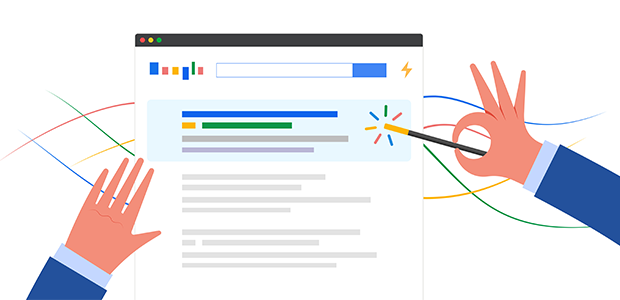
As everyone in SEO knows, there really are no set rules. And, even when we think we have cracked the code, the algorithm updates again, creating an ever-evolving world. In 2025, it’s simply not enough for brands to just show up in search. Today, the Google EEAT model is at the centre of success.

The most underrated mode of communication in a brand’s arsenal might just be the ones customers already use daily. While businesses race to embrace cutting-edge technologies, the fundamentals of communication – voice and text – remain powerhouses for customer engagement. So why do so many overlook their potential?

There’s an actual marketing strategy in business that I think is barely talked about or shared by the online self proclaimed “gurus”, and yet I think it’s one of the most powerful things to genuinely move the needle in your business, and fast.
AI won’t take your job. It will change your job. Here’s how to handle that.

With live entertainment and theatre marketing budgets squeezed, CEO of performance marketing agency SINE Digital, James Dale, explains how his business has quantified the financial burden of ‘boring’ in live entertainment, and looks at why brands are failing to invest in the quality creative needed to beat the ad algorithms

A bold rebrand can breathe new life into a business, helping it stay relevant in a fast-changing market. But when done poorly, it can do quite the opposite, drawing criticism, confusing customers, and in some cases, damaging brand loyalty built over decades.

Summer is coming, and for many startup owners that can mean we are preparing for the summer slump. It’s a known thing: clients are on holiday, people on annual leave, and your service isn’t their top priority.

Yorkshire’s first bean-to-bar chocolate company, Bullion, is a masterclass in the power of a business story. Founded by Max Scotford in 2016 as a side hustle inspired by a Saturday morning TV segment, Bullion officially launched in 2017. Within a year, the Sheffield-based brand had moved from Max’s kitchen to a full-scale factory, expanding to multiple sites with a café, bakery, and thriving team by mid-2025.
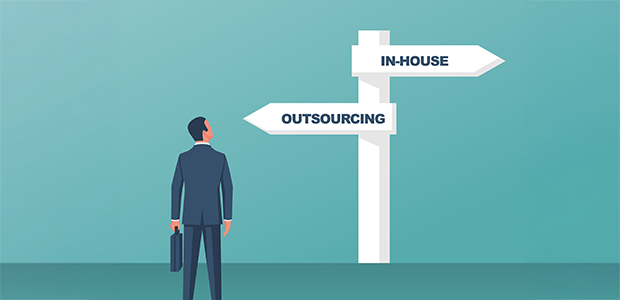
Marketing is one of the most critical drivers of success for your startup. It builds your brand, attracts customers, and keeps your growth engine running. When it comes to execution, you’ll face an important choice – should you create an in-house marketing team or outsource the work?
In a crowded marketplace where everyone seems to be saying the same thing, the biggest challenge startup founders face is standing out. Award-winning business strategist Lisa Johnson, who has amassed a following of over 50,000 people online, shares how to truly shine in your visibility as a startup founder.

According to Salesforce’s “State of Marketing” report, “implementing or leveraging AI” is the number one priority for marketers. Still, the survey showed that although 96% of the specialists implemented generative AI in marketing operations, only 32% had fully applied it. The question is not whether firms should but rather how they implement gen AI tools in their marketing strategies.

When I started my career at Google two decades ago, we were obsessed with one thing: helping people find what they were looking for faster. Google’s latest AI announcements signal something far more profound. Tech leaders are not just changing how people search, they’re fundamentally transforming how they discover and buy.
We’ve all seen that: great product, strong team, yet no people who are buying. In the UK, the average e-commerce conversion rate floats around 2.5% to 3% (as of late 2023 to early 2025). That means just two or three out of every 100 visitors actually make a purchase.

CEOs are taking over our social feeds, with one in three (30%) building up such a following that they now see themselves as influencers. That’s according to new research from BT, which finds execs now see their social media presence as critical to their business strategy.