
In this day and age, building the right content marketing strategy can either make or break a business. Content marketing has the power to shape the way audiences perceive and engage with your organisation.

YHANGRY is a London-based startup providing private chefs for social get-togethers at home. We launched our beta website in May 2019, when Siddhi Mittal and I were still working on the trading floor at Barclays in Canary Wharf. We were 10 months into our startup journey when COVD-19 brought our business to a grinding halt.

A new index by Business Fibre has analysed 34 of the world’s Organisation for Economic Co-operation and Development (OECD) capital cities to find 2020’s best cities to be a tech student. The index has analysed each city according to metrics such as the number of universities offering technology and engineering courses, total tech companies and employees in each city, the monthly living cost and the top cities investing in tech-related research. An infographic is available here.

In light of the business loan scheme statistics out today, Stephen Kelly, Chair of Tech Nation has shared his thoughts.

Having set up a business there are some very logical next steps that have common features irrespective of what your business will do. Any business needs to sell its product or service and make a profit so that it can reinvest in its future and pay the shareholders.

Creator Fund, the university-focused venture capital fund, has released its “State of Student Startups” report, which gives a comprehensive national picture of what the UK’s best young minds are starting, and how to best support them. The report found that more than half of UK campus ventures have a foreign student founder.

COVID-19 (coronavirus) has significantly impacted businesses, but even more so for social entrepreneurs, BAME founders and females due to the difficulties and challenges around access to support, finance and funding as well as structural inequalities. We are on a mission to work closely with these founders to help them flourish in the face of adversity.

With the acquisition of eSoftThings, an expert in the Internet of Things (IoT) and Artificial Intelligence (AI), based in Cesson-Sevigne (Rennes metropolitan area, France), LACROIX Group has consolidated its R&D division already present in Brittany in the area and strengthened its positioning in the industrial IoT and AI, particularly in the field of connected vehicles.
Israeli medical startup, NanoVation has been awarded a €2.5m grant as part of the European Union’s prestigious Horizon 2020 EIC Accelerator program. The Haifa-based company is developing a new respiratory monitoring device, based on its proprietary nano-sensor technology.
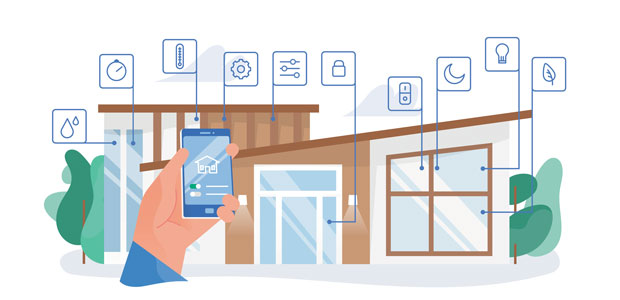
Edinburgh-based startup, Boundary is preparing for the official launch of its smart home security system in August, and will use the funding to complete product testing and for its post-launch operations.
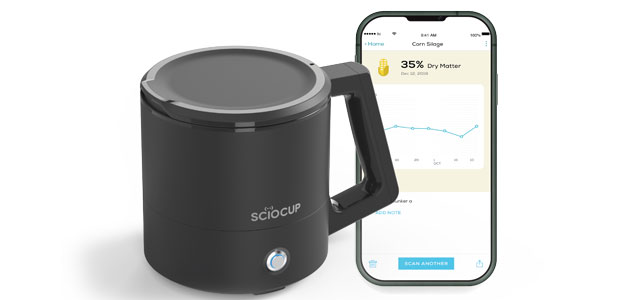
Ag-tech startup, Consumer Physics, is introducing SCiO Cup – according to the company it is the world’s fastest, portable, lab-grade forage dry matter analyser. The smartphone-operated device transforms feed analysis by enabling frequent dry matter analysis. SCiO Cup enables on-farm decision making ensuring consistent dry matter intake and reducing feed leftovers. In addition, SCiO Cup can be used on-field for planning silage harvest timing at optimal moisture levels.

New research from Santander UK reveals that a third (32%) of the UK’s SMEs who implemented changes plan to make their COVID-19 adaptations a permanent feature post-pandemic as almost half found they not only survived, but actually grew their customer base during COVID-19. The study – which polled 2,050 senior leaders in UK SMEs – suggests that the pandemic has driven long-term change to the way businesses operate.

“I never put myself forward for awards, so this was a really nice surprise,” is what Tamsin Dewhurst, Founder at Uptree said to me when I asked how she felt about winning our Founder of the Year award in this year’s Virtual Hustle Awards.
With businesses across the world seeing the tangible benefits of a mobile workforce over the last few months, returning to the office may become temporary as working from home potentially becomes a new way of working, according to research collated by Instant Offices.

Moneybox, the award-winning saving and investing app, today announces it has secured £30m in Series C funding earlier this year from existing investors including Eight Roads, and new investors Breega and CNP. Moneybox also reveals it now has £1bn in assets under administration, and announces plans to bring customers closer to its growth journey through an upcoming crowdfund.

When starting a business, the implementation of a Customer Relationship Management (CRM) system may seem like an additional and unnecessary expense, but committing to it from the outset will realise a number of benefits including the development of a clear and focused sales strategy, together with the opportunity to strengthen new client relationships.

Over the years we’ve seen Twitter celebrities get their accounts hacked. But this recent hack goes way beyond anything we’ve seen before. This latest security breach calls into question the security of Twitter and social media platforms and even the foundation technology they are built upon.

Online shopping is arguably one of the best inventions out there. Nothing beats that feeling of joy when your parcel arrives! But what about the times when your parcel isn’t successfully delivered and you arrive home to find a ‘sorry we missed you’ card through your letterbox? iParcelBox solves the problem of missed deliveries, providing a smart, secure and weatherproof parcel delivery solution that users can monitor and control from their smartphone.

Roundups is a new donation app that helps charities with their fundraising whilst the economy continues to battle through challenging times. The app links with users’ payment cards in order to round up their payments and donate pennies to their chosen charity as they spend.
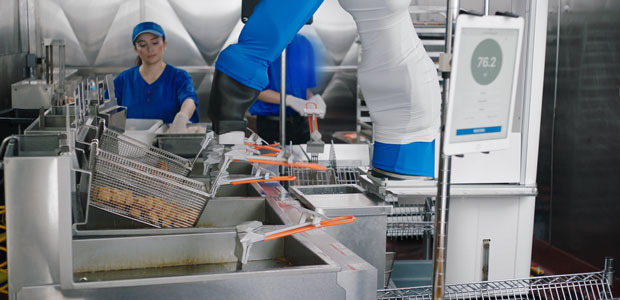
White Castle has announced a planned pilot with Miso Robotics – creators of the autonomous grilling and frying kitchen assistant, Flippy – to accelerate the adoption of Artificial Intelligence and robotics in the restaurant industry.