It goes without saying that in 2020 COVID-19 shook humanity to the very core. Millions lost their lives and even more lost their livelihoods. But even amid all this chaos and uncertainty, there’s one group of people who are somehow still finding possibilities in a pandemic.

Here, Startups Magazine speaks to Hristian Nedyalkov, Co-founder and CEO at Novus, the next generation impact-driven sustainable banking app.

Sustainability, more than a word or an ambition, but a daily reality and practise. Since we opened Huckletree in 2014, we have worked hard to make sure that being environmentally conscious was in each and every strand of our DNA and who we were as founders.

Innovation, by its very nature, involves change and disruption. This is undisputed, but many businesses can, naturally, have some reservations about disrupting themselves too much. After all, change can often seem like a scary thing. But businesses have now been forced to change by something well beyond their control. The aptitude to risk has changed and ‘pandemic’ will be referenced in the PESTLE analysis of every university student’s dissertation for years to come.

Business, and the economy as a whole, can be very much like the English weather – sunshine and showers. We all know that long range forecasts are less accurate than short range ones, simply because there are a greater number of unpredictable factors to try and consider, and a small variable in any one of them can change the final outcome quite considerably.

With life in the UK beginning to unlock, many employees will be keen to re-book routine check-ups and medical procedures that were cancelled during the peak of the coronavirus crisis. There is, however, a huge backlog of appointments and GPs are still under an enormous strain.

Absence management platform, e-days, has launched its Absence Risk Profiling Report informed by its work with 5,000+ businesses over the last 10 years. The comprehensive report summarises a decade of anonymised data collected on businesses that are looking to improve absence and compresses years of conversations, analysis, and market statistics into one report.
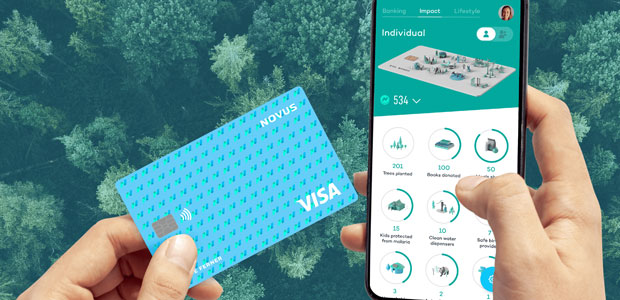
A brand-new and unique smart banking app that encourages sustainable living is releasing a beta product in the coming weeks to start testing with early users before launching to the wider public this summer.
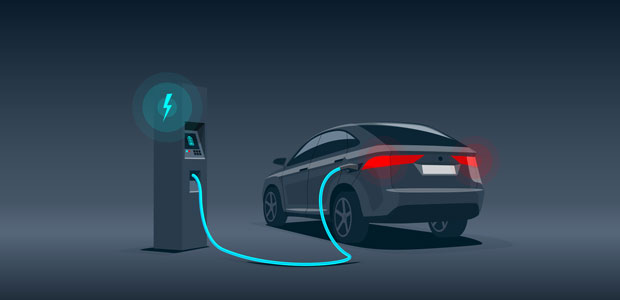
Israeli startup, EVR Motors has unveiled an innovative electric motor, based on a new patented topology, which it calls TSRF (Trapezoidal Stator Radial Flux). The company has successfully developed and tested the first prototypes of its lightweight and compact TSRF motor. EVR expects its new motor architecture will be adapted to a wide range of vehicles in cooperation with automotive OEMs and Tier 1s. A production-ready motor is scheduled to be introduced to the global market later this year.

Addressing climate change requires innovation across the world, across industries, and across startups and multi-national corporations. From distributed energy to storage solutions to efficiency and optimisation software – clean technology investment and innovation is surging.
The International Live Events Association (ILEA) has partnered with the first Event Tech Live (ETL) USA and Canada, which takes place next month, spreading show news to its more than 45 branches around the world.

Today’s consumers are an evolved, diverse and versatile breed with ever-changing expectations. They make educated choices, are equipped with relevant information, and continuously challenge the enterprises they interact with. That said, enterprises that go the extra mile to understand their customers and their customers’ needs have an added advantage.

Cyber is becoming an increasingly important part of every business, from small to large enterprise. Regarding the added issue of security – how do you protect what you value most?
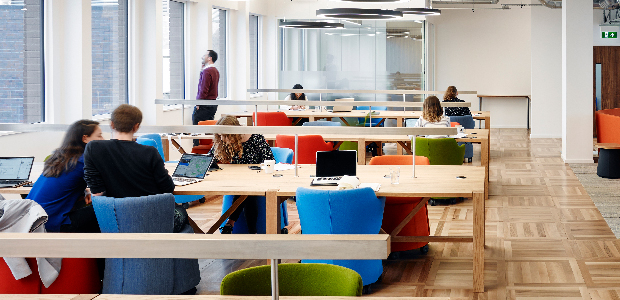
Over the last 30 years, there has been a steadfast campaign calling for remote working to be offered to employees. Calls for more flexible working options seemed to fall on deaf ears. Businesses were sceptical of change, unable to assess the differing productivity levels of those who worked remotely and those who worked in an office, so they consistently opted for the tried and tested. Us&Co – Professional Workspaces explores.

We’ve all dreamt about handing in our notice and leaving our full-time job to go it alone and start our own business. And, for many, this dream has become a reality, with the world going startup crazy in the last 12-months.

On any given day, you’ll find Tom, a Deliveroo rider, astride his moped in front of a shuttered unit in an industrial park in Sussex.

The majority of executives deem sustainability to be important, yet a mere 25% integrate sustainability into the core of their business (according to a BCG/MIT study). The issues stem from the fact that sustainability is considered a business side-branch, and not integrated into the business strategy and model.

The Hustle Awards 2021 is fast approaching, with applications open and in full swing we have seen so many amazing startups and founders already nominated, but who will be in charge of choosing the best of the best? Well let me introduce you to this years incredible judges…

NeuReality, an Israeli AI startup developing high performance AI compute platforms for cloud data centres and edge nodes, has unveiled NR1-P, a novel AI-centric inference platform. NeuReality has already started demonstrating its AI-centric platform to customers and partners.

Regardless of size, recruitment is often one of the most difficult areas for businesses to handle. Finding that vital talent via recruitment agencies requires an upfront investment that many businesses simply don’t have. The alternative, the DIY approach, is deeply time-consuming, taking anything from 12-40 hours from application to hire and it’s very easy to get wrong if you lack the experience.