
Female business owners across the UK are working longer hours and taking on second jobs, with 39% saying 2025 has been tougher than last year, a groundbreaking report from Tide, the business management platform, and everywoman, the global organisation dedicated to advancing women’s careers, has revealed.

Exwayz, pioneer in 3D positioning and navigation software, has announced a €1 million fundraising round led by CentraleSupélec Venture. This includes a grant awarded by the prestigious i-Lab Innovation Competition under the France 2030 plan.

The King Abdullah University of Science and Technology (KAUST) startup portfolio has successfully raised over $1 billion in investments, co-investing with a diverse network of local and global venture capital firms. This significant milestone underscores KAUST’s growing impact on the global deeptech landscape.
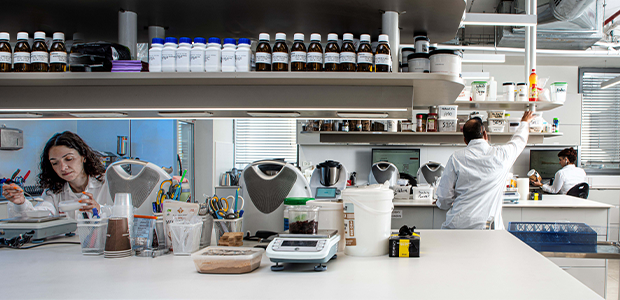
AKA Foods has announced the completion of a $17.2 million seed funding round led by renowned AI experts and entrepreneurs Alex and Michael Bronstein. The funding marks the official launch of AKA Studio, a secure AI system and proprietary platform that enables food companies to create, optimise, and launch products much faster, smarter, and more affordably than ever before.

1nhaler, a Scotland-based drug delivery device developer, has secured £1.5 million in seed funding to drive development of its novel pop-up cardboard dry powder inhaler (DPI).

Artificial Intelligence (AI) is significantly changing the way small and medium-sized businesses manage their finances. In the UK, the number of SMEs adopting AI tools has increased 32-fold between 2022 and 2024, while average spending on AI tools has risen nearly sixfold over the same period. Once seen purely as a tool for automation, AI now plays a much more proactive role, helping businesses anticipate cash-flow gaps, prevent fraud, and deliver more personalised customer experiences.

A few weeks ago, I was speaking at a conference about Gen Z (we discussed how to hire them). At the end of the session, a woman raised her hand and asked: “I agree with you about Gen Z. But we’re far away from them yet. So, can you help me, how do I convince my boss that it is okay to start hiring MILLENNIALS?”

There’s been a huge amount shared about the EU AI Act in recent weeks, so much so that you’d be forgiven for being pretty confused as to what is happening and when, and whether you need to worry about it at all.

Danish fintech Flatplay has become the latest company to reach unicorn status, after it secured $170 million in fresh capital. Co-founder Rasmus Busk said Flatpay became the fastest firm in Denmark to reach the milestone, achieving it within three years.

Female-founded businesses are a vital and dynamic force within the UK’s entrepreneurial landscape. As of October 2024, there are 7,696 high-growth companies in the UK with at least one female founder, representing 13.7% of the country’s high-growth ecosystem.
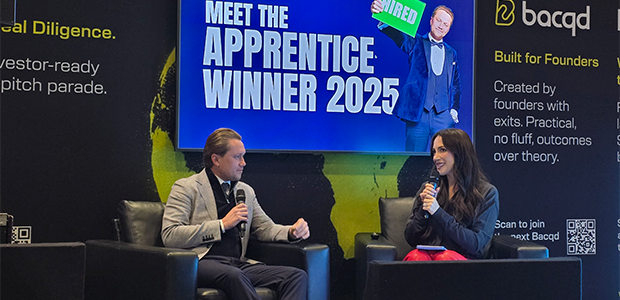
Dean Franklin is the winner of The Apprentice 2025 and Founder of ADL Air Conditioning, and at The Business Show 2025, he discussed starting a business during lockdown, his experience on the show, and how life has changed since the big win.

Integrated Systems Events has announced the launch of Spark, a new four-day showcase event dedicated to cross-vertical creative connectivity.

Finance leaders across the UK remain bullish about their own business prospects for the year ahead, but deep concerns persist around government policy, global uncertainty and the pace of technological change.

Two essential Startup Masterclasses are now open for registration, designed specifically for founders and business owners navigating complex innovation, IP, and immigration requirements. Each event offers highly practical insights from experienced experts to help you protect your innovation, strengthen your funding eligibility, and secure your long-term UK status.
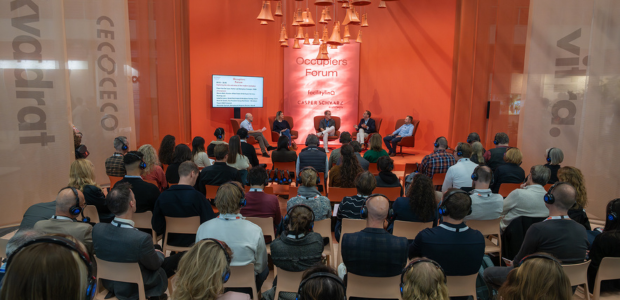
The second edition of Workspace Design Show Amsterdam returned to RAI on 5th – 6th November 2025, bringing together Europe’s workplace design community for two vibrant days of ideas, inspiration and meaningful connections.

On 26th – 27th November 2025, Madinat Jumeirah will host DATE – a Digitisation, AI & Emerging Technology Summit, where technology meets investment and deals take shape. An initiative by Trescon, D DATE will bring together government leaders, global innovators, investors, and technology visionaries to explore how emerging technologies – powered by cloud, hybrid, and hyper-converged infrastructure – are shaping industries and translating innovation into tangible business outcomes.

Digital workplace solutions and managed services company Espria returns in December with another Optimise IT exhibition, leading the discussion on how IT solutions can best work together to provide the ultimate support for businesses and end-user experience.
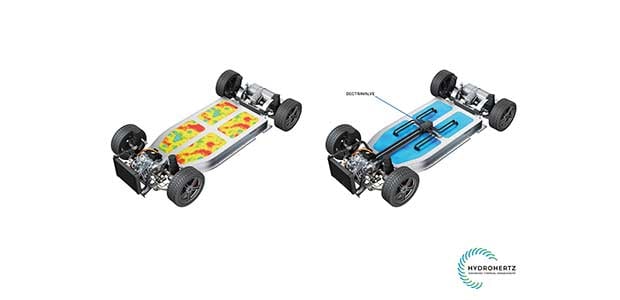
Hydrohertz launches a battery cooling technology which not only delivers a step change in EV fast-charging times, but also significant improvements in battery range, life, and safety.

Zilch announces it has raised over $175 million ($176.7 million) in debt and equity. Led by KKCG, the round includes participation from BNF Capital, and several other strategic investors. The raise also includes the expansion of its securitisation led by Deutsche Bank.

Michael Page has released its ‘2026 Salary Guides’, offering insight into key trends in the UK technology hiring market, highlighting the most in-demand roles and skills, and examining the priorities technology professionals are seeking in their next positions.