

AI is helping British startups to shine, according to talks at London Tech Week

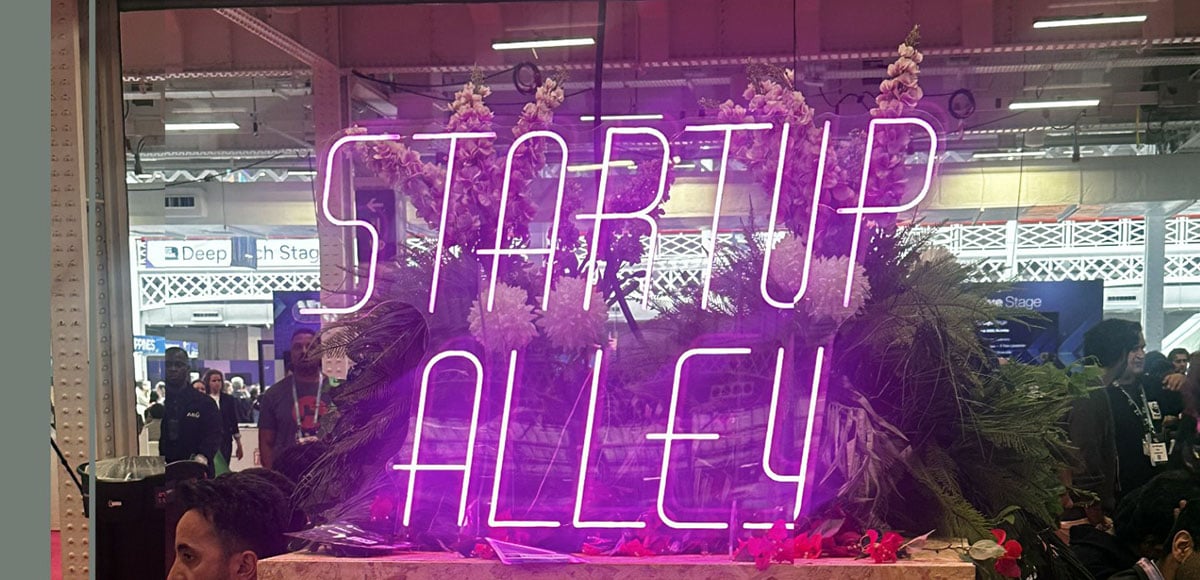
At London Tech Week 2026, there were many talks around the value that AI startups bring to the UK. Listening to three talks in particular – from Prime Minister Sir Keir Starmer, Technology Secretary Liz Kendall, and Deloitte’s Chief Strategy Officer Sam Burnett – it seems now that the UK has built a genuine, data-supported claim to AI leadership, the question has become less about whether the conditions are right, and more about whether founders, enterprises, and investors are moving fast and deliberately enough to take advantage of them.
Data is always key
UK AI startups raised over £6 billion in venture capital in 2025, an 80% increase on the previous year and the highest share of UK venture capital on record. AI now accounts for roughly a third of all UK venture capital deployed, and in Q1 2026, UK startups raised more capital than France, Germany, and the Netherlands combined. Globally, the UK sits fourth for AI venture capital, behind only the US, the EU27 as a bloc, and China.
“There are more than 6,500 AI companies in London alone,” said Burnett. London ranked third globally in the 2025 Startup Genome report. And while the Bay Area still attracts roughly ten times as much venture capital as all of Europe, Burnett noted it is worth remembering that a significant share of US capital is consumed by the infrastructure layer, such as frontier model providers, GPU clusters, and hyperscale data centres. Strip that out and compare startup-to-startup, applying intelligence to real-world problems, and the gap narrows considerably. European and British founders, he noted, also tend to be more capital-efficient than their US counterparts, stretching each round further.
So if the pipeline looks in good shape, what comes next?
Government pledges
The policy commitments announced at LTW directly affect what is available to early and growth-stage companies. The Sovereign AI fund, launched in April 2026, has the capacity to invest £500 million directly in British AI startups. It comes with fully funded access to the UK’s largest supercomputers, fast-tracked global talent via super-priority visa decisions, and coordination with the British Business Bank.
The AI Hardware Plan, published during LTW, brings together £1.1 billion in government support across four areas particularly relevant to startups in the semiconductor and chips space. An expanded mentoring programme supports chip development from initial concept through to validated prototype, with an additional £20 million, taking total investment in the Frameworks Lab near Cambridge to £70 million. A further £80 million has been invested in the skills pipeline, including PhD-level bursaries in electronic engineering and materials science, with the number of funded places rising from 300 this year to 500 within two years. A £750 million heterogeneous supercomputer procurement – over half earmarked for inference chips – comes alongside an expanded £150 million advanced market commitment providing startups with a government first-customer guarantee, and a further £250 million to purchase novel inference chips once the best have proven themselves in the market. Finally, a new fund from Playground Global, one of the world’s leading AI hardware investors, is backed with up to £150 million from the British Business Bank in what the BBB has described as the largest single fund commitment it has ever made. Playground is opening its first office outside the US in the UK as part of the deal, subject to final due diligence.
The government’s AI Opportunities Action Plan has driven £28.2 billion in private investment commitments across five AI Growth Zones. Inflection AI is expanding UK operations, creating 1,000 jobs over three years. AMD has committed £2 billion to the UK over five years. Microsoft has announced $15 billion in UK capital expenditure, including the country’s largest AI supercomputer. NVIDIA committed £2 billion to the UK AI startup ecosystem.
Don’t confuse activity with value
At LTW, Burnett warned about what happens when organisations confuse activity with value. Many, he said, are currently measuring AI adoption through activity metrics such as prompts submitted, licences provisioned, and tokens consumed, which tell only you about usage, but not about the value created. Consuming tokens, he said, is not the same as creating value, any more than billing hours is the same as delivering outcomes. AI spend is ballooning far beyond budgets at many large enterprises while remaining disconnected from demonstrable results.
The organisations that win, Burnett said, will be those that deploy intelligence intelligently. Those that understand that not every task requires a frontier model, that open-weight models can deliver excellent results at far lower cost and with greater control, and that real value sits at the intersection of AI capability, domain knowledge, proprietary data, and workflow design. He cited Hewlett Packard Enterprise’s finance function as a concrete example of a process that previously consumed over 100 people a week to produce an operational reporting pack, which can now be completed by one person and an agent in under a day, using an open-weight model on HPE’s own infrastructure, with costs that are predictable and value that is measurable.
The real differentiation will accrue to those who understand the problem and the workflow, and who can integrate intelligence to deliver outcomes responsibly in specific domains. And that is what the best British AI startups are building. The challenge, Burnett said, is that US enterprises are still much more willing to buy from young companies than their British and European counterparts. Two founders he spoke with at the Deloitte-NVIDIA Adopt 100 launch both said they target the US as their primary market for precisely that reason. Changing enterprise buying culture at home, he said, is one of the most important things the ecosystem can do.

The bigger story
With the pace of technological evolution and the scale of geopolitical disruptions, the relatively predictable global conditions that businesses once relied on are gone. In their place is a multi-polar world in which technology, and AI specifically, has become part of national strategy, industrial competition, and international rivalry.
Britain’s position as the third-largest tech economy globally, fourth in the world for AI venture capital, home to DeepMind, ARM, Wayve, and Ineffable, is as commercially valuable as it is significant. Seventy percent of global AI compute is currently controlled by five companies. Kendall pressed the point on sovereignty, say that the countries and companies that shape AI infrastructure will hold a form of power that becomes increasingly difficult to challenge after the fact.
That means startups are no longer simply building a product. They are contributing to whether the next layer of the world’s most important technology is built here and shaped by values developed here, or whether it arrives pre-made from elsewhere.
The choice Starmer, Kendall, and Burnett each described – between shaping the future and being shaped by it – applies at every scale. For tech founders, it seems that now is your time. The conditions are exceptional. The window is open. The only question is, what will you do with it?
