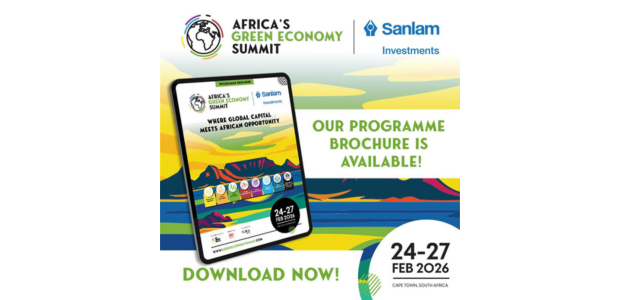
The critical climate negotiations at COP30 in Belém, Brazil, are underscoring the urgent need to translate global ambition into tangible investment and action. This imperative resonates directly with the upcoming fourth edition of the Africa’s Green Economy Summit (AGES), scheduled for 24–27 February 2026 at the Century City Conference Centre in Cape Town. Africa’s transition to a climate-resilient, low-carbon future will take centre stage at the event—powered by lead partner Sanlam Investments. This year’s edition underscores a shared commitment to accelerating investment into Africa’s green and blue economies at a defining moment for global climate action.

If you had met me in first year of university, you would have found a completely normal student. I showed up to lectures half awake, clinging to a coffee, and hoping the problem set I “remembered” submitting had not just been a dream. Nothing hinted that a year later I would be sitting in the entrepreneurship hub, convincing myself I was building the next big thing. All I lacked was a turtleneck and a slide with a graph going neatly upwards.

As enterprises race to deploy AI, a startling trend is taking shape: the majority of initiatives never evolve into long-term investments because big businesses pull the plug before results can materialise.

Many leaders treat Employee Stock Ownership Plans (ESOPs) as little more than a legal formality or a simple perk to attract talent. According to Stefan Surina, CEO and Founder of Eldison, this is a critical mistake. Drawing from years of experience advising founders, he believes that an ESOP isn’t just a part of a compensation package – it’s the foundational tool for building a company’s culture. Done right, strategic ESOP turns employees into true owners, while a poorly planned one risks creating resentment and killing motivation before a company even gets off the ground.

Chancellor Rachel Reeves has been urged to use the opportunity afforded by AI to ‘Make Britain Great Again’.

New research from Xeinadin shows small businesses are adjusting their plans ahead of the Autumn Budget. With many expecting further tax pressure, a large number are reviewing pricing strategies or reducing costs in 2026. The findings reflect how SMEs are being proactive and taking early action in response to an uncertain policy outlook.
The global fintech Revolut has announced the completion of a share sale, which values the company at $75 billion.
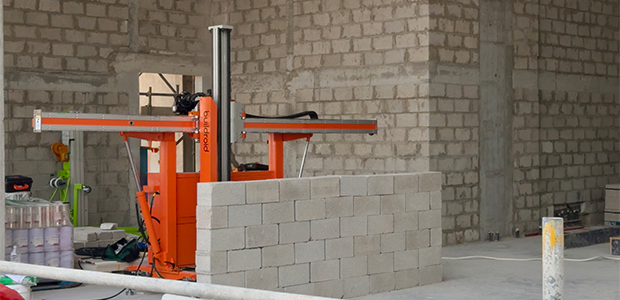
Buildroid AI, an AI robotics startup, has emerged from stealth with $2 million in pre-seed funding led by Tim Draper, known for backing Tesla, SpaceX, Skype, and Robinhood. The startup has also announced the launch of its first block-laying robot, built using BIM-to-BUILD simulation.

UK small businesses would be most at risk if various taxes were to go up in the Autumn Budget, according to new research from Novuna Business Finance, conducted a week before the Autumn Budget.

More UK businesses can slash their energy bills thanks to Octopus Energy’s latest ‘Shape Shifters: Agile’ tariff – the UK’s first fully agile tariff for small and medium-sized enterprises (SMEs).
Social Links has secured $3 million to accelerate the development of next-generation defence tools designed to secure companies’ brand, assets, and people in the AI-Driven Era against modern risks.

For many founders, raising funding can be something of a double-edged sword. On the one hand, capital unlocks growth, on the other, funding can come with strings attached, and in some cases, a loss of strategic control.

If there’s one thing I’ve learned after two decades specialising in leadership it’s this: startups don’t fall apart because of strategy, they fall apart because of people.

Once, product managers were measured by their ability to translate user needs into feature roadmaps and shepherd products to launch. Today, as AI moves from the fringe to the core of countless products, PMs are expected to master an entirely new language, where concepts like retrieval-augmented generation, dataset curation, and bias mitigation are daily realities.

I’m Dani, and I’m the CEO of The Sleep Consultant Academy. I specialise in helping women set up an online business, specifically in infant sleep.

Rosberg Ventures, the venture capital firm of Formula 1 champion Nico Rosberg, is reportedly launching a new $100 million venture fund-of-funds, PitchBook reports.

The government has announced a comprehensive package of AI-focused reforms and investments to accelerate national renewal, boost economic growth, and cement the UK’s position as a global leader in artificial intelligence.
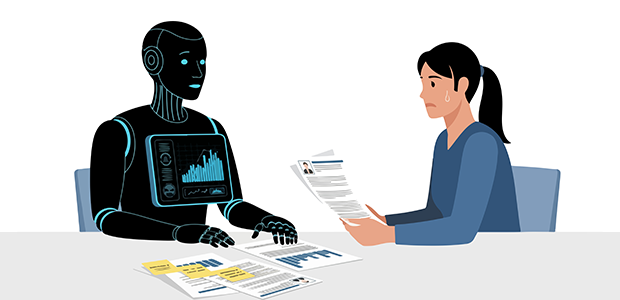
Artificial intelligence (AI) is rapidly shaping customer engagement, but a growing number of US mid-sized businesses are under mounting pressure of being left behind with small players being pushed out the market. Over three-quarters of business leaders are calling for the government to step in to help regulate the growing divide and prevent mid-sized businesses from being squeezed out of the market.

Snowball, the award-winning disability accessibility app that made headlines with a rare full-house offer from all five Dragons on BBC’s Dragons’ Den, has been officially signed up by Google for Startups, accelerating its mission to make accessibility accessible around the world.

Only three months after its founding, NexDash has secured €5 million in seed funding to build Europe’s first Neo-Carrier for electric trucks. Founded by Michael Cassau – who previously built tech-rental unicorn Grover – the company aims to accelerate the electrification of Europe’s highly fragmented and under-digitalised road freight sector.