
Amidst the pressure to make sales, offer a good deal and cut through the noise around the Black Friday and Cyber Monday (BFCM) sales, brands competing for shopper attention online sometimes forget that meaningful connections can be built with the right user experience (UX) design and a good story.

Technology is constantly evolving, and some trends, like AI, have been dominant players over the last few years. While AI isn’t going anywhere, there are other themes and trends that will be taking the world by storm next year.

Alison Imbert shares with Startups Magazine what makes a winning team, how her team is shifting strategies in an unpredictable market, and why she thinks being considerate isn’t incompatible with being a top VC.

Speed and reliability have become the foundation of any good online experience. Now, shoppers expect sites to load without hesitation, checkouts to work flawlessly, and performance to hold steady regardless of device or demand. Data reflects this shift too, with a two second delay being enough to double bounce rates. When experience falters, customers rarely wait. Instead, they’ll move on to the next merchant offering the same product with a smoother journey. In a market where alternatives are just a click away, even brief moments of friction can mean a lost sale.
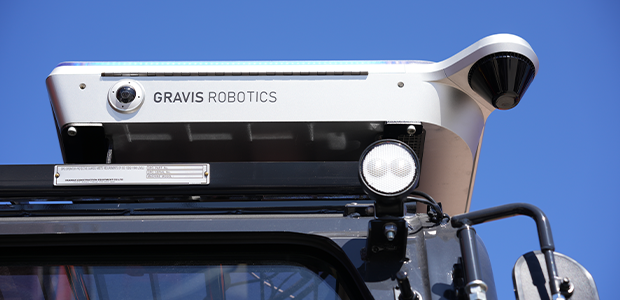
Gravis Robotics has announced a new wave of industry partnerships alongside $23 million in fresh funding.

A new analysis of 334 UK startups that secured seed or pre-seed funding in 2025 has revealed a striking lack of PR readiness, with just 13% of funded startups having a dedicated press or news section on their website.

Across the UK, Europe, and the US, startup leaders are facing a growing shortage of young talent who are truly job ready. Particularly in remote settings, employers increasingly seek more mature profiles with strong soft skills and an understanding of company life capabilities that many graduates still lack.

Artificial intelligence has already become a powerful democratiser for smaller companies and startup ventures, enabling them to achieve faster growth and enterprise-level efficiency. As the sophistication and simplicity of AI improves, there are also expanding opportunities for companies to enhance their competitive edge by taking direct charge of advanced technologies.
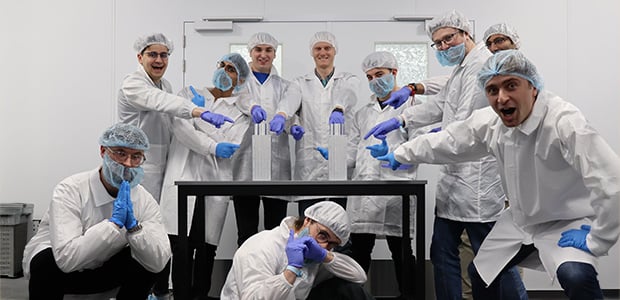
As many as 70,000 Low Earth Orbit (LEO) satellites are expected to be launched over the next five years, Goldman Sachs Research has reported, highlighting a growing and thriving industry that has come to rely on satellites for connectivity and observation. Satellites are used for anything from voice communications in remote locations to tracking populations of endangered species.

You are not your grandfather’s SMB.
While many mid-market manufacturers still fax purchase orders and wrestle brittle ERPs, born-in-the-Cloud startups enjoy a greenfield. That blank canvas is both a luxury and a trap: copy yesterday’s stack, and you inherit yesterday’s headaches.

“We can solve all the world’s energy challenges with no drawbacks,” said John Bucknell, CEO and Founder of Virtus Solis, a spacetech startup based in Michigan who is building astral solar power plants.

When we last spoke to Skyrora 18 months ago in our Jan/Feb 2024 edition, CEO and Co-Founder Volodymyr Levykin likened the company to being a “space taxi”. The vision was to disrupt the space industry by becoming the first private orbital launcher – designing, manufacturing, and deploying launch vehicles for satellites – all with sustainability in mind.

Estonia is back in the top tier of Deloitte’s Technology Fast 50 Central Europe 2025, confirming its rising influence on the region’s innovation map. At the awards gala in Prague on November 20, Tallinn-based startup Wallester was revealed as the highest-ranked Estonian company, placing 6th overall among the fastest-growing tech firms in Central Europe.

Adam Reynolds, Co‑Founder & Managing Partner at ISH, explains how startups can avoid common post-funding pitfalls and scale sustainably.

As organisations strengthen their data foundations, chief data officers (CDOs) are increasingly driving technology innovation, according to a new Deloitte report which shows, CDOs overwhelmingly agree that a well-defined data strategy is essential.

Fintech is nearing the end of 2025 with an unmatched pace of innovation. AI is now embedded in daily operations, and the industry has grown noticeably more ambitious. But while technology accelerated, communication systems inside many organisations failed to keep pace.

UK Chancellor Rachel Reeves has announced targeted investment in industrial strategy sectors across the UK with the introduction of two AI growth zones in Wales, creating more than 8,000 jobs and £17 million in Northern Ireland to strengthen UK external markets.

NatWest has announced partnerships with four UK universities to strengthen the UK’s innovation and startup ecosystem, driving growth, business productivity, and creating high-value jobs across all regions of the country.

Gosta Labs, a Helsinki-based healthtech company founded by the ex-Kaiku Health founders, has closed a €7.5 million seed round to scale its AI operating system for complex medical specialties.

On 13th – 14th October, Amsterdam became the powerhouse of innovation at the Oil and Gas Automation and Digitalisation Congress 2025. The event, held with the support of Host Sponsor Fluor, gathered more than 170 companies and 340 experts to discuss the challenges and opportunities of the new technological era and enhance professional skills.