As organisations strengthen their data foundations, chief data officers (CDOs) are increasingly driving technology innovation, according to a new Deloitte report which shows, CDOs overwhelmingly agree that a well-defined data strategy is essential.

A new whitepaper released by Europe’s leading tech, startup and digital investment event, GITEX AI EUROPE, in partnership with research firm – LUE, maps out the foundations for Europe’s digital sovereignty; identifying the imperatives that could define the continent’s next decade of technological leadership.

A new education technology company, PupilPower, has launched with an ambitious mission: to bring immersive, virtual reality (VR) learning into UK classrooms – completely free for schools.

Global Work AI, the AI-native job-search platform focused exclusively on job seekers, has secured a $2.4 million follow-on investment from existing backers Pre-Seed to Succeed, Yellow Rocks, Smart Partnership Capital, AltaIR Capital, and TMT Investments. The new round brings the company’s total funding to $3.7 million.

CIQ, the US-based leader in enterprise-grade open-source software infrastructure focusing on security and high performance computing (HPC) including artificial intelligence (AI), has announced the opening of its new regional headquarters in the Gulf region.

When I started my business from my bedroom in 2013, I didn’t have investment, a five-year plan, or even a proper desk. What I did have was a belief that I could do things differently.

Press conferences across mobility, immersive entertainment, and AI join the schedule, alongside CES Unveiled and CTA Tech Trends to Watch.

The upcoming Autumn Budget has been sparking debate across the UK economy for several weeks, largely due to leaks. The rumoured measures, from a possible exit tax (which thankfully now looks to have been abandoned) to changes to capital gains tax and pension rules, could reshape the landscape for investors, fund managers, and entrepreneurs alike. With the government looking to balance competitiveness with fairness, overburdening businesses and investors in private markets could ultimately backfire, hindering the UK’s position as a leading home for private capital.
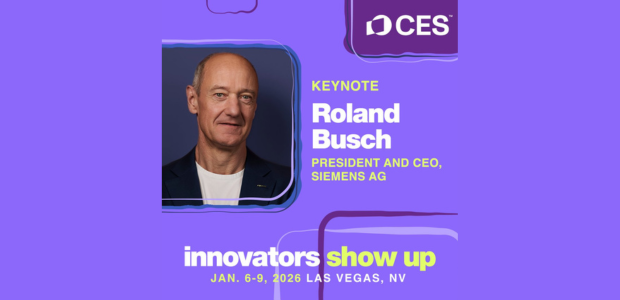
The Consumer Technology Association (CTA) and Siemens announce Roland Busch, President and CEO of Siemens AG, will deliver a keynote at CES 2026, the world’s most powerful tech event. Roland Busch will showcase how Siemens is developing AI, digital twin and automation technology to drive real-world impact and usher in a new era of AI-ready manufacturing, infrastructure and transportation – where the real and digital worlds are combined to transform the everyday.

Early-stage founders spend a huge amount of energy on the usual forms of capital: cash, talent, time, and product. But purpose-driven startups have access to a fourth resource that often makes the biggest difference in the years where margins, headcount, and certainty are all painfully thin – their community.
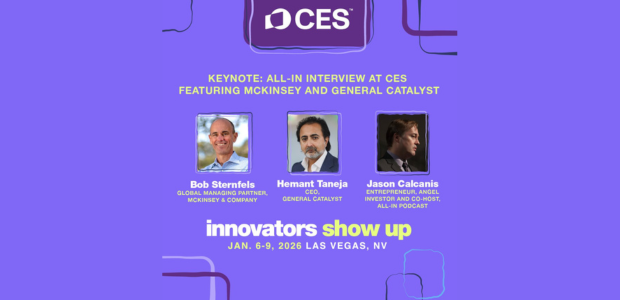
The Consumer Technology Association (CTA) announces Bob Sternfels, Global Managing Partner at McKinsey and Company and Hemant Taneja, CEO of General Catalyst, will join Jason Calcanis, Entrepreneur, Angel Investor, and Co-Host of the All-In podcast for a CES keynote. This live taping of the world’s most influential business podcast will explore how AI is redefining global strategy, investment, and innovation, offering real-world insights from three of the sharpest minds in business.

Startups love building elegant technology and chasing ideas no one has tried before. But in the supply chain, elegance rarely survives contact with reality. Julia Sanzharova – a supply chain transformation leader with deep FMCG and product-development experience – explains why even the most advanced AI models fall short without a solid understanding of how operations actually run.

A record-breaking number of submissions showcases global innovation across 36 product categories, including 32% growth in the robotics category.

Founders get early traction through pure hustle, personal networks, charisma, and tenacity, but at some point, relying on the hustle inhibits growth.
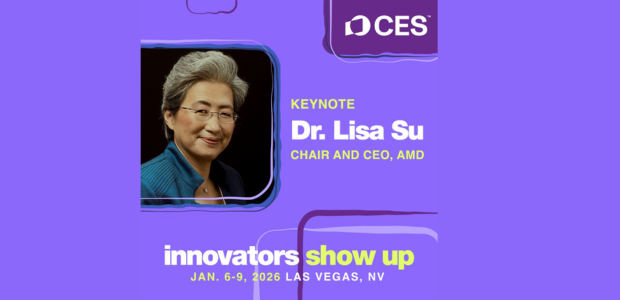
The Consumer Technology Association (CTA) welcomes Dr Lisa Su, Chair and CEO of AMD, as a keynote speaker at CES 2026, the most powerful tech event in the world. Dr Su will return to the CES keynote stage to highlight the AMD vision for delivering future AI solutions – from cloud to enterprise, edge and devices. AI is transforming every aspect of our lives, and AMD is uniquely positioned to deliver the performance and flexibility required to drive this transformation.

On the 26th November, the long-anticipated Autumn Budget was delivered by Chancellor of the Exchequer, Rachel Reeves.
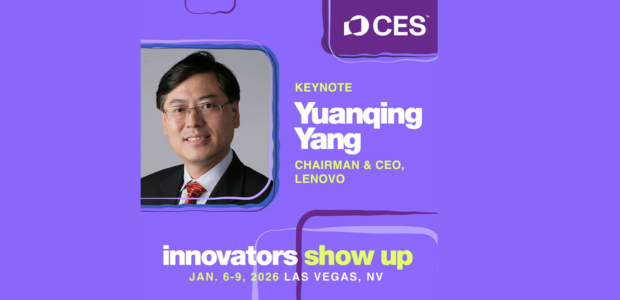
The Consumer Technology Association (CTA) announces Yuanqing Yang, Chairman and CEO, Lenovo, as a keynote speaker at CES 2026. Lenovo will take its flagship event, Tech World, to CES, where global business gets done. Having Lenovo Tech World at CES puts decision-makers, partners, and media all in one place. For the past decade, Tech World has been Lenovo’s platform to unveil new technologies, products, and solutions.

Across the GCC, sustainability has become a strategic imperative, yet many organizations struggle to move beyond commitments to concrete action. The challenge is not conviction, it is execution. Fragmented ESG data, complex reporting requirements, and the difficulty of embedding sustainability into operations create barriers that leave businesses spinning their wheels. emtribe was founded to eliminate these obstacles. Founded in Dubai for the realities of the GCC market, the company transforms ESG data into a strategic asset, enabling businesses to operationalise sustainability into their day-to-day decision-making.

Many leaders treat Employee Stock Ownership Plans (ESOPs) as little more than a legal formality or a simple perk to attract talent. According to Stefan Surina, CEO and Founder of Eldison, this is a critical mistake. Drawing from years of experience advising founders, he believes that an ESOP isn’t just a part of a compensation package – it’s the foundational tool for building a company’s culture. Done right, strategic ESOP turns employees into true owners, while a poorly planned one risks creating resentment and killing motivation before a company even gets off the ground.

Chancellor Rachel Reeves has been urged to use the opportunity afforded by AI to ‘Make Britain Great Again’.