For all the talk about the golden opportunity presented by AI, the government has just published a report that confirms what many of us have known for years. The country’s biggest obstacle to unlocking AI’s potential isn’t innovation or, dare I say it, ‘investment’, but a lack of talent.

A new study conducted by researchers at Warwick Business School has revealed significant insights into the gender finance gap in startup funding, shedding light on how biases influence investment decisions.

It’s a common workplace story: December hits, and suddenly the office turns into a ghost town of checked-out employees chasing holiday cheer over deadlines. But let’s challenge that myth head-on.
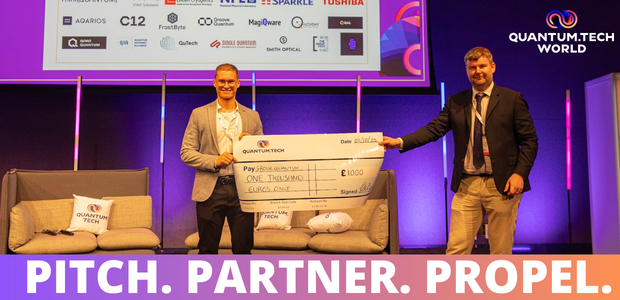
A major highlight of Quantum.Tech World, taking place 25th – 26th June 2026 at the Encore Boston Harbour, Boston, will be the expanded Startup PitchFest. A high-conviction platform designed to accelerate the most promising companies building across quantum, AI, HPC, data-centre infrastructure, biotech, pharma tech and next-generation deeptech.

FASTA, a programme backed by the UK Agri-Tech Centre and delivered in partnership with the Carbon Trust, has launched to help UK-based innovators scale the technologies needed to support sustainable farming in the UK.

The nation’s favourite small businesses have been revealed, showcasing the UK’s love for small firms ahead of Small Business Saturday (6th December).

Humanoid, a UK-based robotics and AI company, unveiled HMND 01 Alpha Bipedal, a humanoid robot that sets a new benchmark for development speed and operational readiness.

Mirror Security, a research-driven cybersecurity company spun out of University College Dublin, has raised $2.5 million in pre-seed funding to scale its breakthrough encryption platform for AI security.

The traditional CV is losing its grip on hiring decisions, with just four in 10 employers now rating them among the most reliable indicators of talent in an age of AI-generated applications, according to a new global study from Willo.

Small businesses are the beating heart of the UK economy: creating jobs, energising high streets, and boosting communities. But while they’re vital to growth, new research from HSBC UK shows many entrepreneurs are struggling to promote themselves and attract new customers.

2026 is shaping up to be a complex year for employment laws and regulations affecting small businesses. Founders are expected to be proactive and ready for changes across several legal areas, including corporate transparency, employment law reform, and evolving technology regulation.

In less than two and a half years, the University of Bristol has launched 12 social venture spin-outs, each one rooted in academic insight and driven by societal purpose.

As the UK continues to position itself as a global hub for technology and innovation, two immigration routes stand out for founders, engineers, and digital specialists seeking to build their careers or businesses in the country: the UK Global Talent Visa and the Innovator Founder Visa.

Trying to define what it means to be a challenger brand is a bit of a paradox. Once upon a time, it was simple – challengers were the scrappy underdogs shaking up slow-moving industries. But today, the idea of being a challenger is more nuanced. It’s not just about taking on the big players; it’s about thinking differently, acting boldly, and staying true to the values that made you stand out in the first place – even as you grow.
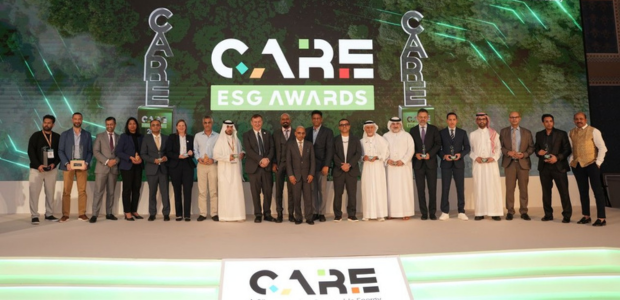
The CARE ESG Awards by Trescon and ESG Mena recognised the region’s most outstanding leaders, changemakers, and industry shapers driving sustainability, clean energy, climate resilience, and responsible growth. Held during the inaugural edition of climate action, renewable energy & sustainability forum, CARE 2025, the awards spotlighted high-impact contributions driving measurable progress across environmental stewardship, renewable energy deployment, resource efficiency, social value creation, and transparent governance.

In the high-stakes world of startups, a deeply ingrained myth persists: stay silent until you have something monumental to announce. This ‘stealth mode’ philosophy suggests that premature exposure risks tipping off competitors or revealing imperfections before a product is market-ready.

Prior Labs announces the world’s first foundation model capable of handling millions of rows of data, giving enterprises a powerful and scalable way to understand and use their most complex, business-critical information.

AI has undeniably been the headline of 2025. Every day has seemed to bring a new tool, startup or product launch, promising transformation and innovation at levels never seen before. With so many new developments, often accompanied by both excitement and caution, how can business leaders know how to navigate the evolving AI landscape and ensure they are investing their time, money and resources in a way that truly drives value?

As we approach the end of 2025, managing stress and prioritising mental wellbeing in the workplace is essential for both individuals and organisations. End-of-year deadlines, performance reviews, planning for the year ahead, and the excitement (and pressure) of the festive season can place additional strain on individuals and teams.

Most early-stage founders spend more time dealing with money movement than they ever expected. Not fundraising, but the simple act of getting money in and out of the business. Traditional banking still slows teams down with long processing times, inconsistent cross-border transfers, and rigid rules that do not match how modern startups operate.