
Orbital Marine Power, the Scotland-based operator of one of the world’s most powerful tidal turbines, has secured a multi-million pound investment to advance its international commercial projects and contribute to the wider decarbonisation of energy.

Most founders will tell you they are bringing AI into their business. Some talk about it with genuine excitement, others with a quiet sense of panic, and a few with the hope that automation might finally fix the chaos they’ve been ignoring for years. The truth is far less glossy. AI rarely fails because the tools are weak. It fails because the organisation behind them isn’t prepared for what the shift actually involves.

European technology investing can no longer be relegated to the continent’s economic sideline. New movement in the sector and regular activity over the past few years have made it one of the primary infrastructures on which other industries and services are built. Every month, Zubr Capital publishes a brief look at how this European tech sector is evolving, not just to summarise, but to better understand what the market is building towards.

Jason Bennett is the Global VP of Startups and Venture Capital at AWS. He has been at AWS for 15 years, he has previously served as VP, US Enterprise and private equity, and GM, US-Enterprise Leader. At AWS re:Invent in Vegas, Bennett discussed all things AI, startup trends, and AWS’s commitment to supporting startups.

The Invest in Women Taskforce, which was established to support female entrepreneurs in the UK, has announced Nationwide and the British Business Bank as new partners in the UK’s first female-led Fund of Funds that targets first close of £130 million, subject to final terms, relevant approvals, and signing.

Quantum Dice has secured a €2 million grant from the European Innovation Council (EIC) Accelerator programme, with the project now officially underway following its October kick-off.

Melt&Marble has raised €7.3 million in Series A funding to scale production and bring its first ingredients to market. Designed to deliver enhanced functionality, taste and even health outcomes, the company’s ingredients offer sustainable, high-performance alternatives to conventional oils and fats for use in personal care and food applications.
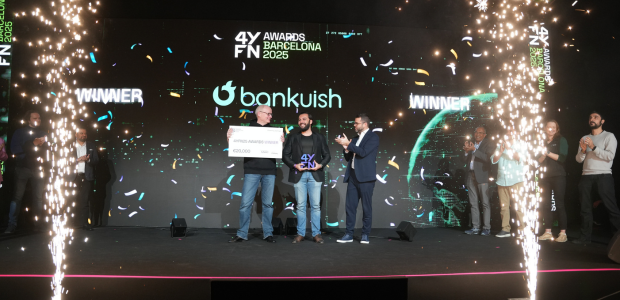
The world’s most iconic startup event 4YFN26 will return to the halls of Fira de Barcelona’s iconic Gran Via during MWC26 Barcelona next year for a groundbreaking showcase of 2026’s most exciting startups. Selected from hundreds of submissions, 2026’s Top 20 startups showcase the brightest ideas and leading minds from across five key industry categories.

Track Titan, the AI-powered “Strava for motorsport”, has raised a $5 million seed round co-led by Partech and Game Changers Ventures, the fund led by Alpine F1 co-owner Roger Ehrenberg.

Sustainable Ventures and Barclays Eagle Labs announced the launch of The National Climate Tech Accelerator (NCTA), a new programme designed to rapidly scale high-potential climate tech startups across the UK.

Britain is on the verge of an entrepreneurship boom which could change its employment make-up and significantly boost the economy, new research has revealed. One in 10 (10%) Brits want to start a business in the next year. If all of these people were to do so, the number of businesses operating in the UK would almost double.

Small businesses have always been quick to adapt, and in 2025, that adaptability has been tested more than ever. Between rising costs, staffing shortages and customers who expect instant replies and 24-hour availability, many owners are stretched thin.

Natalie Portman and biomaterial company UNCAGED Innovations have announced a partnership. Portman, a long-standing advocate for animal welfare and ethical consumerism, will work with the company to promote the adoption of sustainable, animal-free materials within the luxury and fashion sectors.

Brevo, a European leader in customer engagement software, has closed its latest €500 million financing round, officially becoming a unicorn.

team.blue, a provider of digital solutions for businesses and entrepreneurs, has released a new report which analyses the digital maturity of European small businesses revealing that, while many are eager to adopt digital and AI tools, they are held back not by resistance but by uncertainty.

Zen Internet is marking this year’s Small Business Saturday (6th December) with a month-long social media campaign highlighting the outstanding contribution small enterprises make to the UK economy.

Anti Fund, co‑founded by Jake Paul and Geoffrey Woo, announces its over-subscribed $30 million Anti Fund I. With the close of Fund I, Anti Fund’s assets under management now exceed $65 million.

Two of the UK’s leading innovation organisations – Science Creates, the deeptech ecosystem supporting startups with lab space, training, and early-stage investment, and NCC, an innovation organisation helping businesses of all sizes bridge the gap between cutting-edge innovation and industrial application – announce a partnership to accelerate and scale the impact of the South West’s deeptech ecosystem.

On 3rd December, Campus Founders and Dieter Schwarz Foundation celebrated the official opening of its new startup and co-innovation space GRAVITY, marking a major milestone for the development of a collaborative and future-oriented innovation ecosystem in Heilbronn.

Across the United States, a new industrial age is taking shape. Trillions of dollars in infrastructure, from energy projects and advanced manufacturing to data centres and critical mineral facilities, must be built in the next decade. But large construction projects are slower and more expensive today than they were half a century ago.