Features

Investors across the world are betting on the AI boom – as seen in NVIDIA’s $2 trillion valuation and highlighted recently in the UK with Wayve’s $1 billion series C, the largest round of its kind. As with any boom, however, many have raised concerns about a potential tech bubble, similar to crypto and “hypes” such as NFTs. Is there an AI bubble? Who will be the winners and losers? And in a saturated economy, how can AI startups differentiate themselves?

Relocating for work is a significant step for employees. For businesses needing to support those employees, it can be costly, time-consuming – and potentially risky.

For decades, European companies have primarily focused on the “Big Four” – China, India, Japan, and South Korea – for their Asian expansion strategies. While these established markets offer undeniable economic power, recent developments have led European businesses to look beyond traditional targets.

The Enterprise Investment Scheme (EIS) was introduced to the UK 30 years ago with the intention of encouraging private investment into smaller higher-risk and earlier-stage businesses. Alongside the Seed Enterprise Investment Scheme (SEIS), launched in 2012 and aimed at very early-stage startups, these schemes were designed to provide valuable financial support t0 British entrepreneurs and fuel economic growth.

In today’s business world, artificial intelligence (AI) is more than only a buzzword; it’s a game-changer. From revolutionising customer experiences to optimising operations, AI has transformed the way businesses operate now. Let us take a closer look at how AI is reshaping modern business plans and what it means for entrepreneurs like you.

In the age of the always-on economy, even the mightiest of businesses are vulnerable to the debilitating effects of digital downtime.

You’ve heard it a million times: “there’s no need to reinvent the wheel”. Yet, we often find that considerable resources have been poured into building another version of a software tool that already exists on the market, says Craig Cook, principal engineer at Agile consultancy, Catapult.

Researchers from The University of Queensland found that people who believe in manifesting success are more likely to make risky investments and end up bankrupt.

Building a business has never been easy, but in recent years – following a global pandemic, a cost of living crisis and other economic challenges – it has certainly become more challenging.
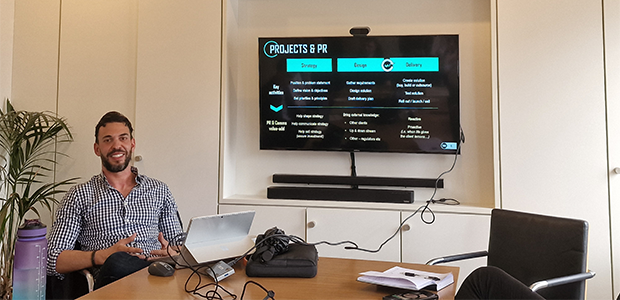
The Apprentice quarter finalist, freelance consultant, and startup advisor, Steve Darken, joined the Spreckley team in London for an exclusive presentation on startups, the importance of PR, and The Apprentice! Startups Magazine’s Deputy Editor, Anna Wood, was lucky enough to be invited along to learn more about Steve and his experience.

From the helm of your business to life after: Transitioning from running a business you’ve poured your heart and soul into can be a tumultuous journey. As the euphoria of selling fades, a myriad of emotions can surface, from exhilaration to anxiety, leaving you questioning your newfound reality.

In today’s digital age, where social media platforms reign supreme, the art of reaching and selling to customers has undergone a significant transformation.

Across the globe, there has been a rise in a relatively new C-suite role of Chief Data Officer (CDO). Organisations have become more aware of the opportunities that data presents and are keen to invest heavily in it to help drive innovation and competitive advantage.

As an entrepreneur, one of the most critical decisions you’ll face is how to exit your business in a tax-efficient manner, a decision you ideally need to have made before you launch your business, to ensure you find the best solution in support of your long-term financial goals, and in alignment with your definition of success.

Navigating the world of life insurance can feel like traversing a maze, with countless options and complexities to consider.

Launching a new business venture can be incredibly exciting. It’s also fairly risky. Startup companies expose you to litigation and loss, making it necessary to implement some legal safeguards.

Starting with the end in mind is key to developing a coherent presentation. And as clever as you are (you must be – you’re reading this article), it isn’t easy for anyone to hold multiple complex objectives in their head as they create content. That’s why your presentation needs a single, simple aim.

Tom Biggs, Partner at Wellers, a firm of small business accountants, discusses the tax changes you need to know to efficiently plan for your next tax return.

We all know the value of a great customer experience (CX). When a brand consistently offers us convenience, friendliness, and importantly humanity, we’re likely to buy more, be more loyal, or share a recommendation with friends.

In the exhilarating world of entrepreneurship, the focus is often on the journey, the hustle, and the grind. The idea of having an exit strategy can sometimes feel like an admission of defeat or a concession that the grand vision might not pan out as expected.