Features

Imagine two companies. Both proudly report £20 million in annual recurring revenue. To the outside world, they look identical. But look a little closer, and the story changes.

Starting and sustaining a business in the UK can be challenging. Each year, thousands of new ventures are launched, yet the majority struggle to survive. According to the Enterprise Research Centre’s latest report, of the startups founded in 2020, fewer than half (47%) were still operating three years later, and only one in ten will reach their 10th anniversary.

Watching the Victoria Beckham documentary felt less like guilty pleasure celebrity binge-watching and more like a mirror for some of the conversations that I have been having with CEOs around the world on females in leadership positions.

In July 2025, MIT revealed that 95% of organisations are getting zero return on their generative AI investments. Generative AI has undoubtedly changed the state of play – providing detailed answers, fast research and surface-level insights – but it was never the endgame. It was the opening move.

It’s not easy being an early-stage business in today’s current economic environment, and businesses of all sizes are waiting in anticipation to see how changes within the Budget will impact them.

A well-structured partnership agreement is vital to the survival of any startup. When enthusiasm and innovation take centre stage, legal detail often falls behind. Many founders focus on growth and funding, overlooking how ownership, governance, and intellectual property are defined.
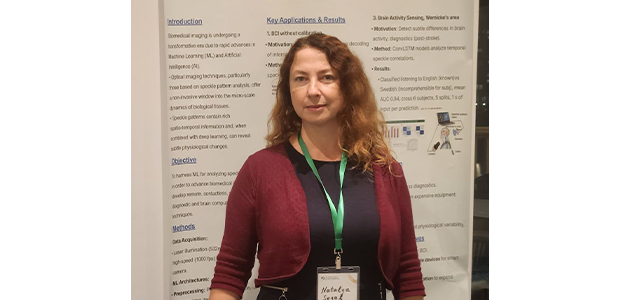
The scope of Natalya Segal’s influence on the field becomes clear in her patent record. Segal and her team filed a graphics rendering patent addressing visual synchronization (US20120262463A1), smart rendering optimization, and cloud-based GPU usage – work that anticipated both cloud gaming and the GPU infrastructure now essential to AI development, with the patent later acquired by Google. Her subsequent wearable technology patents (US 9,955,286; US 10,225,721; US 10,959,099 (2021)) have been cited by Apple in multiple filings, as well as by Nvidia, Qualcomm, Samsung, Dell, Sony, and Microsoft. Whether in cloud infrastructure or wearable interfaces, her work sits at the architectural foundation of modern computing.

HMRC’s Making Tax Digital for Income Tax Self-Assessment (MTD ITSA) represents one of the most significant changes to UK tax administration in recent years. Sole traders, landlords, and freelancers with an income of £50,000 who previously filed a single annual tax return will instead be required to provide quarterly digital updates, along with a final end-of-period statement, using HMRC-compatible software.

Every startup owner ultimately wants the same things: More money. More growth. More loyal customers or clients.

Here’s an uncomfortable truth many founders discover too late: you’ve built something brilliant, gained traction, assembled a talented team – but when it comes to raising your next round, finding the right investors feels like searching in the dark. Meanwhile, investors complain they can’t discover quality deal flow outside their usual networks.
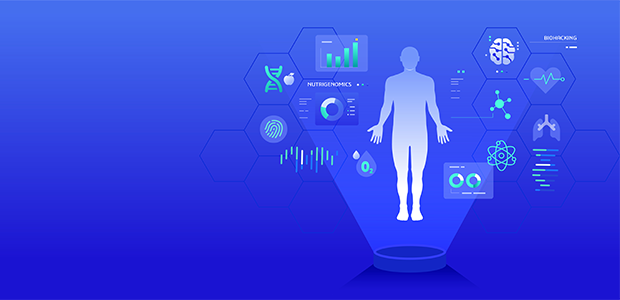
By 2050, one in six people worldwide will be over 65. In Europe, it will be closer to one in three. Although this stems from the positive reality of longer lives and better health, healthcare systems built for younger, shorter-lived populations now face the growing burdens of chronic disease, multimorbidity, and long-term care. And while we can celebrate the advancements that have taken us here, the ageing population is certainly an economic challenge that we must adapt to.

Content marketing has been something of a golden child for companies, recently. SMEs and other firms have been happy to invest heavily in the likes of online articles and blogs, video, e-books, and research reports with the aim of driving customer numbers. According to my company’s research, 91% of marketers have increased their content budgets since 2020

The Framing Effect is all about perception. The way you frame or present the same thing changes how people perceive it. Customers don’t just react to the facts; they react emotionally to how those facts are shown. The roots of the idea go back to the work of Tversky & Kahneman (1981), applied in marketing by Ries & Trout.

As a founder or product lead, you may have noticed how crowded the obvious markets are, leaving you with massive market opportunities that large corporations often overlook. Changing demographics, cultural shifts, and greater public awareness have created unmet needs that agile startups can service in various ways.

As summer holidays have wrapped up, Brits are entering what’s becoming known as the “Winter Arc” – the late autumn period where people focus on productivity, goal-setting, and getting ahead before the year-end rush. Employment Hero data shows that households and employees largely back in rhythm, making October and November key months for productivity.

Raising the topic of artificial intelligence (AI) often sparks debates about job losses and automation replacing humans, and this can be the case in hospitality, but in my view, in an industry built on personal connection, a different story is unfolding. In hospitality, AI isn’t replacing people – it’s empowering them. The next frontier of automation is human-centred, using technology to amplify empathy, not erase it. I believe everyone in hospitality needs AI.

There’s a dangerous myth that continues to linger in startup culture – if you build a great product, they will come. Though it’s the mantra widely attributed to Facebook’s rise in 2004, it simply no longer holds true in today’s world.
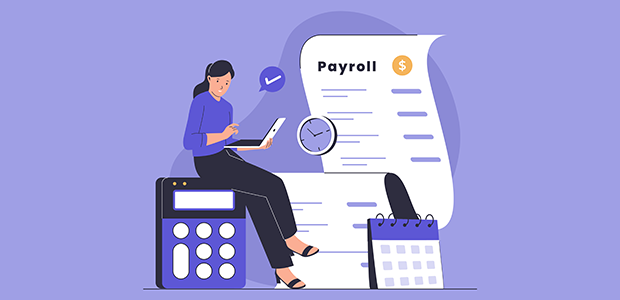
When National Australia Bank (NAB) recently disclosed it faces a staggering AUSD 130 million in costs due to historical payroll underpayments, some dating back more than a decade, it was headline news. However, while reports tend to focus on the scale of such mistakes made by large institutions, the underlying message should resonate deeply with organisations of every size: payroll errors are a serious issue, and can lead to significant financial, regulatory, and reputational consequences, for organisations of any size.

Your startup’s story isn’t just a pitch, it’s the playbook for how you attract customers, talent, and investors. Here’s how to tell a story that sells your vision as much as your product.
The full-scale invasion of Ukraine in 2022 posed unprecedented challenges to the nation’s startup ecosystem. Yet, against all odds, Ukrainian entrepreneurs have demonstrated remarkable resilience and innovation. From navigating funding shortages to adapting business models and entering international markets, Ukrainian startups have not only survived but thrived.